
20 Boxwood Landscaping Ideas That Add Style and Structure to Your Garden
Most people think of boxwoods as simple hedges, but they can be used in far more interesting ways. These boxwood landscaping ideas show how they can define spaces, highlight focal points, and add structure throughout the garden.

If you want your garden to look a little more organized and intentional, adding some structure can make a big difference.
And Boxwoods are perfect for that.
Their evergreen foliage and naturally tidy shape make it easy to define spaces, outline beds, and create focal points that look good all year long.
They’re also very versatile and will grow in both sun and shade.
And since they grow fairly slowly, you don’t have to trim them nearly as often as many other shrubs to keep them looking neat.
That combination of structure, versatility, and low maintenance makes them useful in all kinds of landscaping situations, in both the front yard and the back.
These boxwood landscaping ideas show some different ways they can be used around the yard, from edging lawns and outlining beds to creating focal points and adding structure to the garden.
Hopefully, you can find a few ideas that will work in your own garden.
Looking for more landscaping ideas? You'll love Formal Garden Design and Secret Garden Design Ideas.
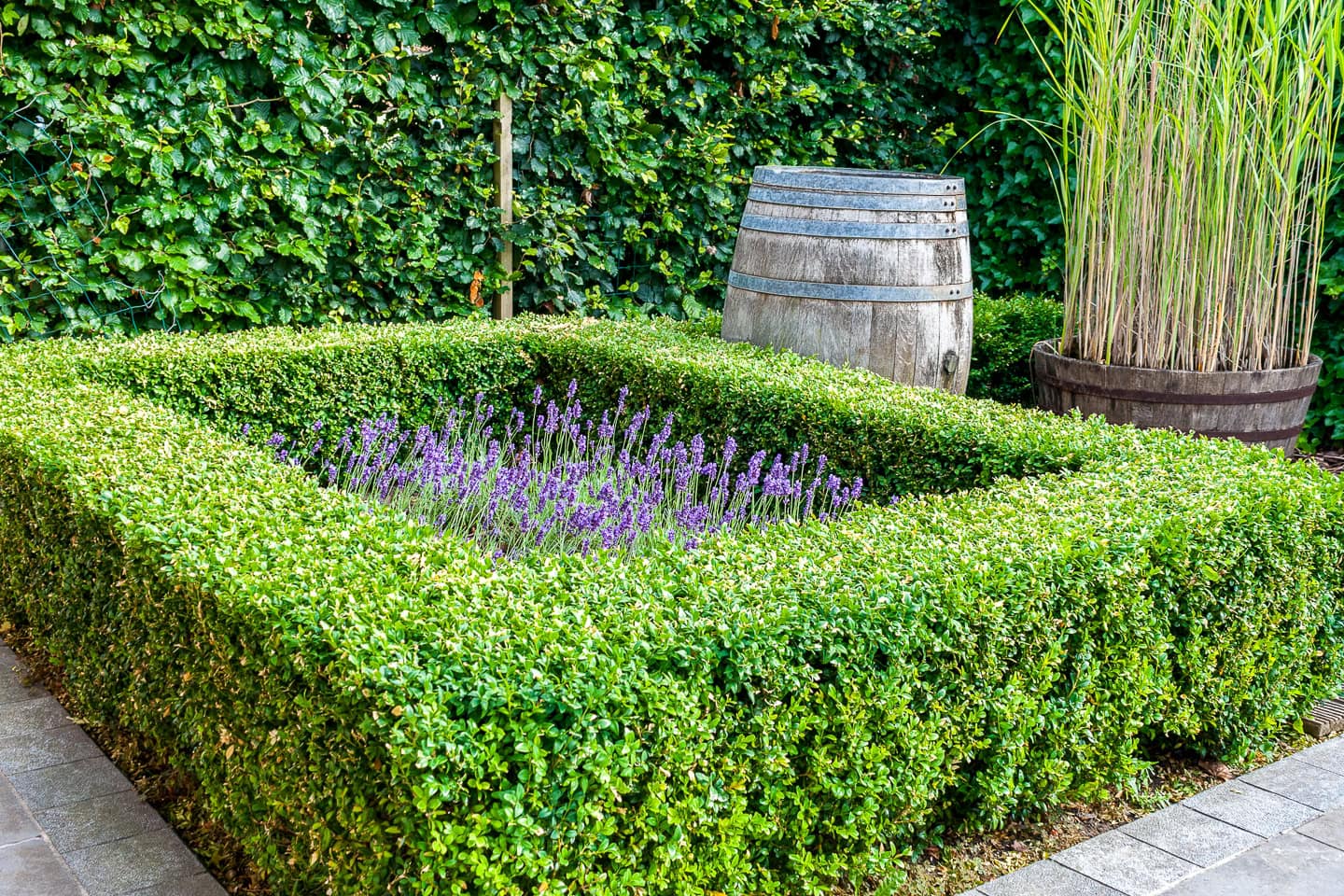
1 | Outline a Garden Bed With a Boxwood Hedge

© havana1234 – stock.adobe.com Boxwoods can be used to outline the shape of a garden bed and give it a clear structure.
The clipped hedge defines the space and keeps the planting looking intentional even when the flowers inside the bed change with the seasons.
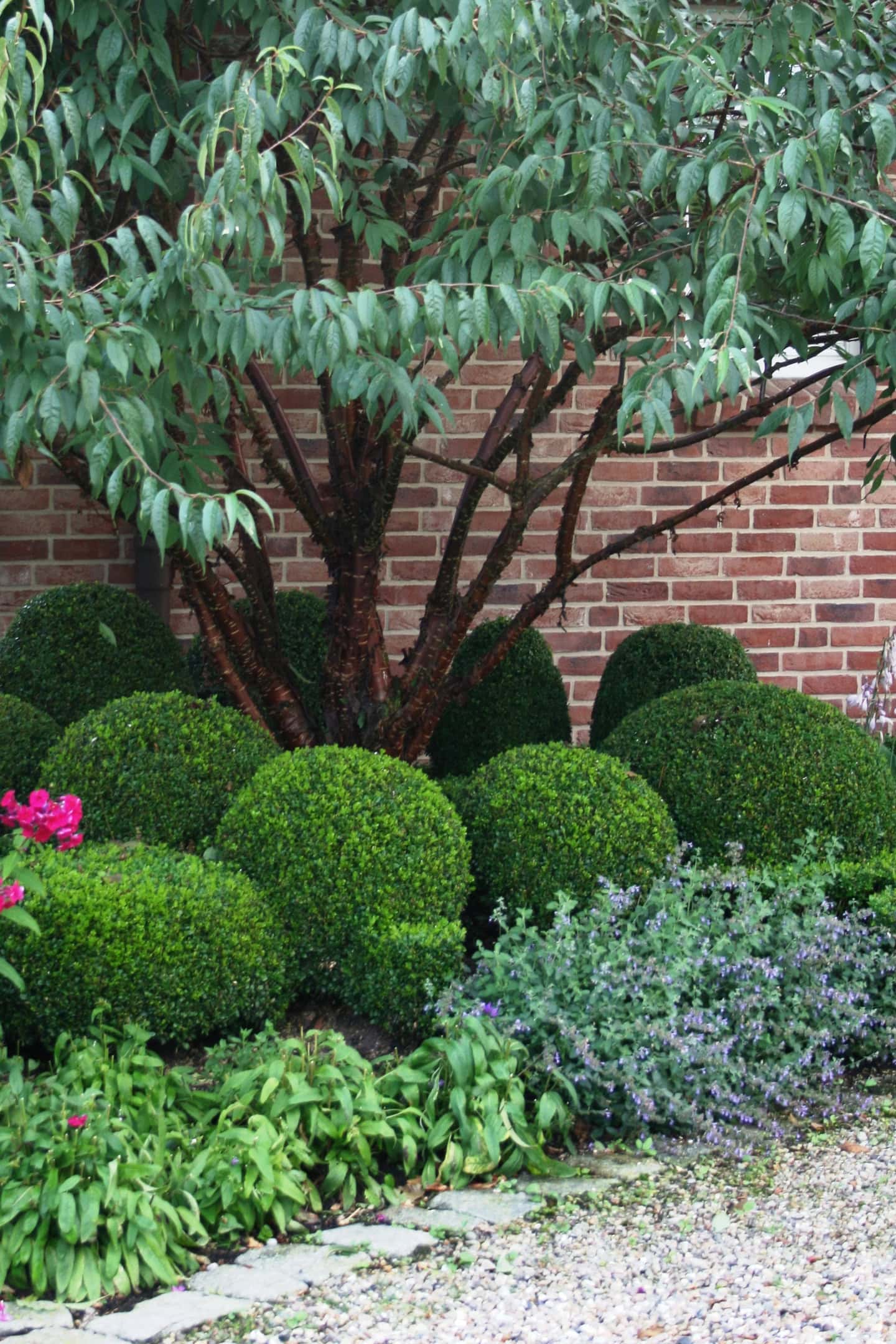
This approach works especially well for square or rectangular beds near patios or walkways.

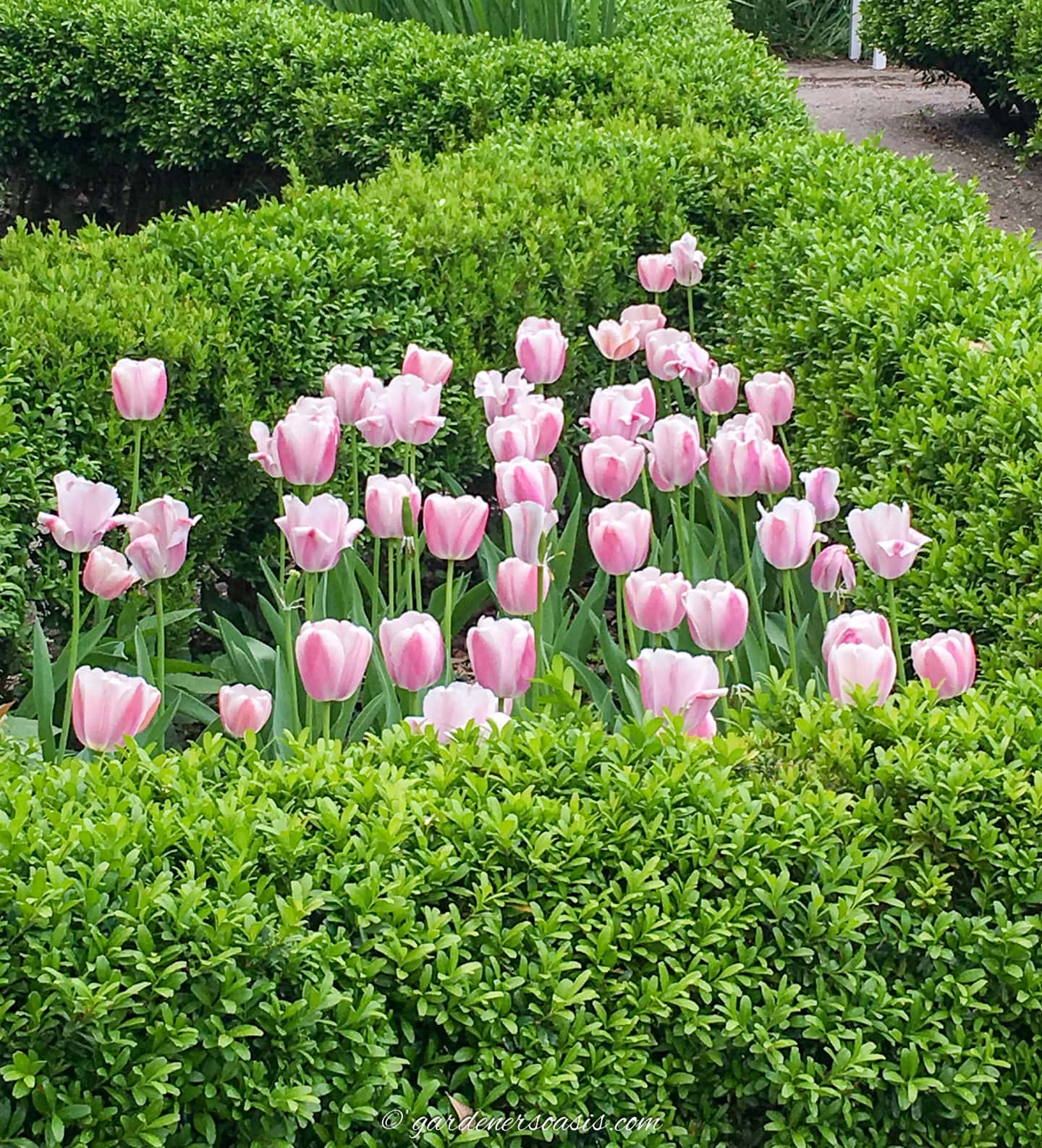
To make sure you have blooms all season, plant bulbs with the perennials in the middle of the bed. The boxwood hedge will help hide the dying leaves when they are finished.
2 | Use Curved Boxwood Hedges For Easier Maintenance

If you don’t like the idea of maintaining perfectly straight lines in your hedges, try using boxwoods to create a curved border instead.
The curved shape feels a little less formal and helps soften the edges of the garden.
And it’s easier to maintain since small trimming imperfections are much less noticeable along a curve.
Planting a boxwood hedge around taller shrubs that tend to flop (like Hydrangeas) helps to keep them upright.
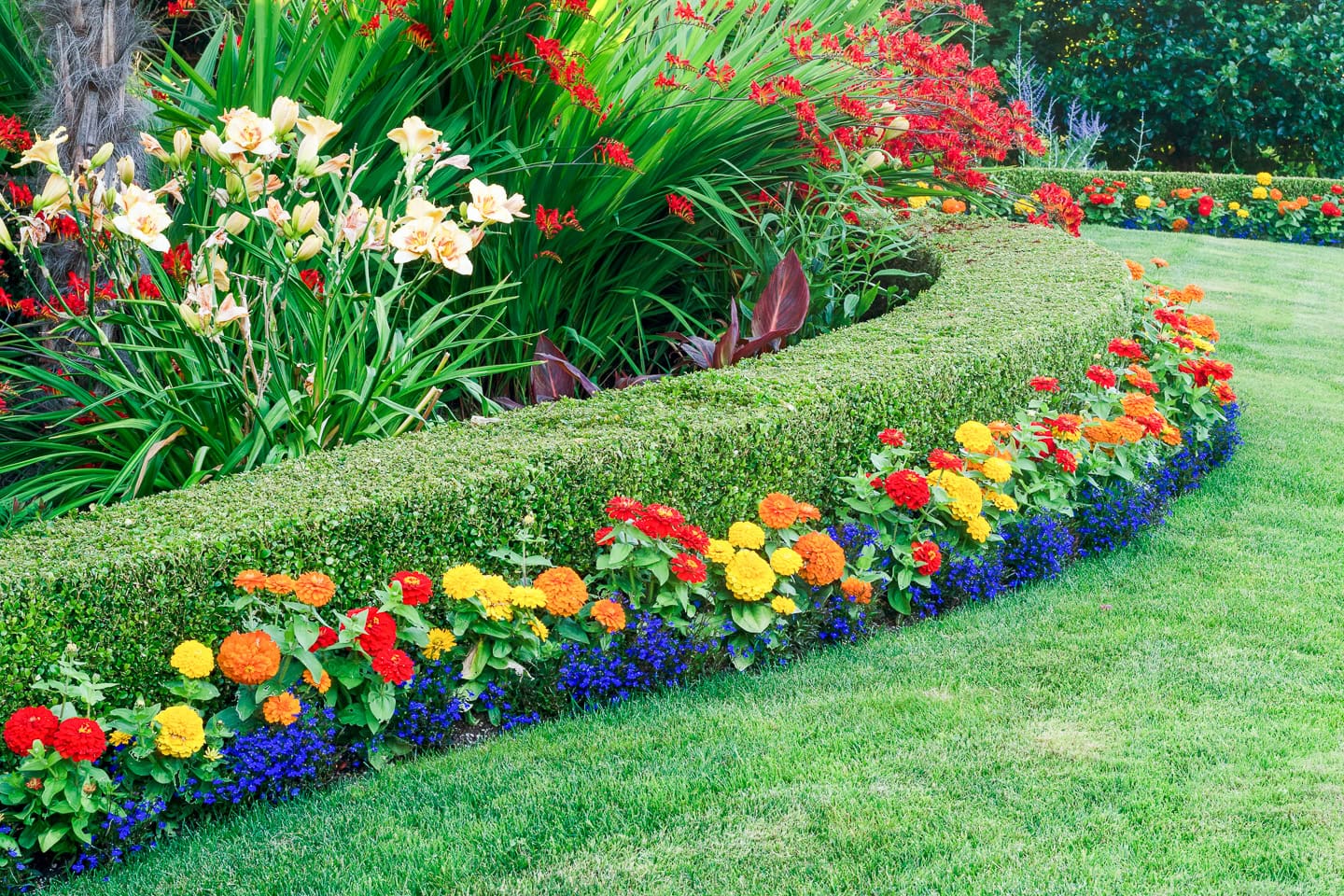
3 | Plant flowers in front for a softer look
Planting flowers both in front of and behind a boxwood hedge creates a layered garden border that looks interesting from multiple angles.
The boxwoods provide the structure while the flowers add seasonal color and texture. And soften the look of the hedge.
This combination helps keep the border looking full and attractive throughout the growing season.
4 | Add Structure to Flower Beds
© elenarostunova – stock.adobe.com Boxwoods can also be used to add shape and structure inside the garden bed as well.
Using round ball shapes inside of a square garden bed adds contrast and interest.
For a minimalist look, just add mulch or gravel around them.
Or plant flowers in between them for more color.
In the picture, the hedge around the garden bed isn’t boxwood. But you could easily do this using boxwood for both the hedge and the balls in the middle. Using 2 different varieties with different leaf colors (one for the hedge and one for the balls) really makes the balls stand out.
5 | Use Boxwoods as Ground Cover Under Trees

© EDEN – stock.adobe.com Plant low boxwood shrubs beneath small ornamental trees to fill the bare space that often forms under the canopy.
Their dense evergreen foliage creates a tidy base layer that looks good year-round and helps visually anchor the tree in the landscape.
Keeping them trimmed into rounded shapes adds structure and makes the entire planting feel more intentional.
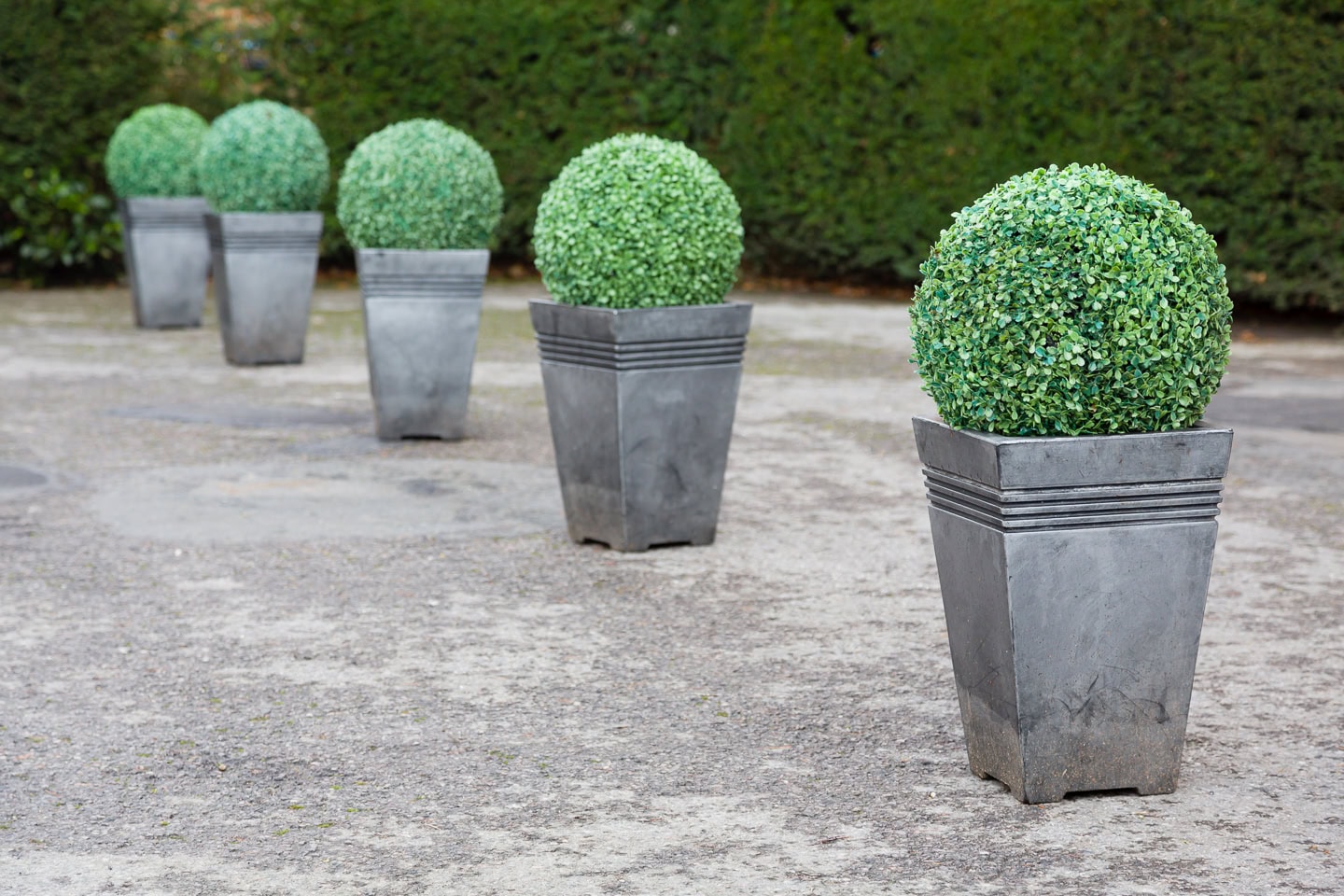
6 | Frame Walkways or Entrances With Potted Boxwood Topiaries
Boxwood spheres in matching containers instantly add a formal touch to patios, walkways, and front entrances.
Using pots makes this idea easy to recreate in small gardens or on a porch where in-ground planting isn’t possible.
Line up two or three containers along a walkway or doorway for a simple but elegant boxwood display.
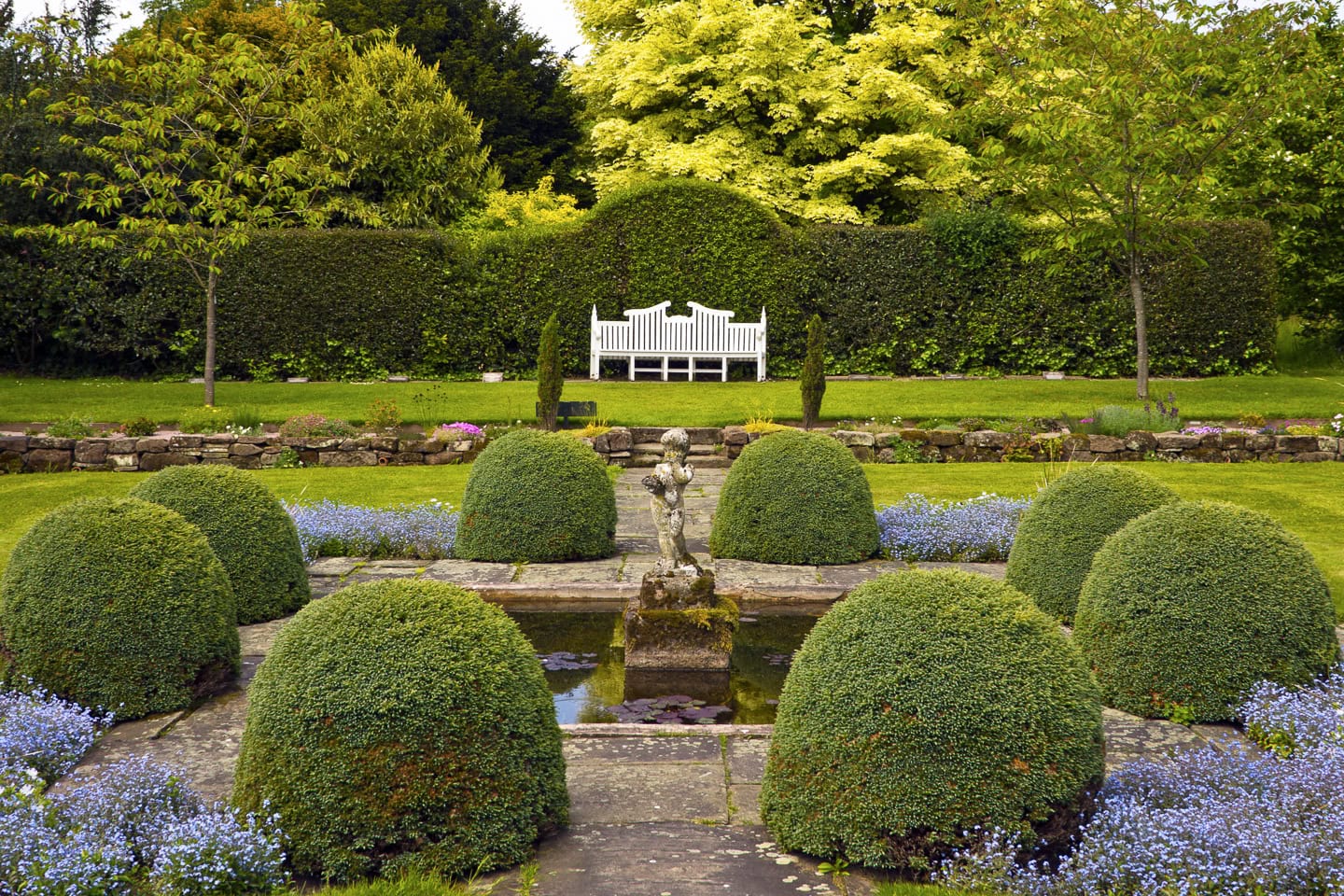
7 | Create a Symmetrical Garden Layout
© Debu55y – stock.adobe.com Plant individual boxwood shrubs evenly spaced throughout a garden bed to create a structured, symmetrical layout.
The repeating rounded shapes add rhythm to the design and naturally draw attention to focal points such as fountains, statues, or bird baths.
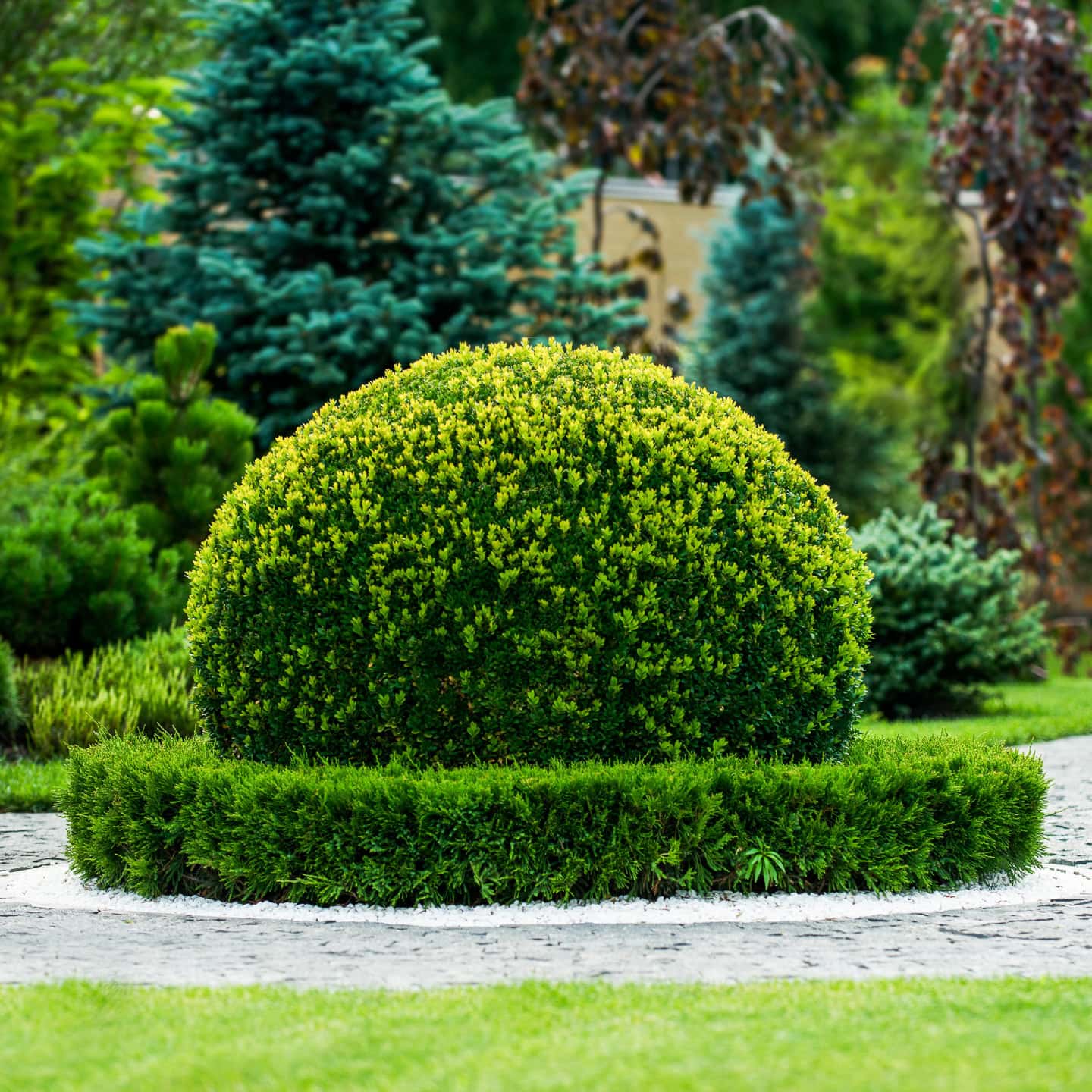
8 | Highlight a Boxwood Focal Plant With a Surrounding Evergreen Hedge

Use a large boxwood shrub as the centerpiece of a planting and frame it with a low evergreen hedge around the base.
The smaller hedge helps define the space while drawing attention to the larger boxwood in the middle.
Combining different evergreen shapes and heights like this creates a layered focal point that stays structured and attractive all year long.
9 | Line a Formal Pathway

© XtravaganT – stock.adobe.com Plant boxwoods in a row along both sides of a walkway to clearly define the path through the garden.
The low evergreen hedge creates a clean edge that guides visitors along the route while adding structure to the surrounding plantings.
Keeping the hedge neatly trimmed emphasizes the shape of the path and gives the garden a more finished, formal look.
10 | Create a Modern Border
© Александр Беспалый – stock.adobe.com Instead of using a continuous hedge, try planting evenly spaced rounded boxwoods along the edge of a garden bed.
The simple shapes and clean spacing give the border a more modern look while still clearly separating the lawn from the planting area.
Keeping the shrubs trimmed into neat spheres helps maintain that structured, contemporary feel.
11 | Use Boxwoods for a Softer Lawn Edge
You can still use boxwoods along the edge of a garden bed even if you prefer a less structured look.
Instead of trimming them into a tight hedge, you can allow the shrubs to keep a more natural rounded shape.
This still defines the edge of the bed but gives the garden a more relaxed feeling.
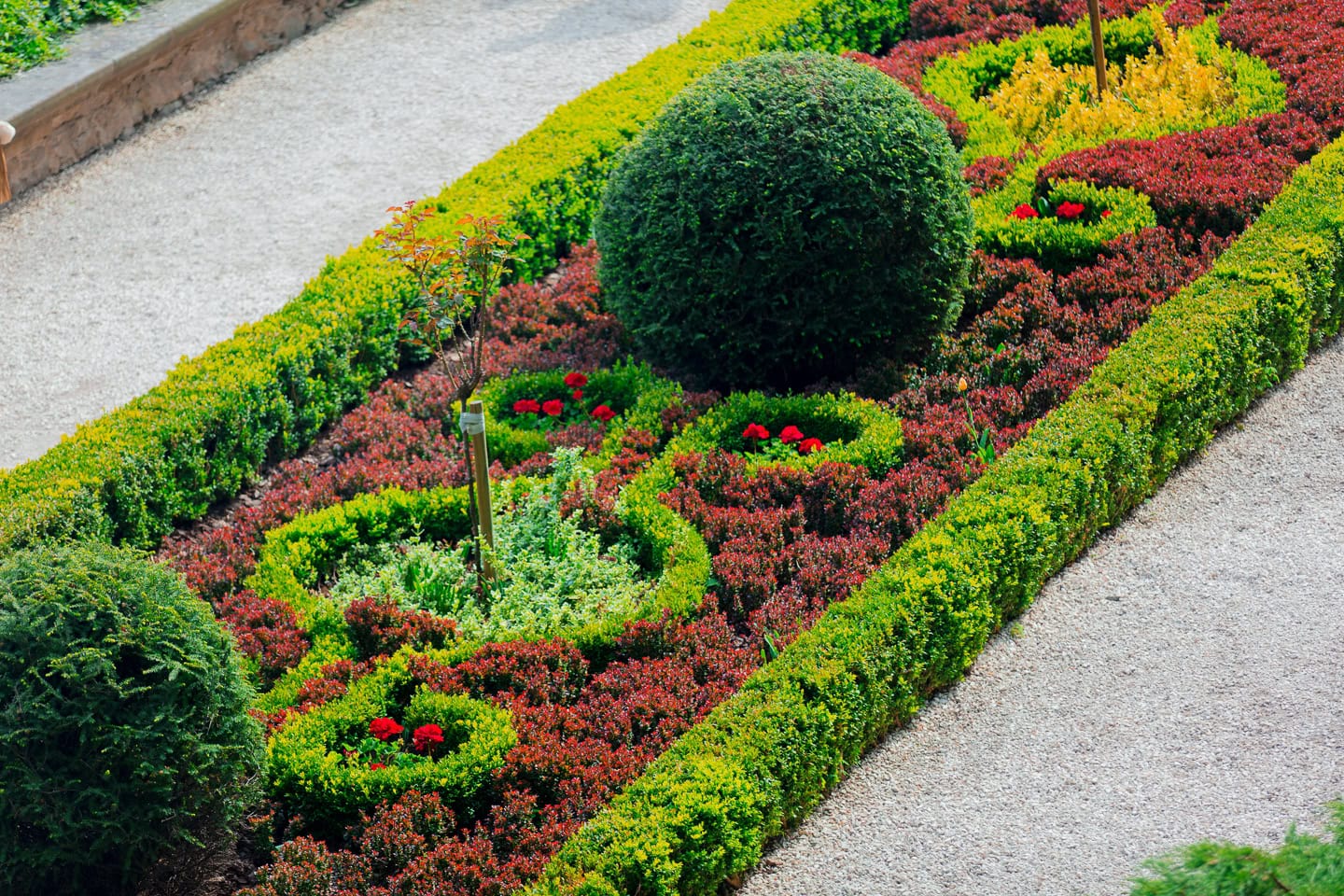
12 | Create Decorative Patterns
Boxwoods can be planted in curved or geometric patterns that add visual interest even when flowers aren’t blooming.
The evergreen structure keeps the design visible all year long while seasonal plants can be added inside the shapes for color.
I love this idea as edging down the side of the driveway or along the side of the house.
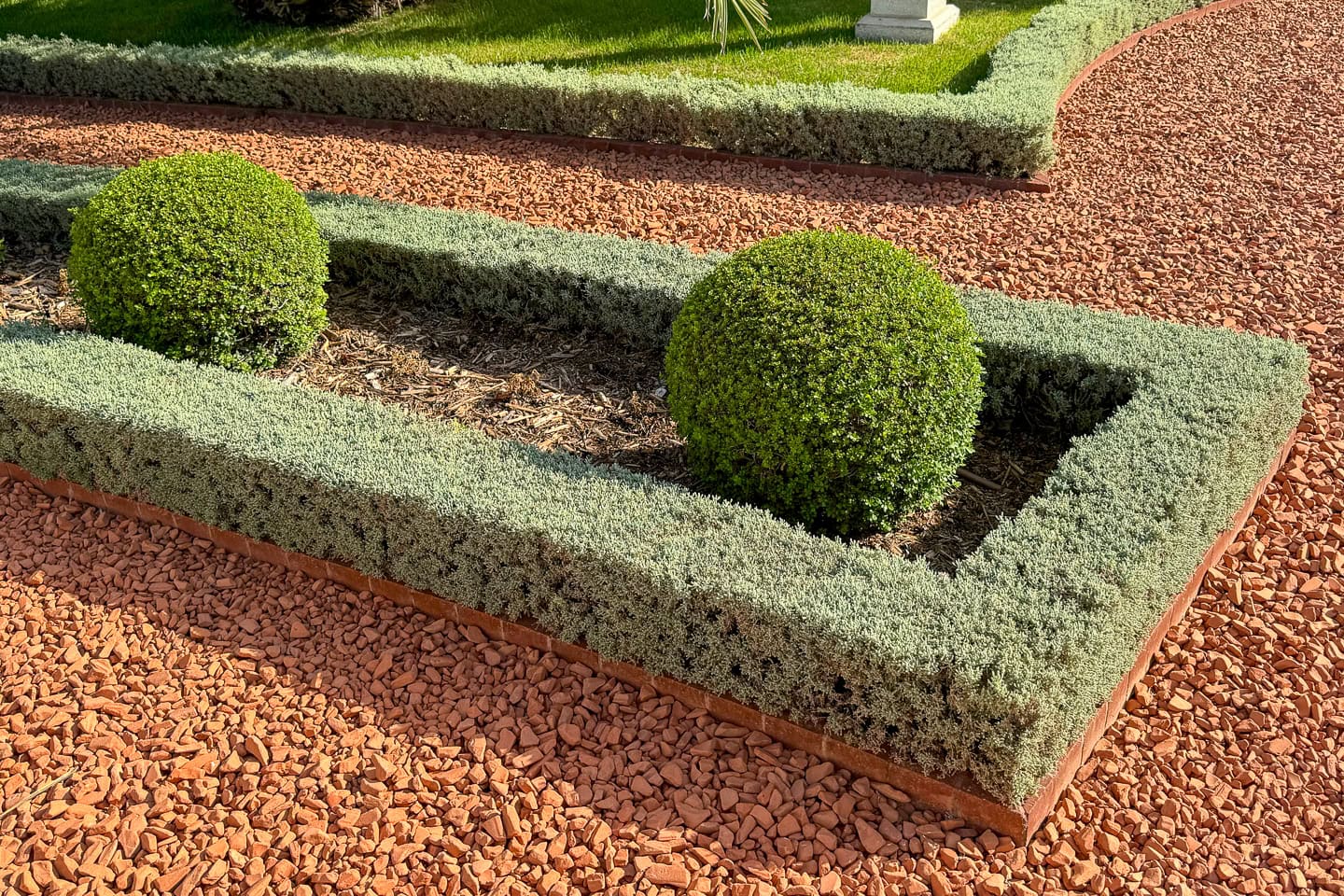
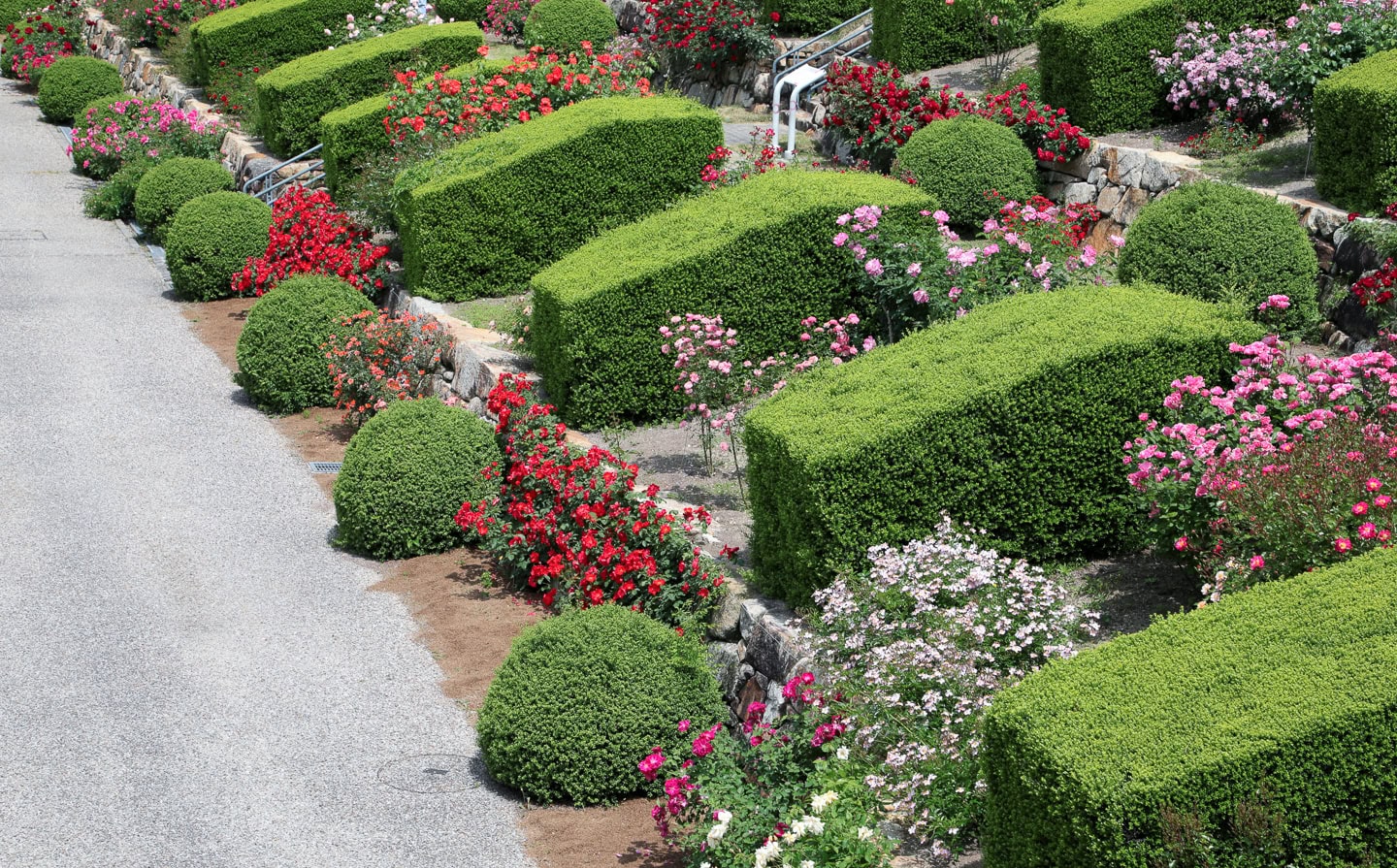
13 | Combine Simple Boxwood Shapes to Create Garden Structure

© tenboh siyaraku – stock.adobe.com If you don’t want to go to all the work of creating decorative patterns, you can trim boxwoods into simple shapes like spheres and low rectangular hedges to add evergreen structure to your garden.
Repeating these basic shapes creates visual contrast and interest while still keeping the design clean and cohesive
To get thick rectangular hedges like this one, plant 3 to 5 boxwoods close together in a row. They will grow together and look like one plant.
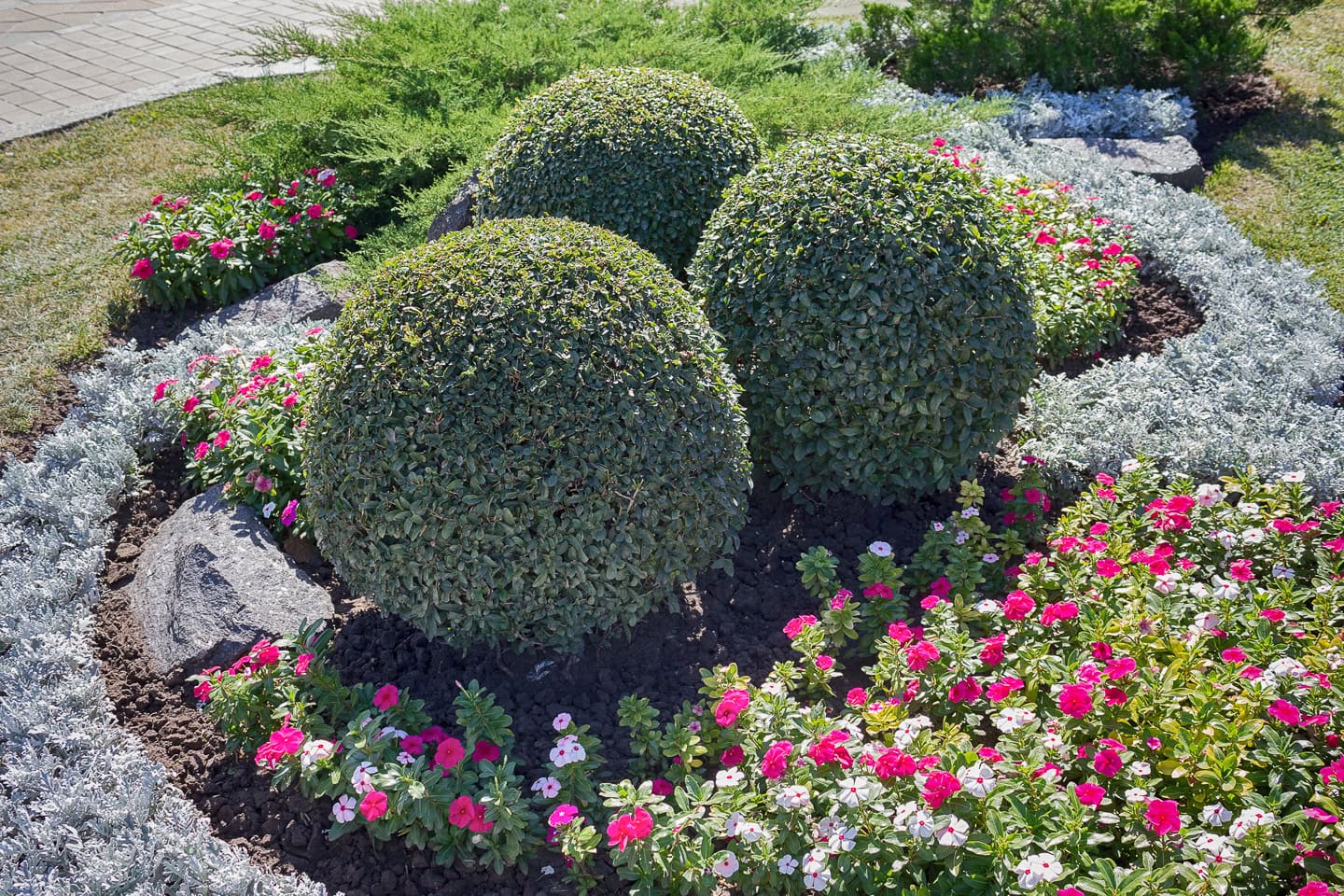
14 | Create a Focal Point With a Trio of Rounded Boxwoods
Plant three rounded boxwood shrubs close together to create a simple focal point in the garden.
Just like in interior decorating, grouping items in threes tends to look more balanced and visually interesting than using a single piece.
The repeated shapes give the planting more presence and add structure to the surrounding bed, making it a natural spot for the eye to settle.

Clipping the balls into different sizes adds even more interest to the grouping.
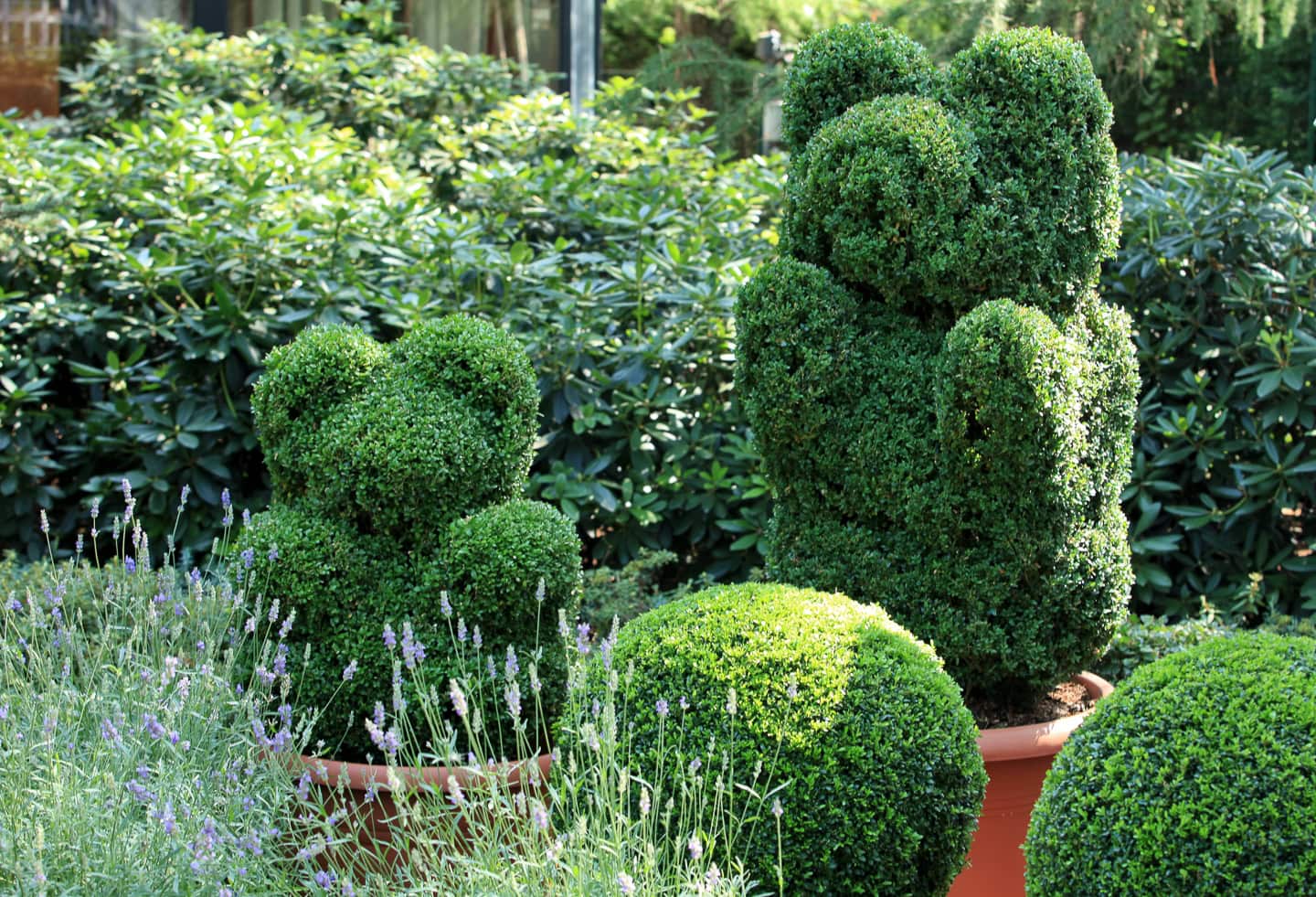
15 | Add Character With Boxwood Topiary Shapes

If you are artistically-inclined, you can cut boxwood shrubs into sculptural shapes to add personality and structure to garden beds.
Topiary forms like spirals, columns, or even playful shapes (like these bears) act as living focal points within the landscape.
I love the idea of putting them in large containers, so you can move them around if you want to change things up.
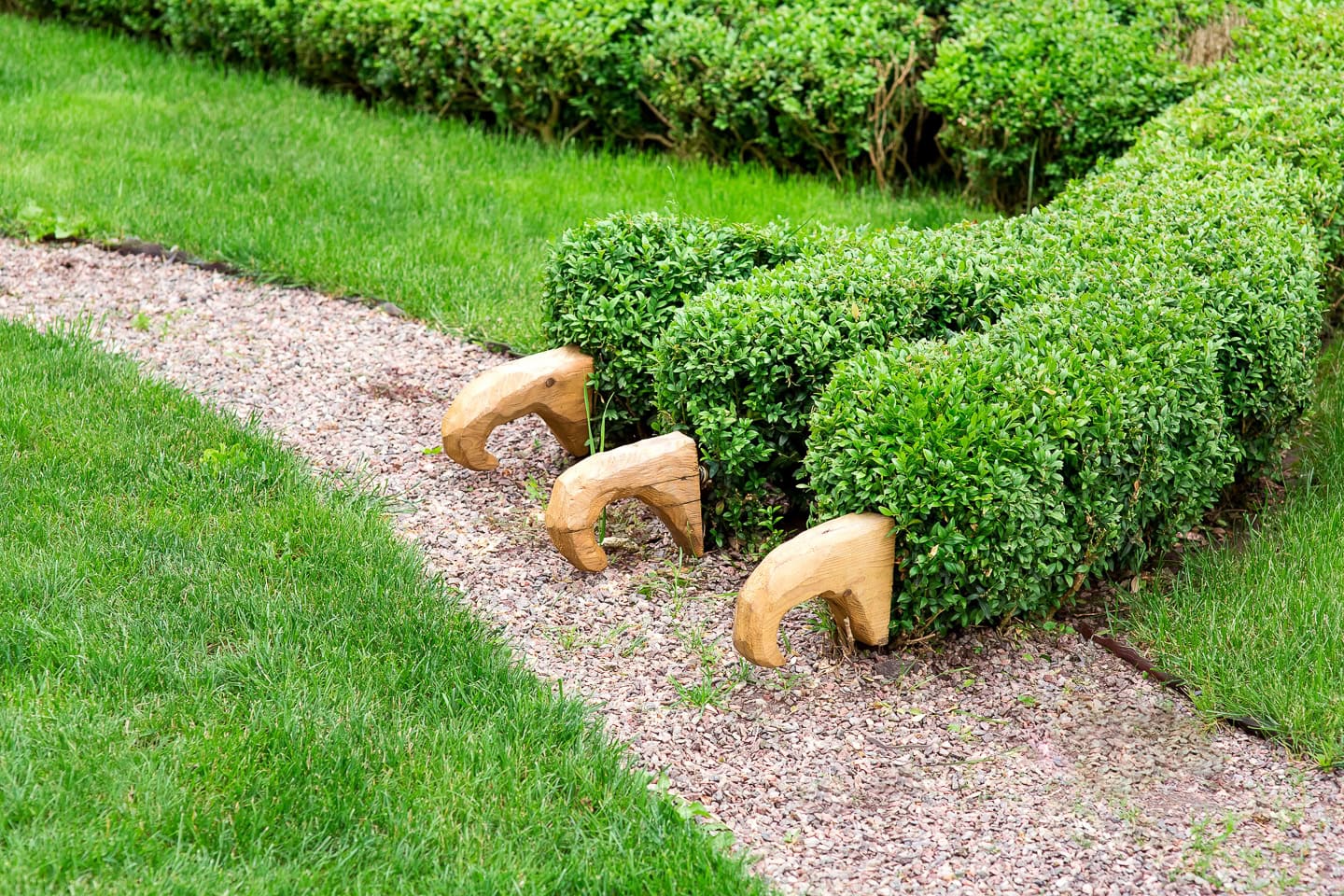
16 | Get Creative
© Александр Беспалый – stock.adobe.com But Boxwoods don’t always have to be trimmed into the usual spheres or cute animal shapes.
With a little creativity, you can make them into something more unexpected to add personality to your garden. And still keep the structure that boxwoods are known for.
(This claw shape would be awesome for Halloween, but I think it might scare some of the neighbors!)
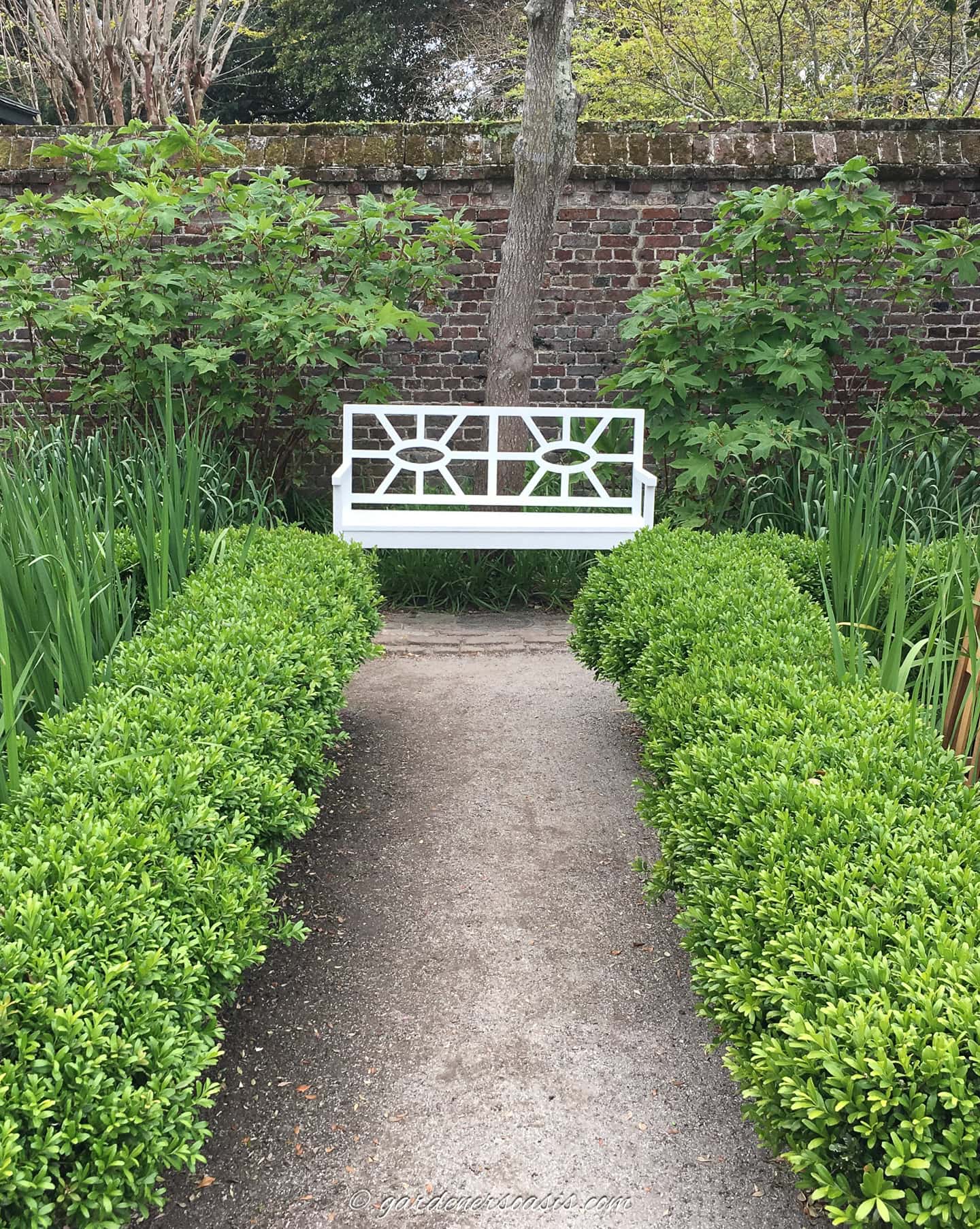
17 | Create Leading Lines Toward a Focal Point

Plant low boxwood hedges along both sides of a path so the lines naturally guide the eye toward a focal point at the end, such as a statue, fountain, or garden bench.
The clean evergreen edges help emphasize the direction of the walkway and make the focal element feel more intentional.
Using boxwoods this way adds structure to the garden and subtly directs how visitors move through the space.
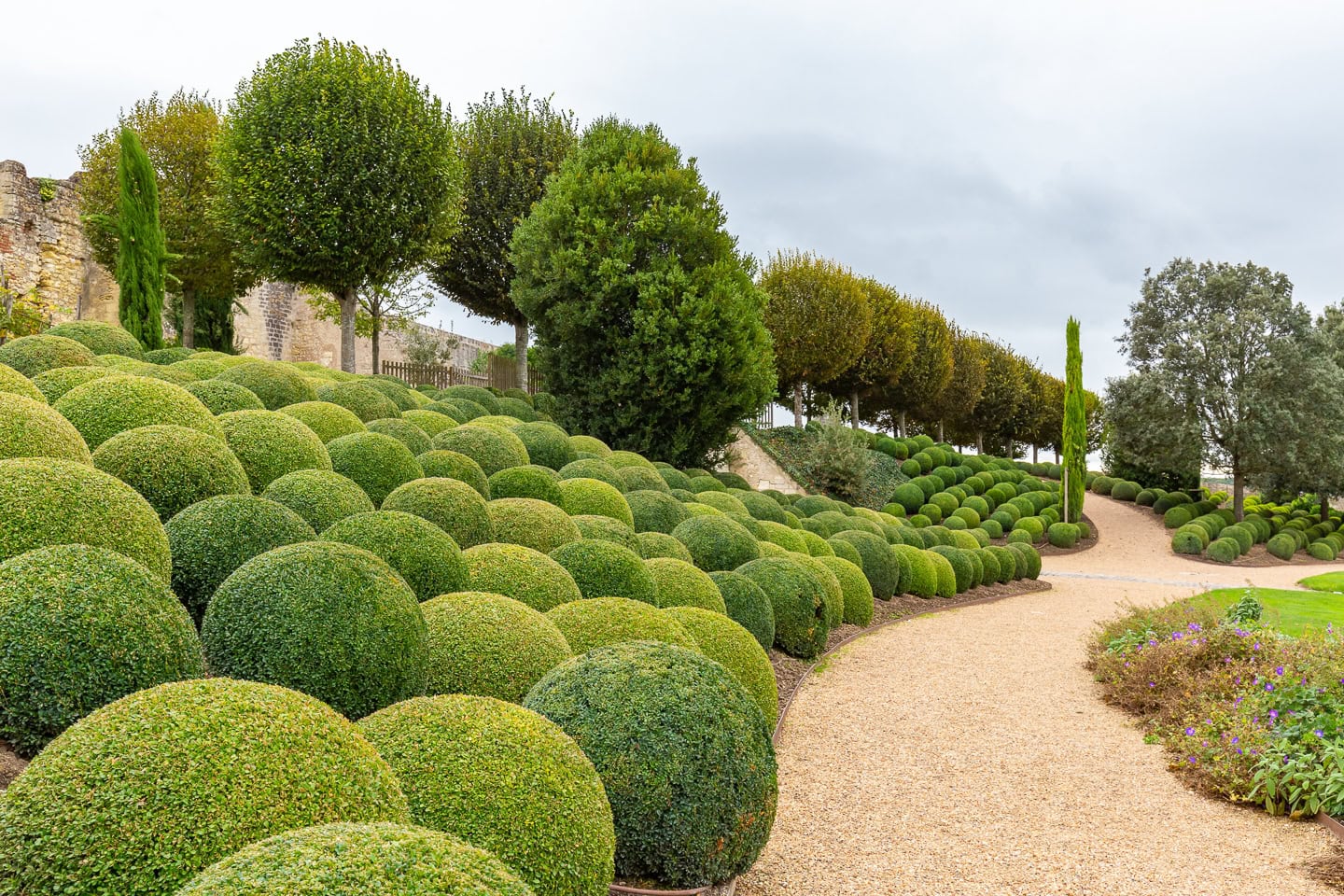
18 | Plant Boxwoods on a Slope to Help With Erosion
© Hilda Weges – stock.adobe.com If you’re looking for something to plant on a slope, try a mass grouping of Boxwoods.
Their root systems help hold the soil in place while the shrubs themselves create an attractive repeating pattern across the hillside.
Planting them in staggered rows helps to stabilize the slope while still looking intentional.
If you want to keep the boxwoods trimmed, make sure your slope isn’t so steep that you can’t get to them.
19 | Replace a Porch Railing With a Boxwood Hedge

© Barbara Helgason – stock.adobe.com For a different approach to a front porch railing, try using a low boxwood hedge instead.
It creates a natural extension of the garden while still marking the edge of the porch.
And because boxwoods can be kept fairly low with regular trimming, the hedge won’t grow tall enough to block the view.
Most areas have building codes that require railings if your porch is over a certain height. So this approach only works with porches that aren’t far off the ground.
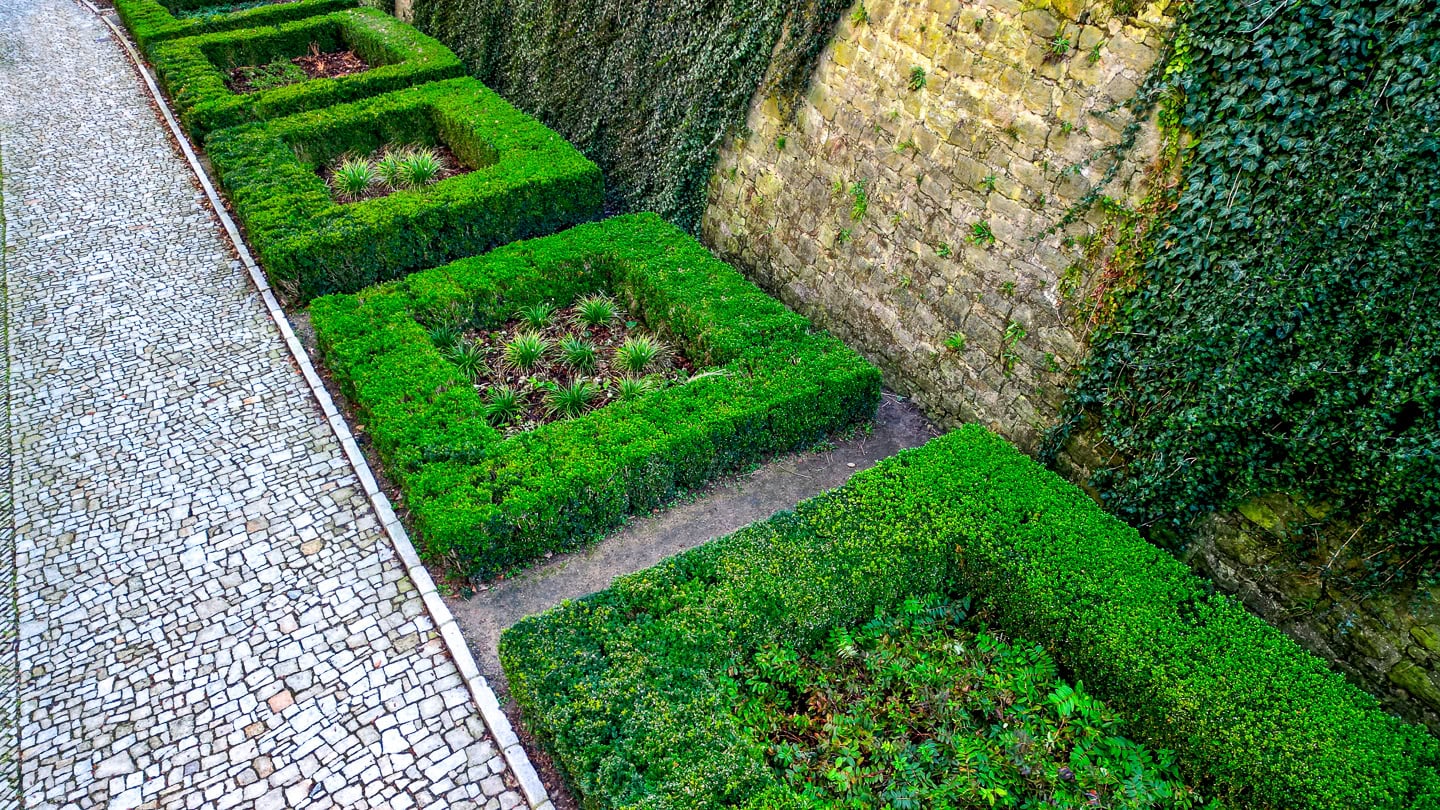
20 | Fill Narrow Spaces With Small Boxwood Shrubs

© Michal – stock.adobe.com Boxwoods are also a good option for long, narrow planting areas where bigger shrubs would feel crowded.
Using them to define small sections or shapes helps fill the space while still keeping the garden looking neat and balanced.
Just choose smaller varieties so the plants stay in proportion with the area.
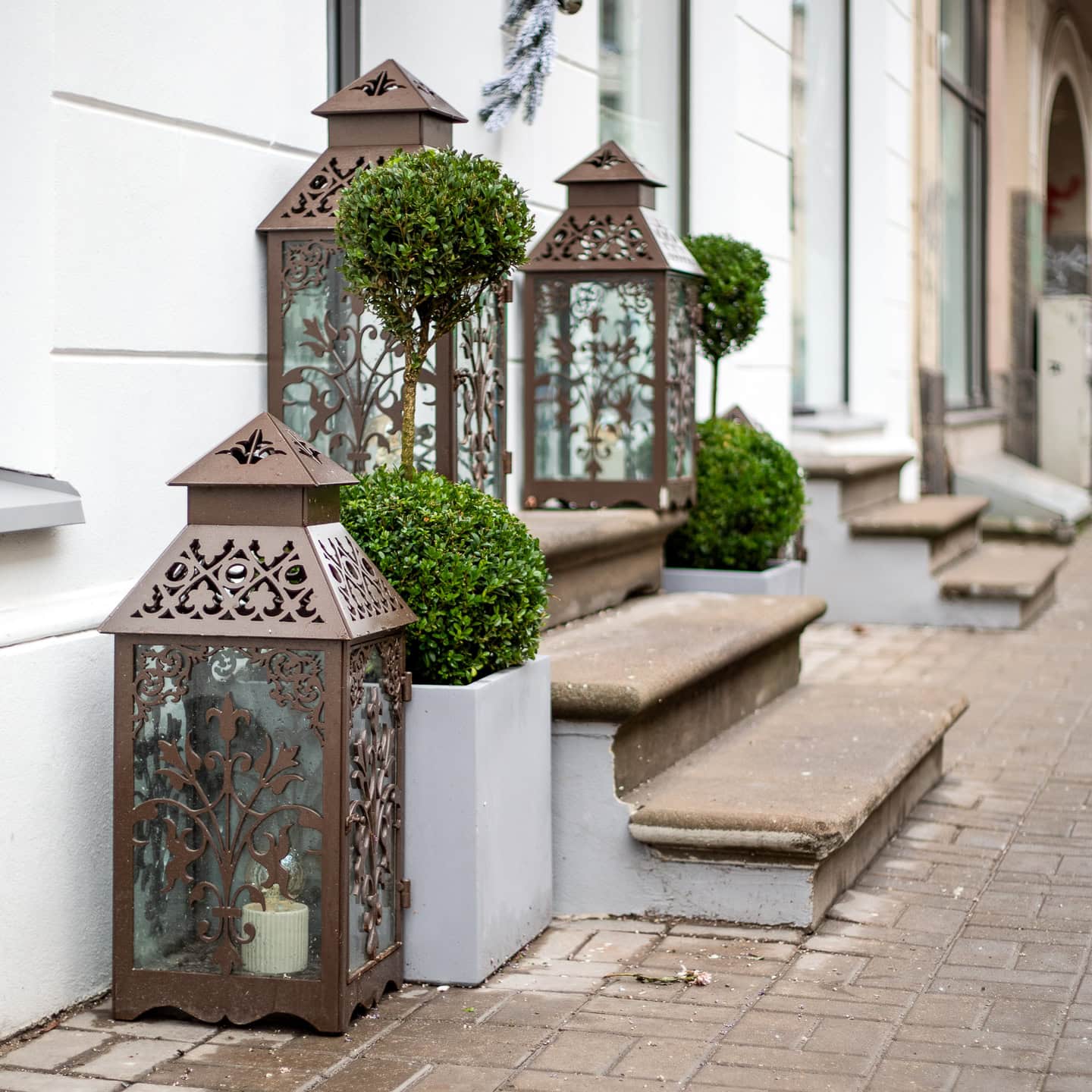
21 | Decorate a Front Porch With Potted Boxwoods
© STOATPHOTO – stock.adobe.com Boxwood topiaries in containers are an easy way to add structure to a front porch or entryway.
Because boxwoods are evergreen perennials, they provide year-round greenery without needing to be replanted every year like annual flowers.
You can place them near steps, seating areas, or doorways to frame the space and then change out the surrounding decorations as the seasons change.
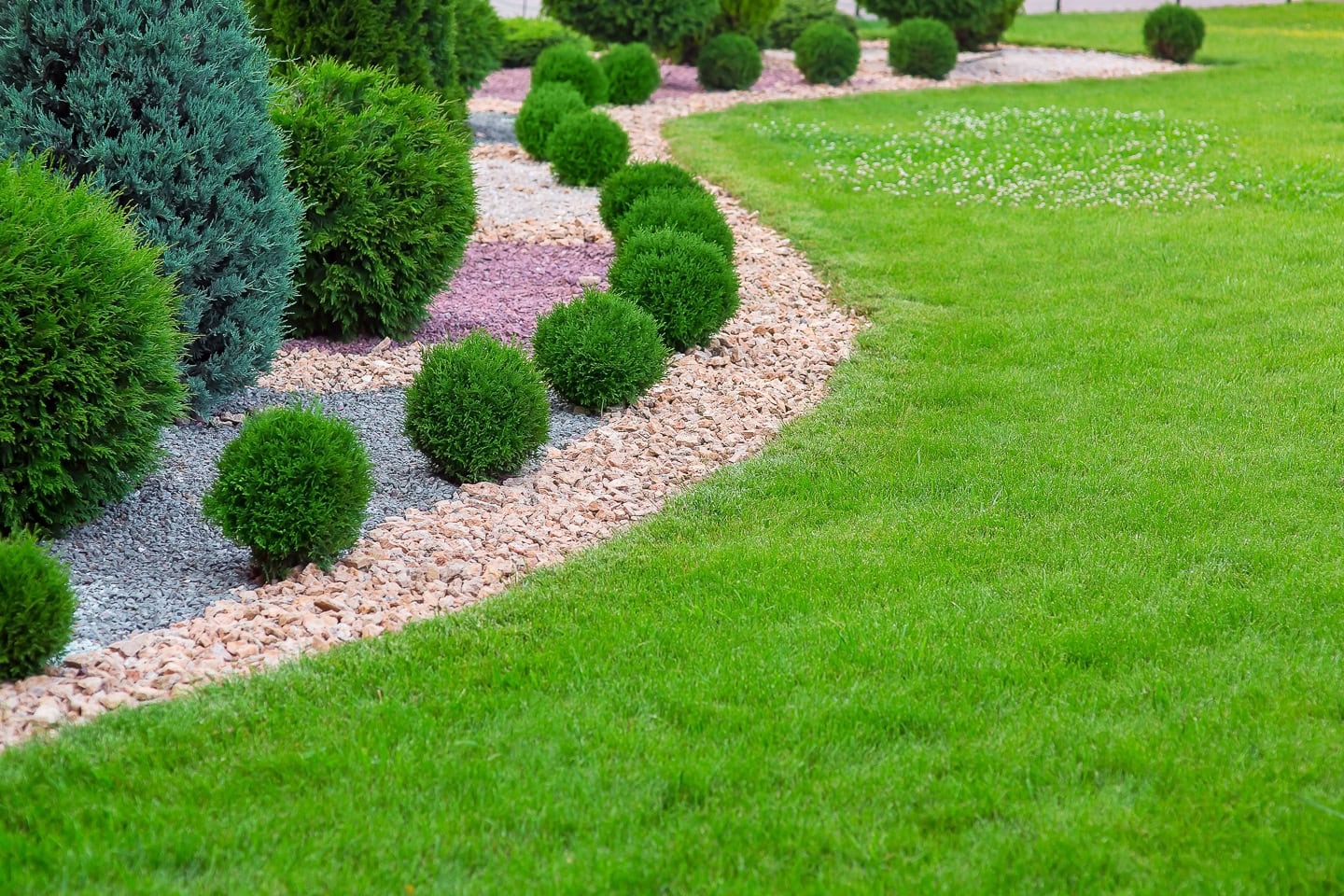
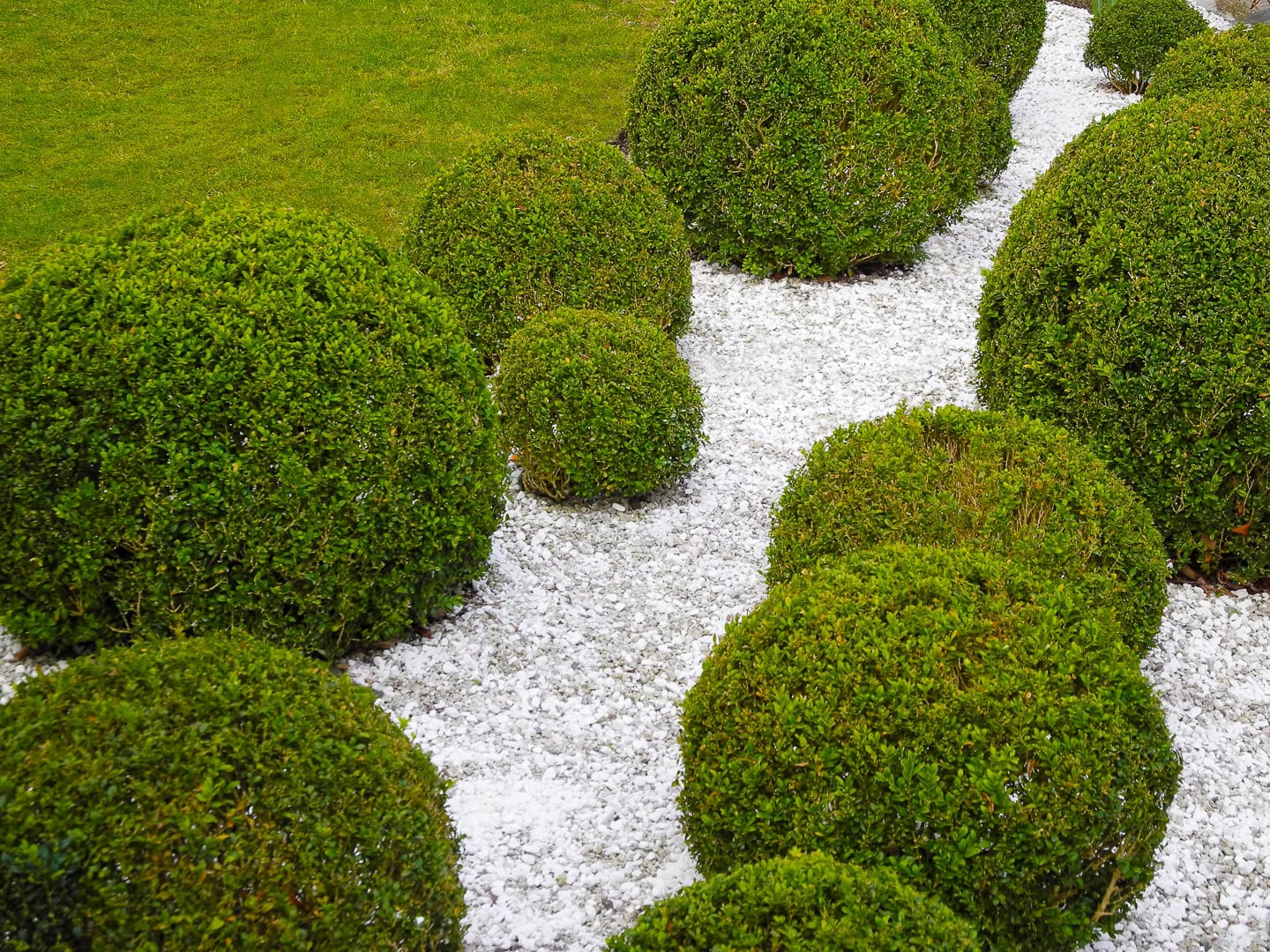
22 | Use Boxwood Spheres for a Clean, Modern Garden Look

Using simple boxwood spheres trimmed to different sizes and placed throughout a gravel or stone bed creates a clean, modern garden look.
The mix of sizes adds interest while the repeating shapes give the space structure without needing a lot of plants.
And because much of the area is covered with gravel (or mulch), there’s a lot less weeding and maintenance to deal with.
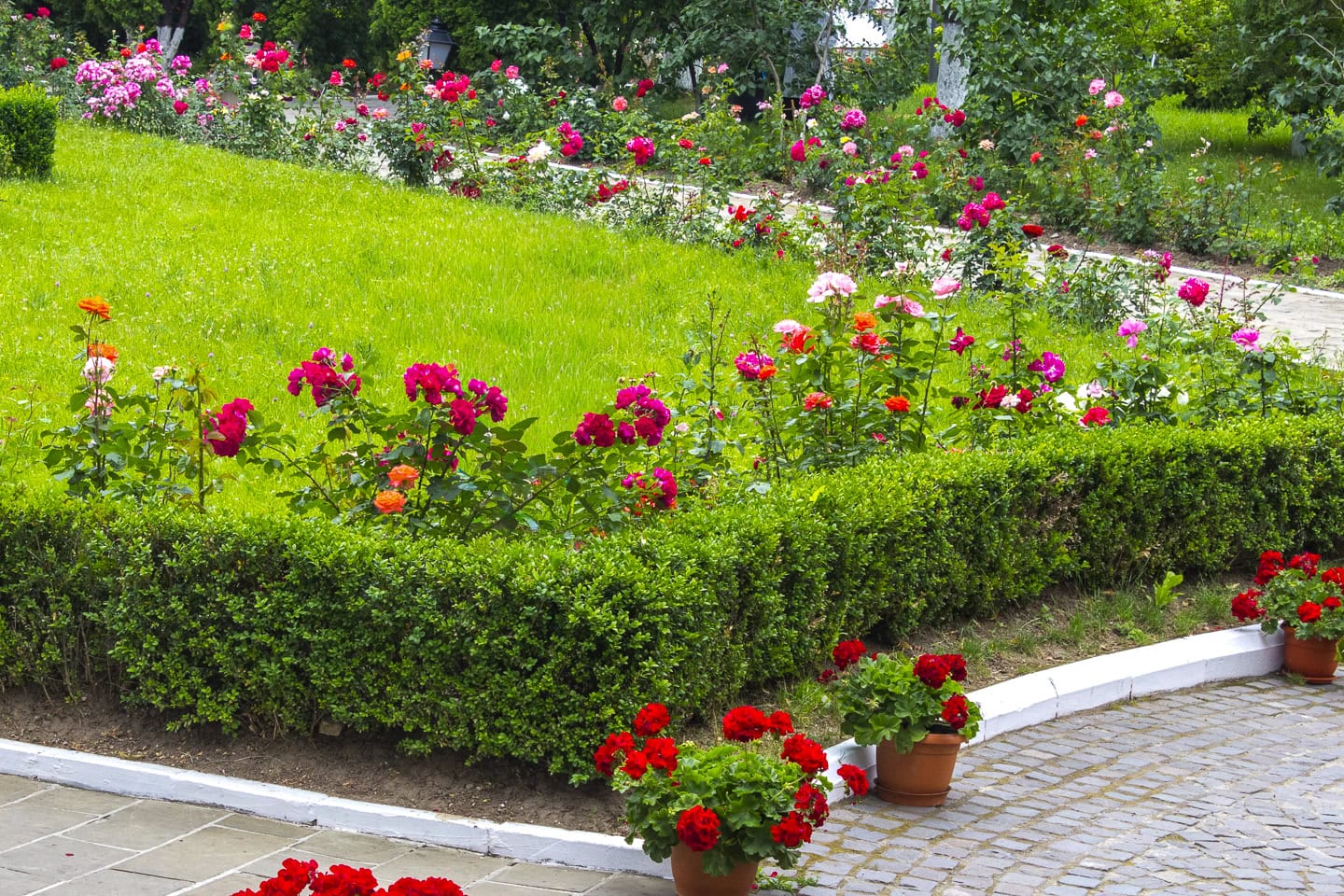
23 | Combine Boxwoods and Roses for Lawn Edging
A low boxwood hedge combined with roses creates a beautiful border around the edge of a yard.
The boxwoods provide the neat structure while the roses add color and height behind them.
They also help hide the bare lower stems of the roses, keeping the border looking full from top to bottom.
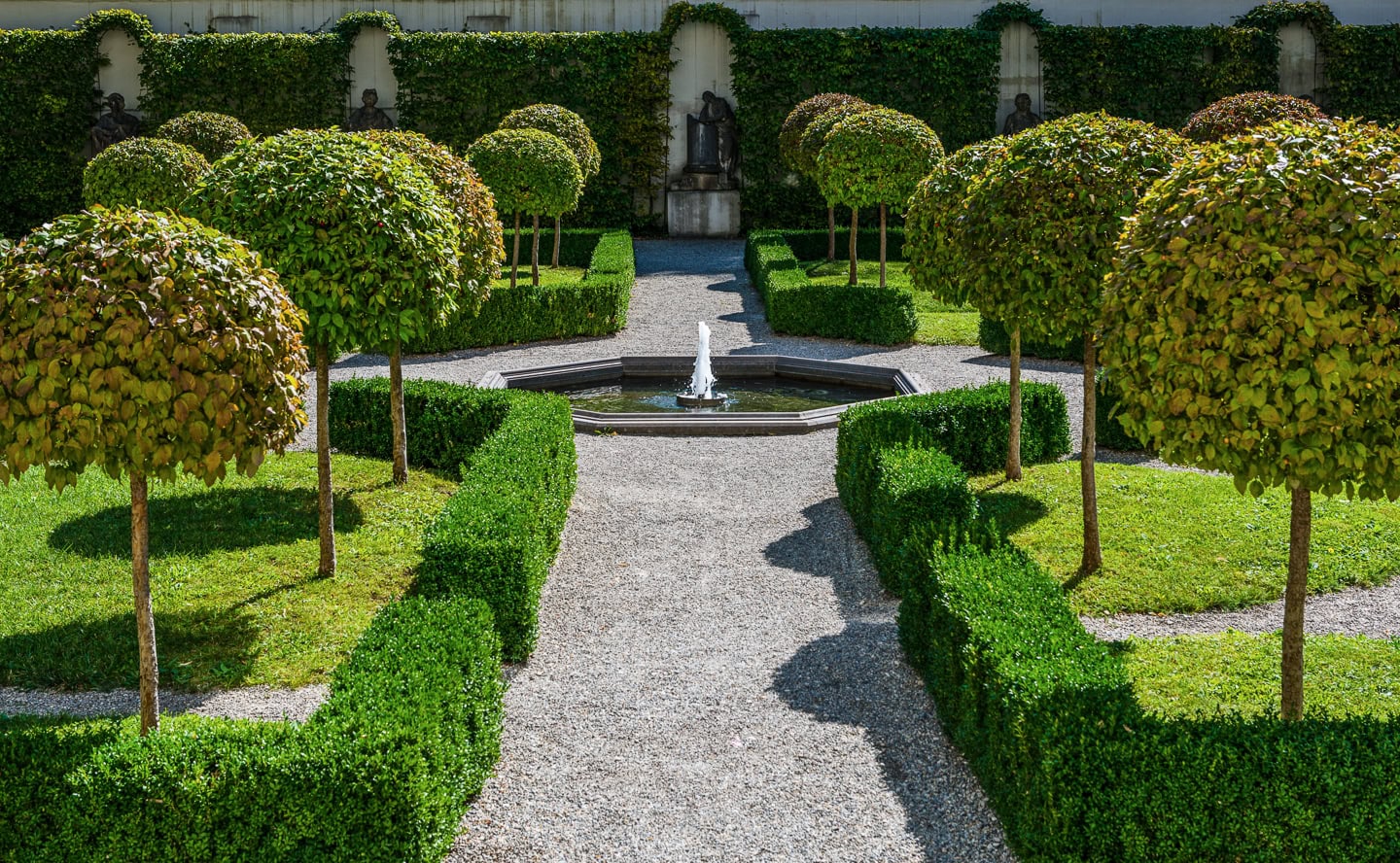
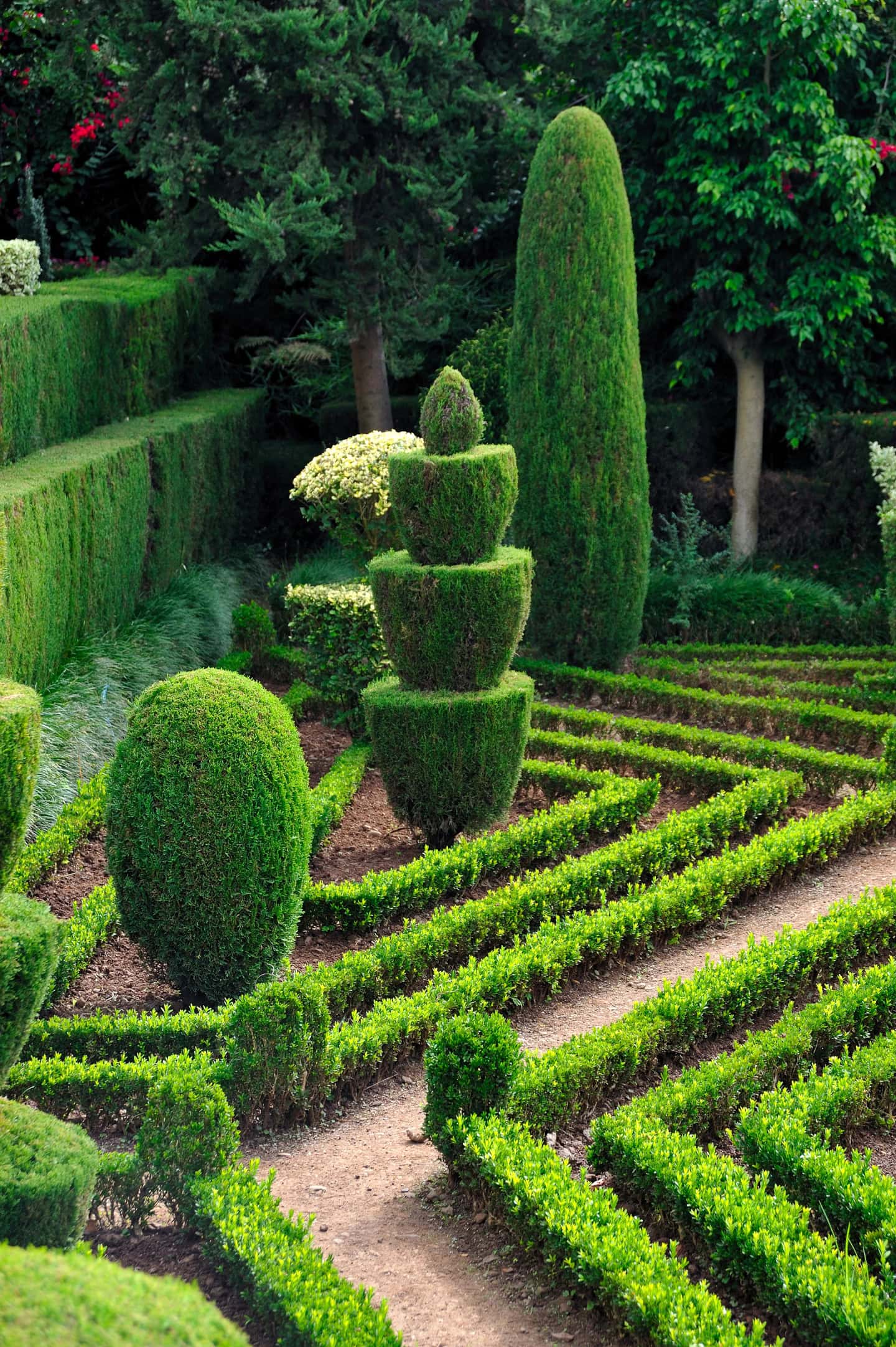
24 | Create a Formal Garden With Boxwood Hedges

And in case you thought I wasn’t going to mention the obvious…
Boxwood hedges are a classic way to create the structured layout used in traditional formal gardens.
Low hedges can be used to divide the space into geometric sections while taller topiary shapes add height and focal points.
Even in a smaller yard, a few boxwood hedges arranged in simple shapes can recreate the same formal look.
Related: Geometric Formal Garden Design Ideas




What to read next
Have comments or questions about our boxwood landscaping ideas? Tell us in the section below.