
Dry Shade Plants (15 of the Best Perennials and Shrubs For Dry Shade Gardens)
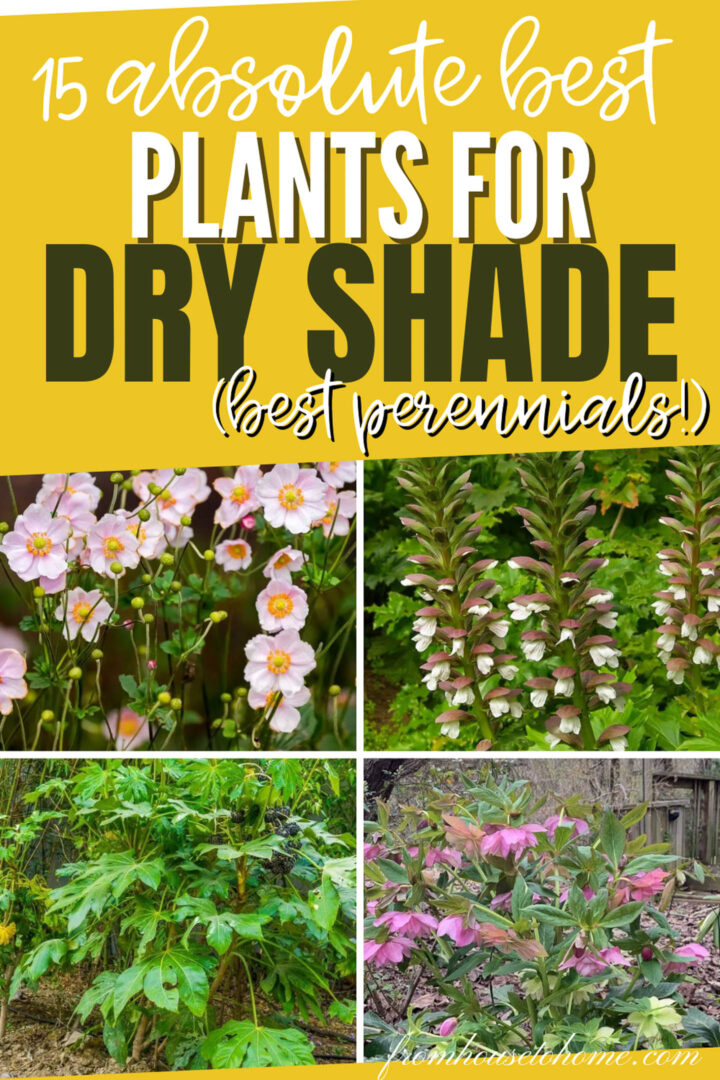
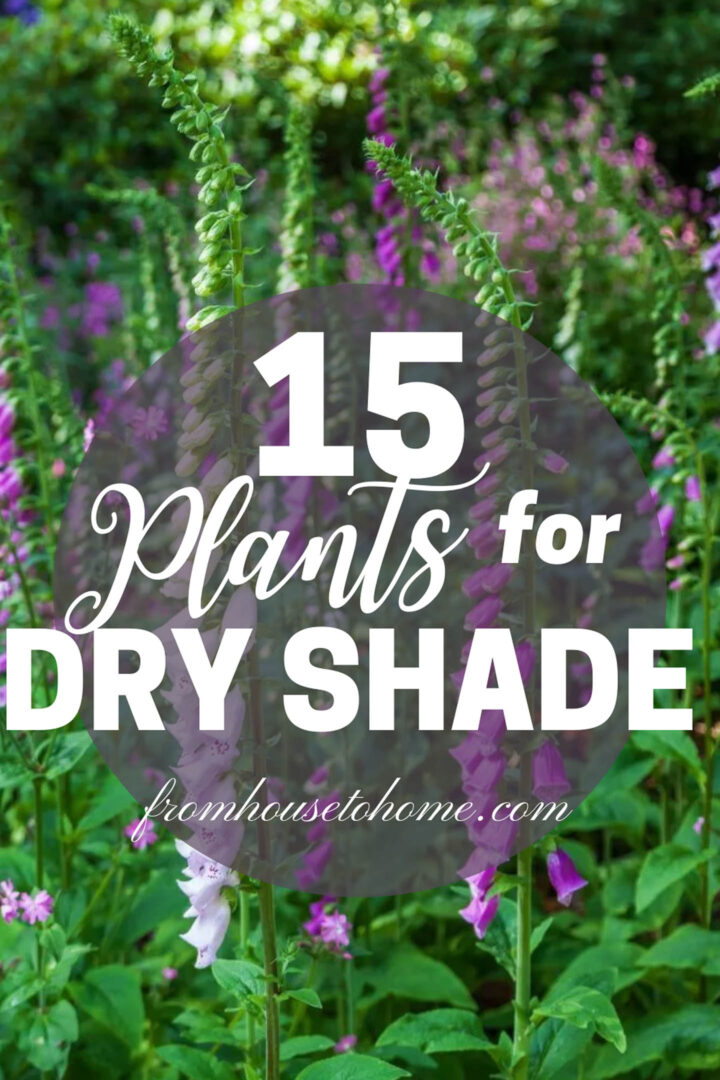
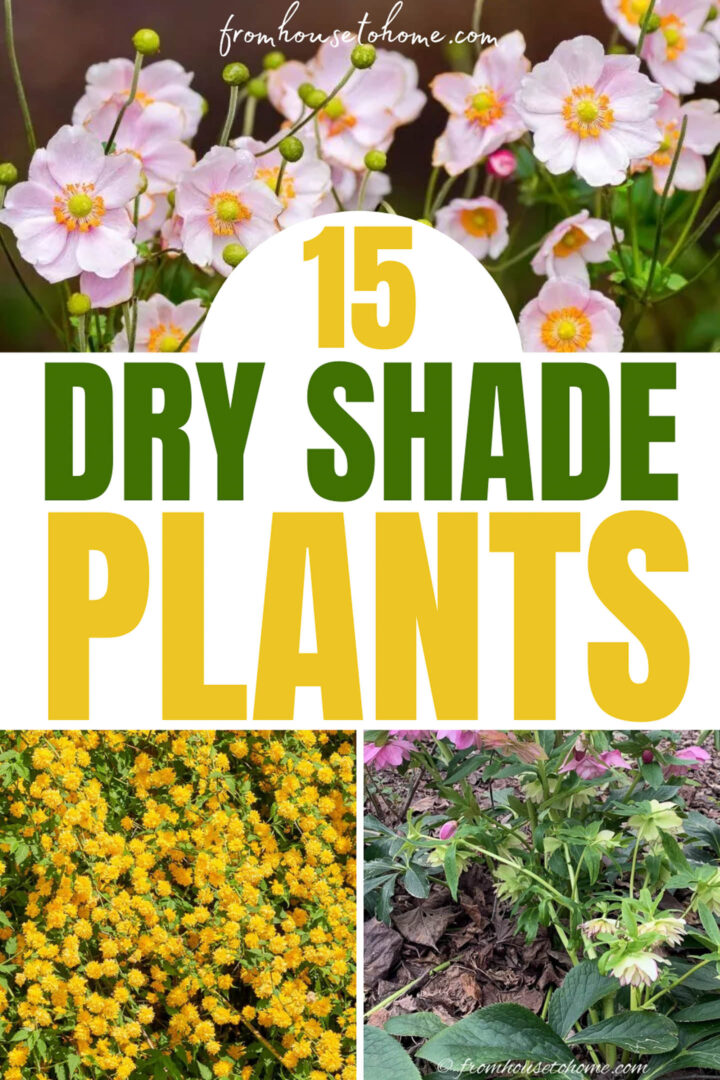
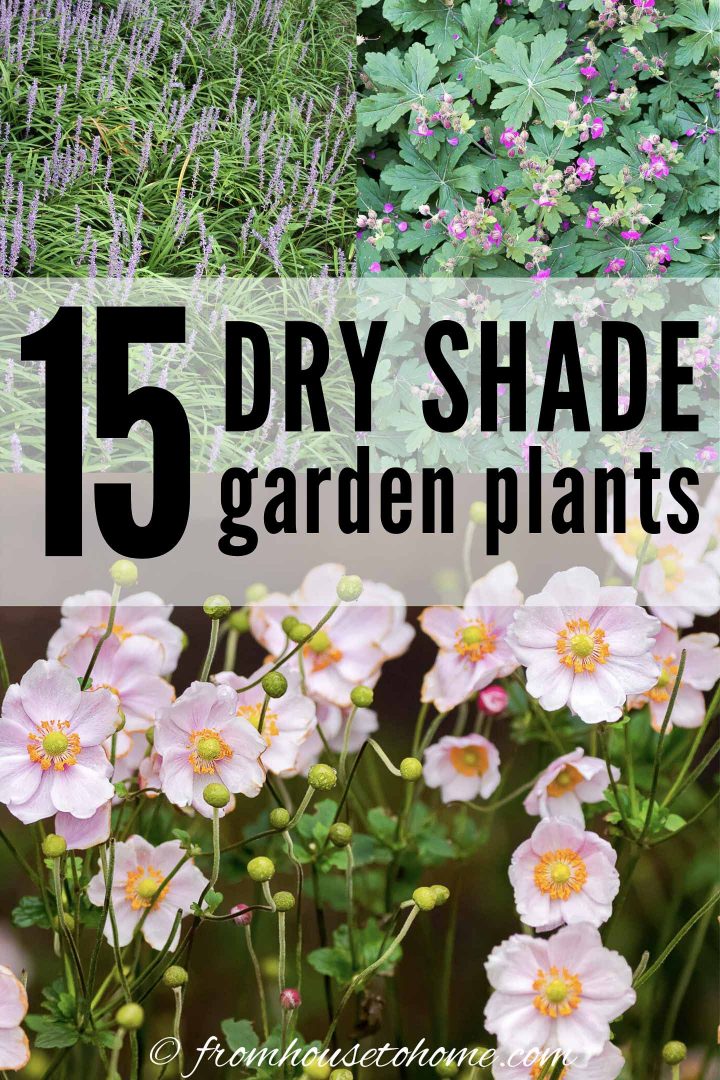
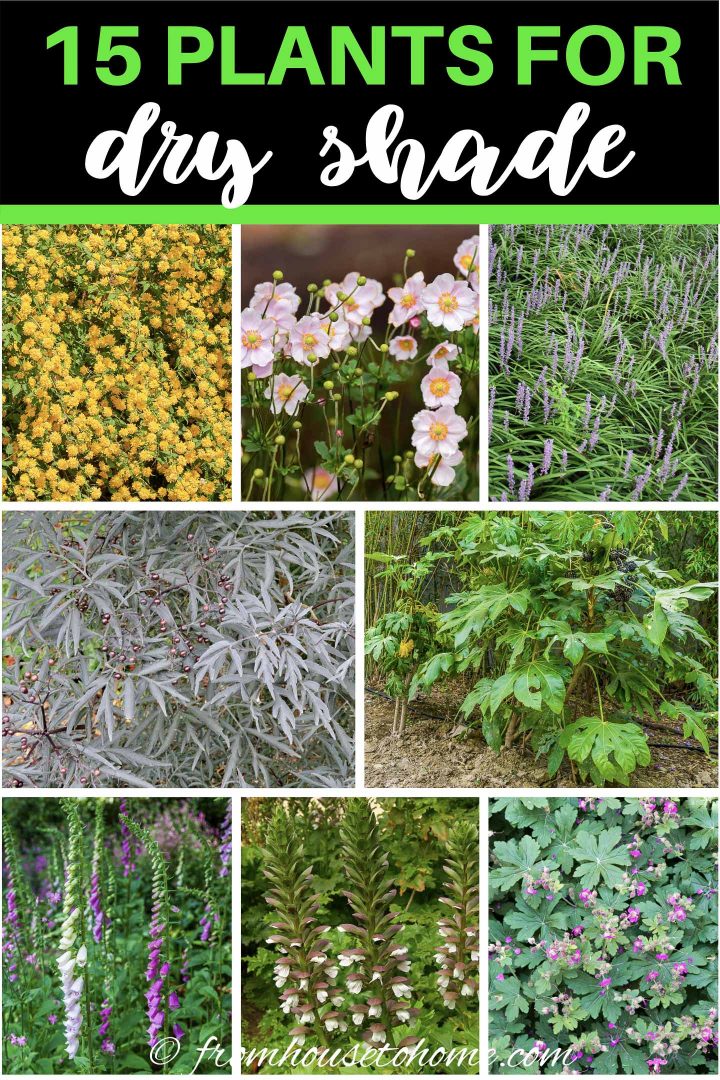
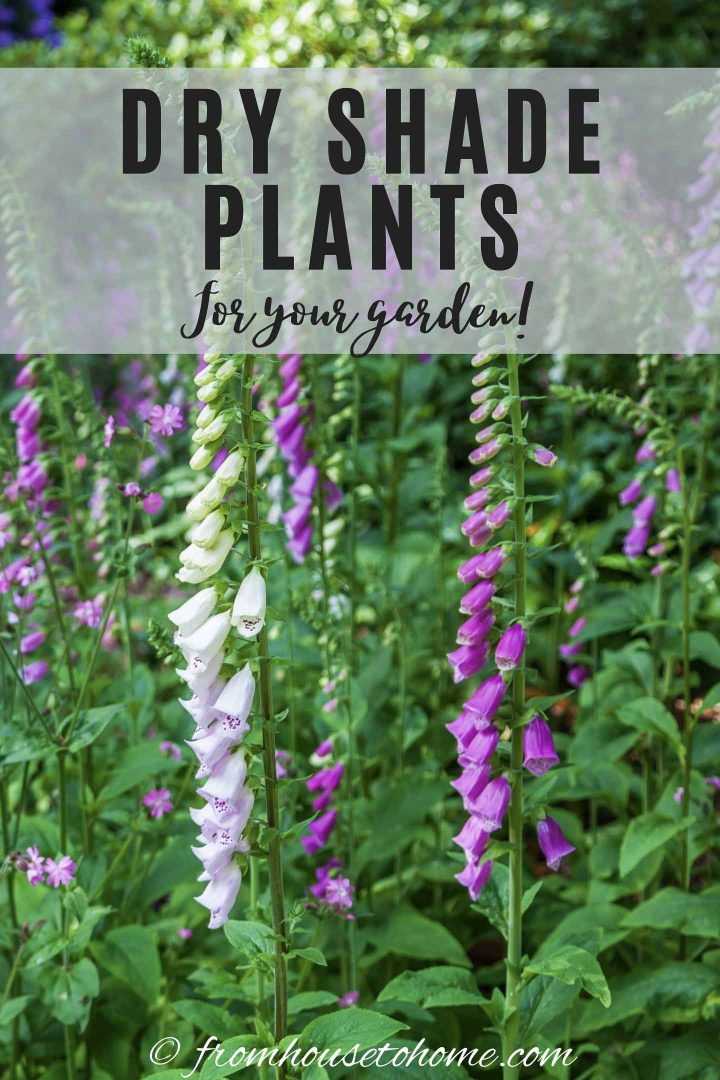
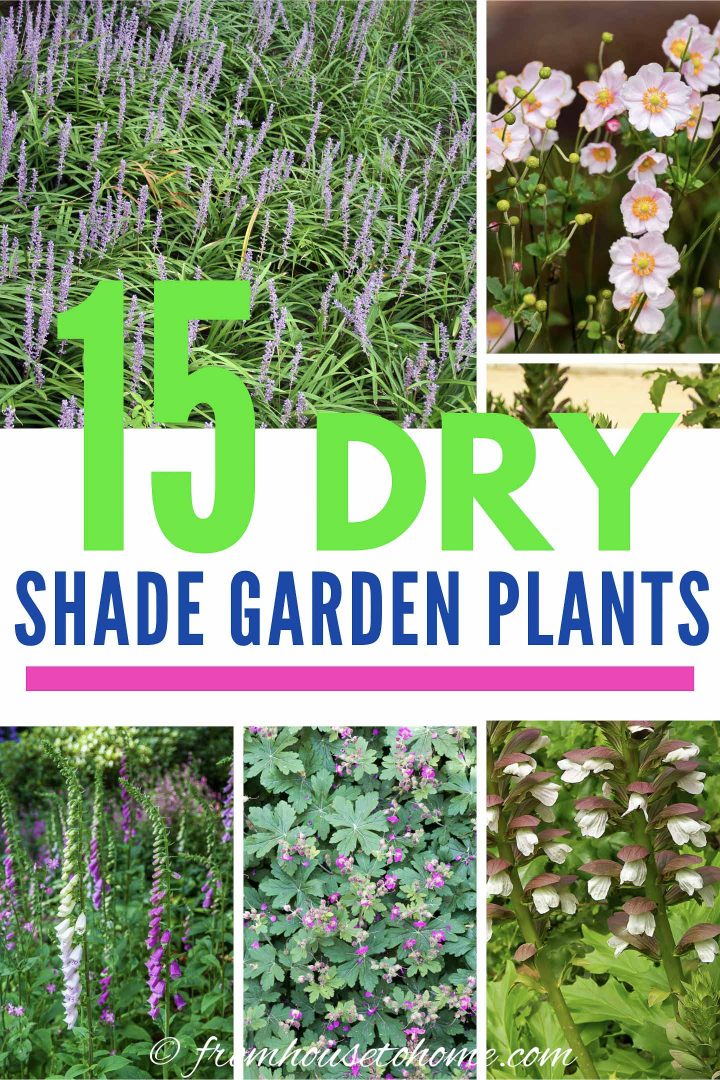
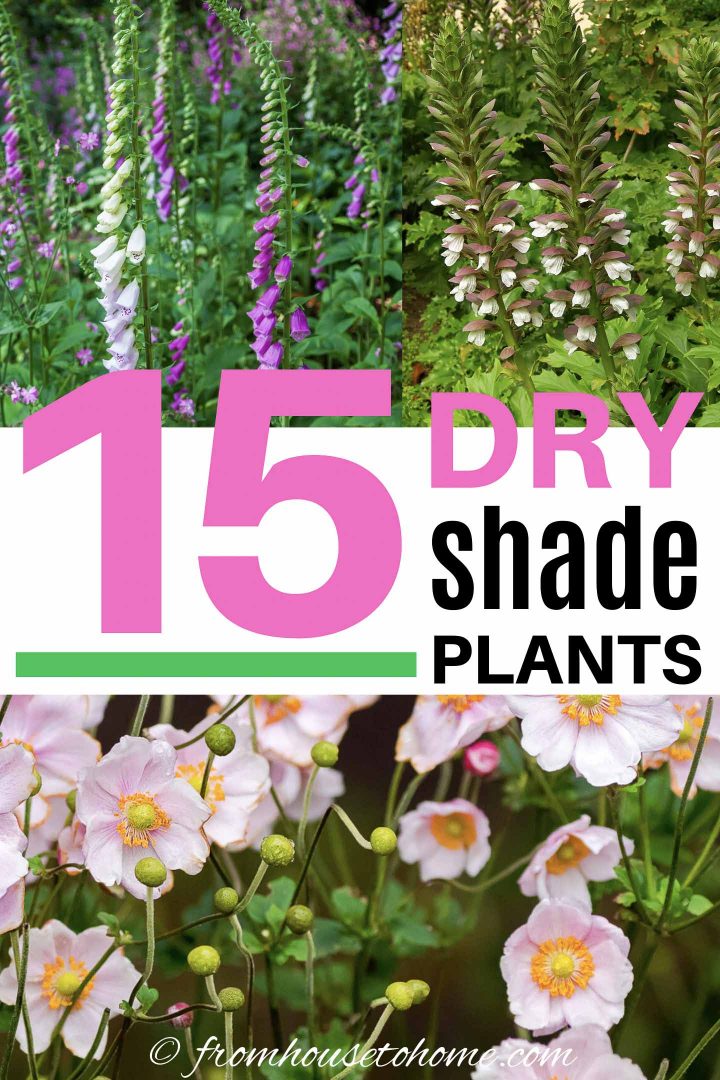
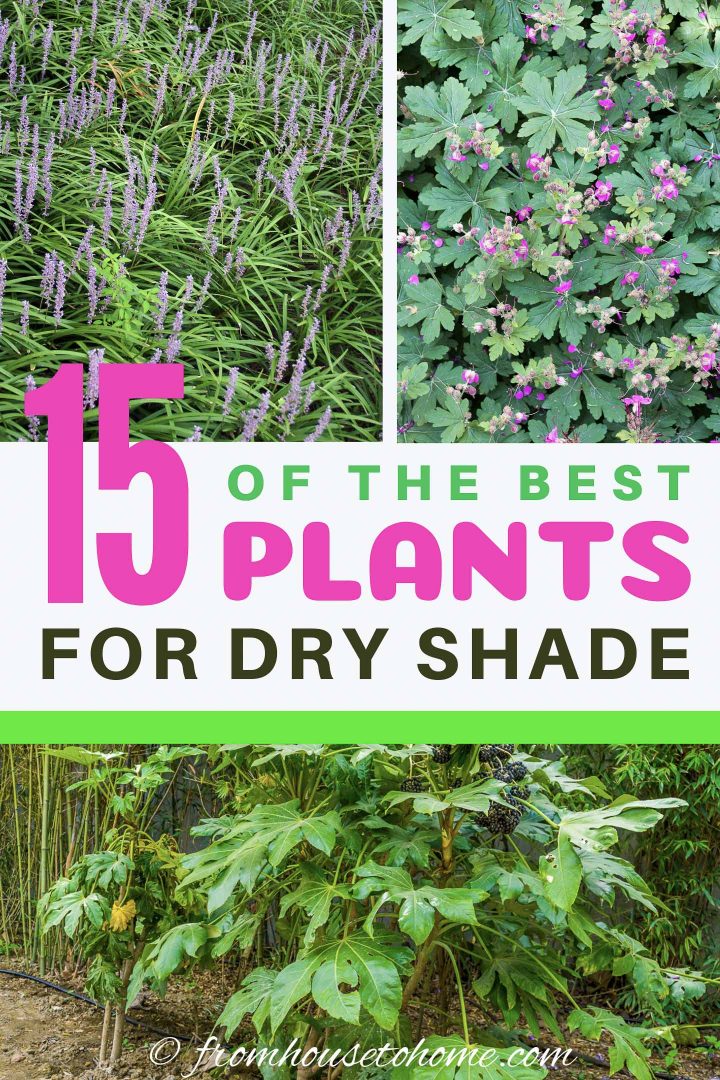
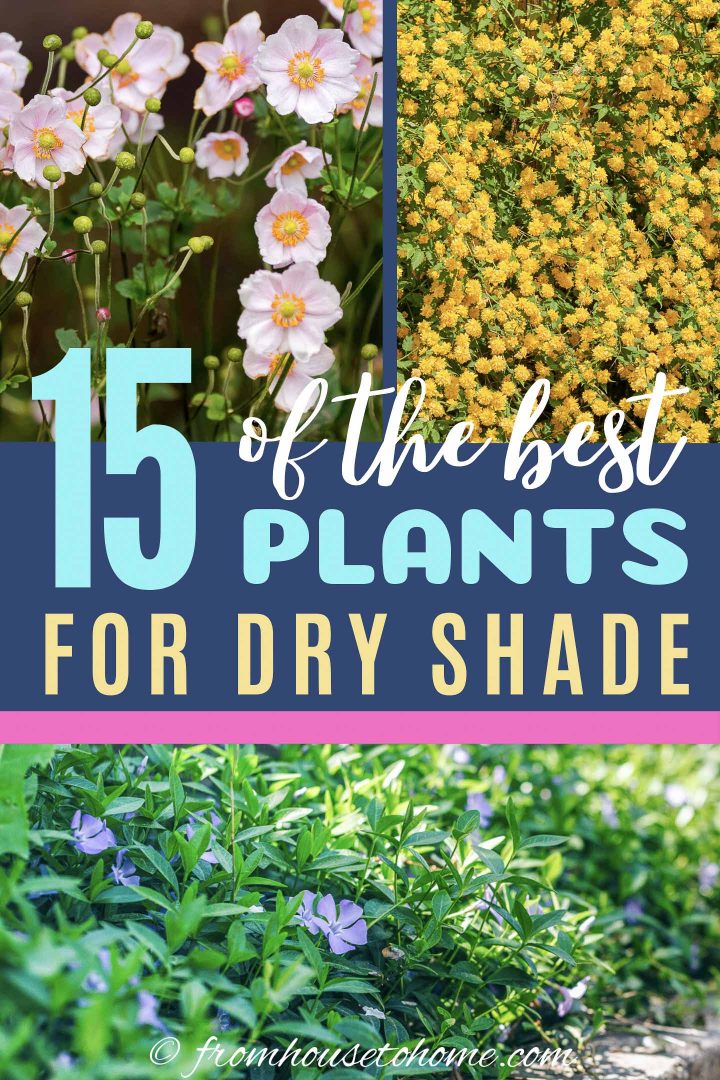
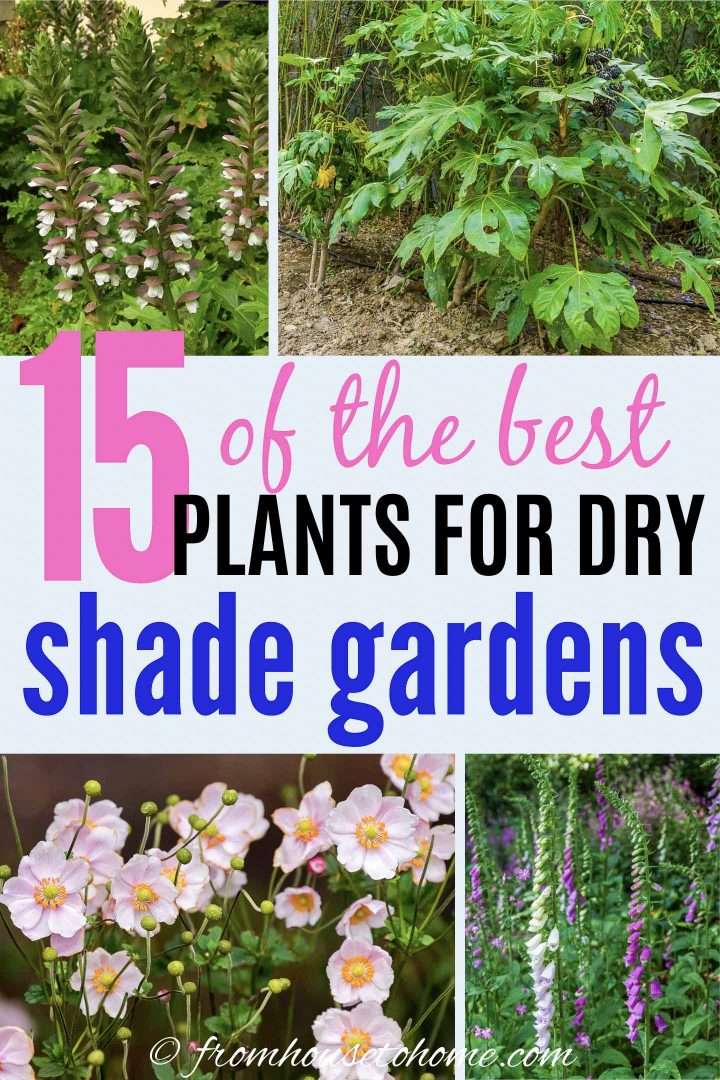
Dry shade is one of the toughest locations to try to grow plants. That is why when I find plants that thrive in these conditions, I try to keep track of what they are. Which is where this list of the best plants for dry shade gardens came from.

We all have sites under trees and eaves, and beside foundations where we want to beautify by adding flowers.
But those are some of the toughest locations for plants to grow because they’re not only shady but also very dry.
Which is where this list of dry shade plants comes in handy.
Because these plants are able to survive in such difficult conditions, many of them also have the potential to become invasive. So pay attention to where they are growing in order to keep them under control.
Want more plants that thrive in the shade?
Get our free 6-part eMail series to the best shade plants when you sign up for our newsletter.
We won’t send you spam. Unsubscribe at any time.
1 | Sambucus nigra Black Beauty (Elderberry ‘black lace’)

Zones: 4 – 8
Exposure: Part shade
Bloom Time: Early summer
Height: 8’ – 15’
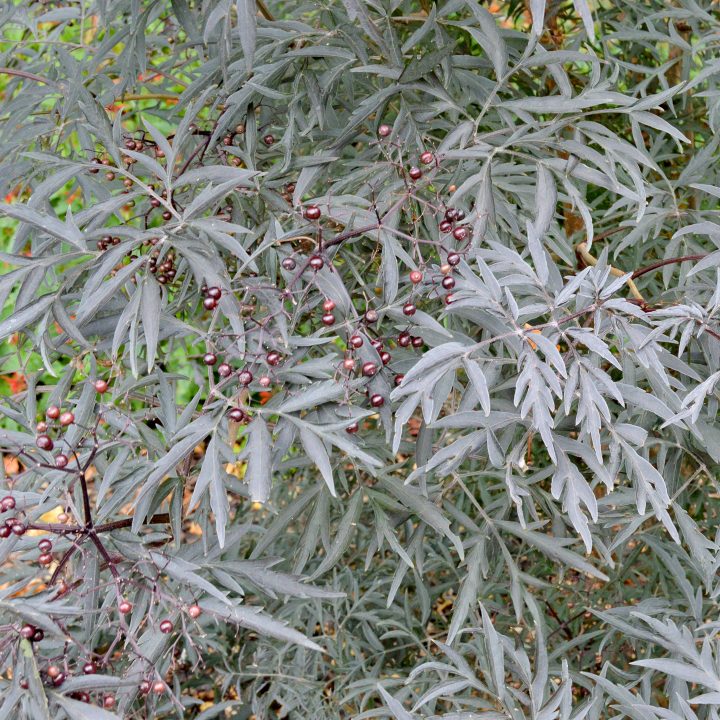
Black lace elder likes partial shade, has fragrant pink flowers in early summer that are striking against the lacy dark burgundy foliage, followed by black berries.
The size can be controlled to a lovely bush by cutting it to the ground in the fall.
This shrub is great for the back of the border or as a specimen in the dry shade garden.
New root shoots should be removed to control spread.
2 | Kerria japonica (Japanese rose)
Zones: 4 – 9
Exposure: Part shade
Bloom Time: Spring
Height: 8’ – 10’
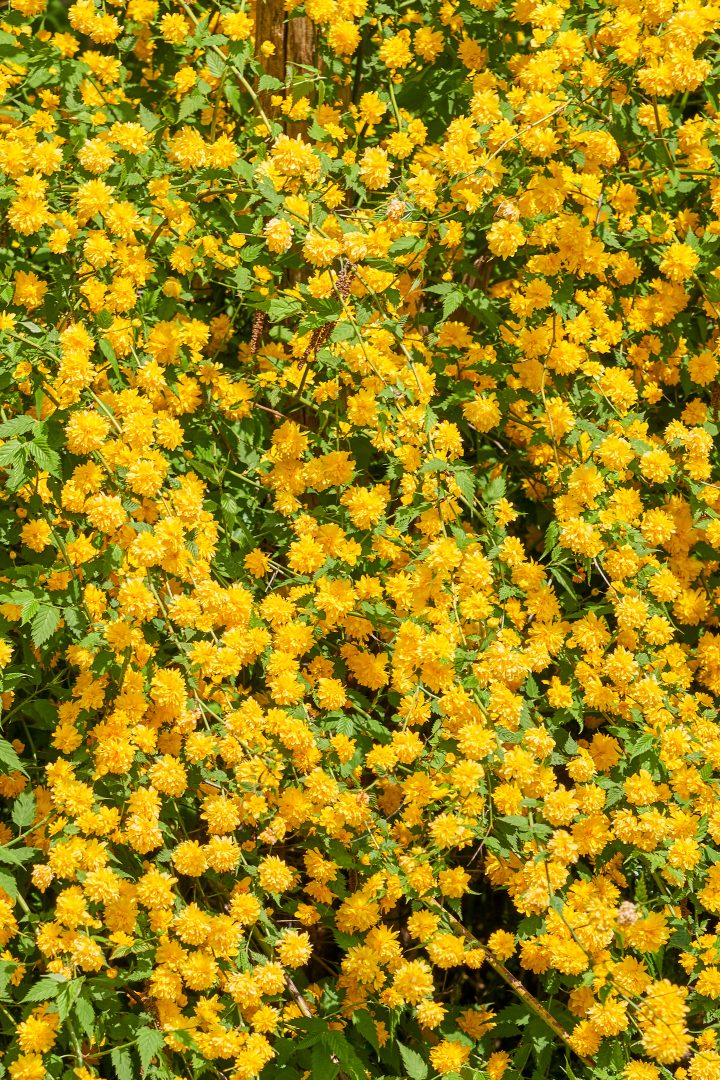
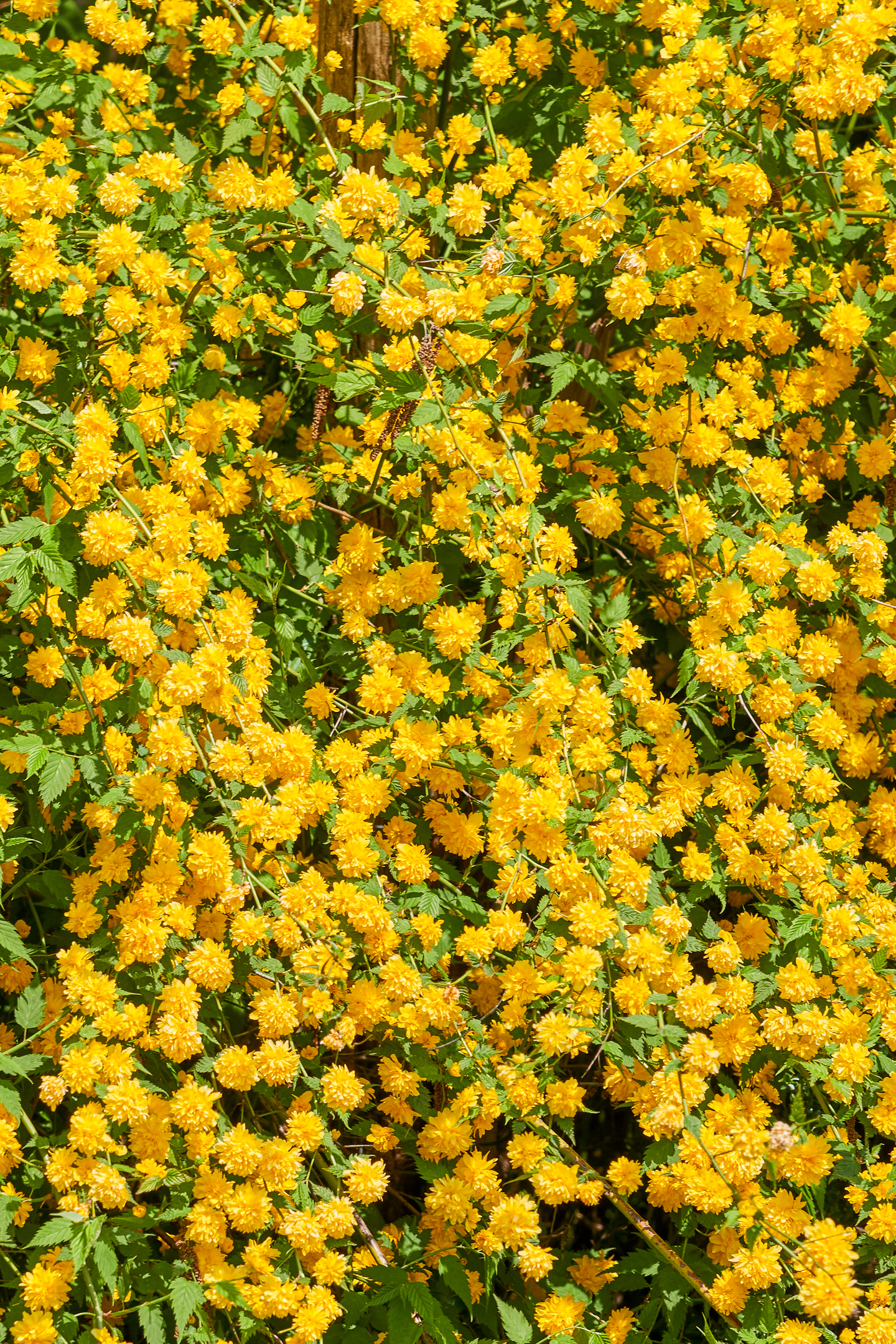
Japanese rose is a deciduous shrub with arching green stems and a profusion of yellow flowers in the spring.
If the bush is pruned after the initial flowering, it will rebloom.
The stems provide winter interest much like red twig dogwood.
Kerria spreads by new growth from the roots., so they need to be cut out regularly.
Plant in humus-rich soil in partial shade.
3 | Fatsia japonica (Japanese fatsia)

Zones: 7 – 10
Exposure: Part shade
Bloom Time: Fall
Height: 6’ – 10’
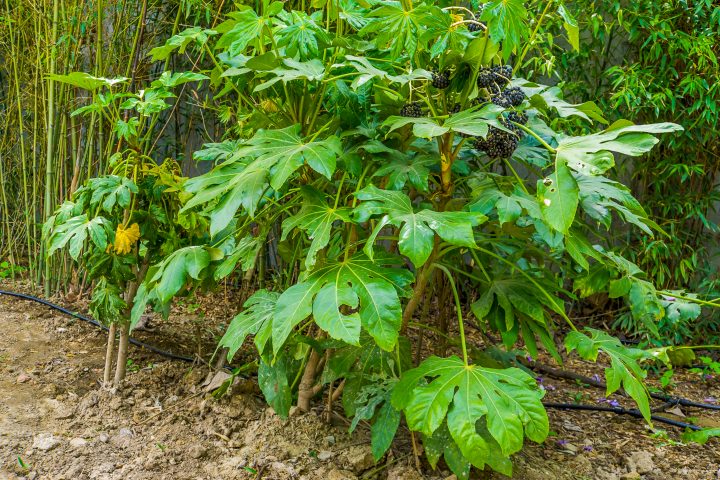
Fatsia is often grown as a house plant, but it does well in the dry garden and tolerates full shade.
An exotic looking large lobed-leafed evergreen that will lose its leaves if frost bitten, but the roots will revive provided they are protected from freezing with mulch.
It has interesting white blooms in the fall.
Pruning is unnecessary except to remove brown leaves or broken stems.
4 | Sarcococca ruscifolia (Fragrant sweet box)

Zones: 7 – 9
Exposure: Part shade
Bloom Time: Early Spring
Height: 3’ – 5’
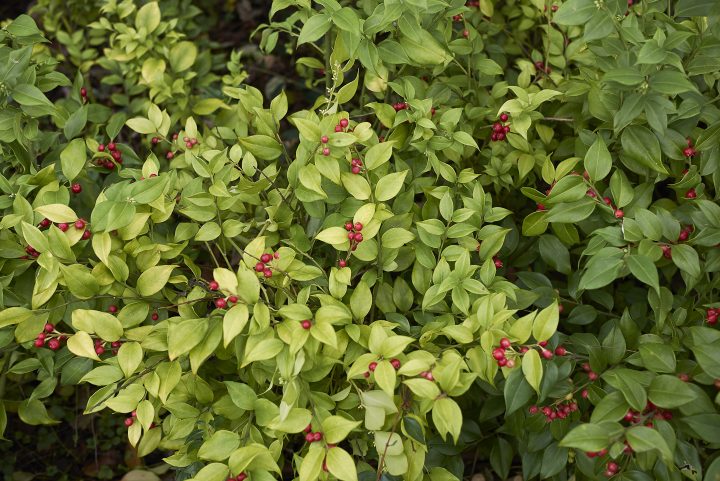
Shiny evergreen foliage and tiny white flowers make a stunning backdrop to the perennials in the dry shade garden.
Red berries follow the blooms.
This is a very fragrant plant that is often sited under windows so the aroma can be appreciated.
It grows slowly and takes full shade.
Sweet box will self-espalier against a wall and works well in containers in shady spots.
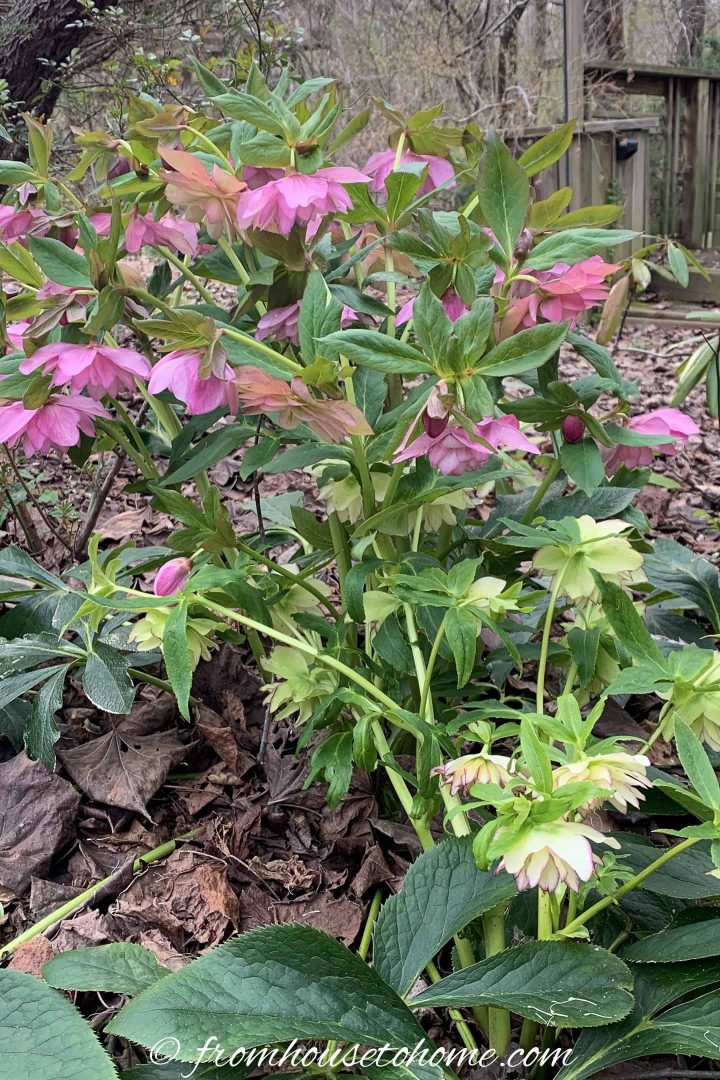
5 | Hellebores (Lenten rose)

Zones: 4 – 9
Exposure: Part shade to shade
Bloom Time: Late winter / Early spring
Height: 15” -18”
Hellebores are one of my favorite easy to maintain plants.
They form a clump of disease resistant evergreen leaves, come in single and double blossoms in a wide range of colors, and bloom from early spring into the summer.
Water weekly until established and plant in their permanent location because they do not like to be moved.
The only care I give mine is to prune out brown leaves.
What is not to love!
Learn more about Hellebores HERE.
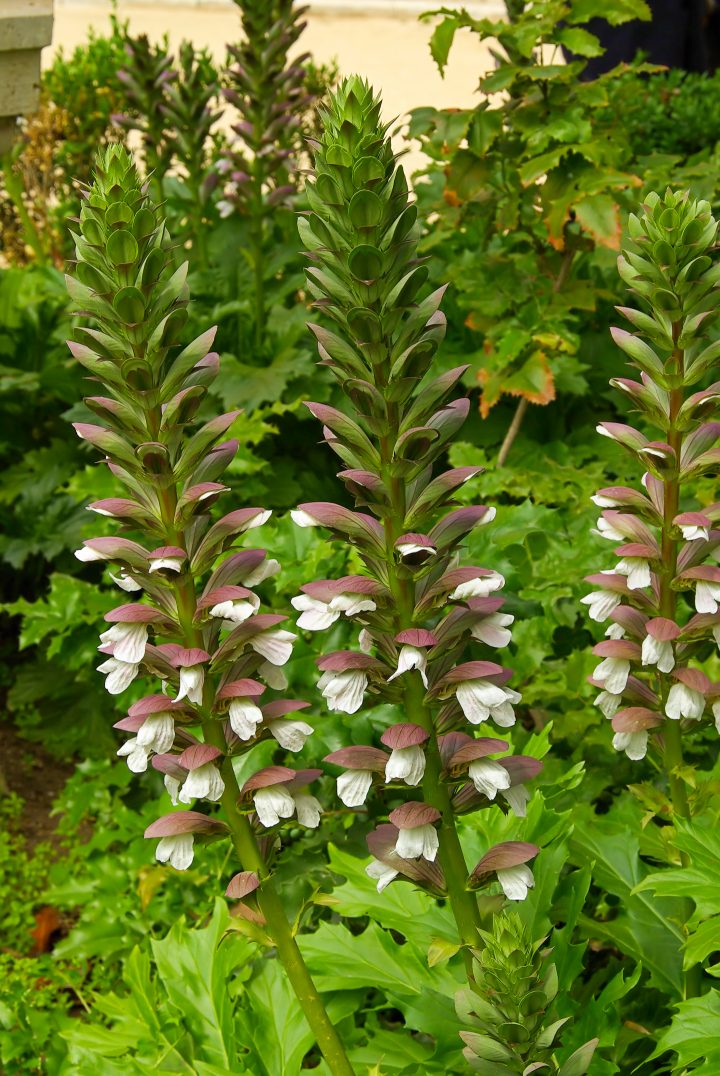
6 | Acanthus mollis (Bear’s Breeches)
Zones: 6 – 11
Exposure: Part shade
Bloom Time: Spring
Height: 4’
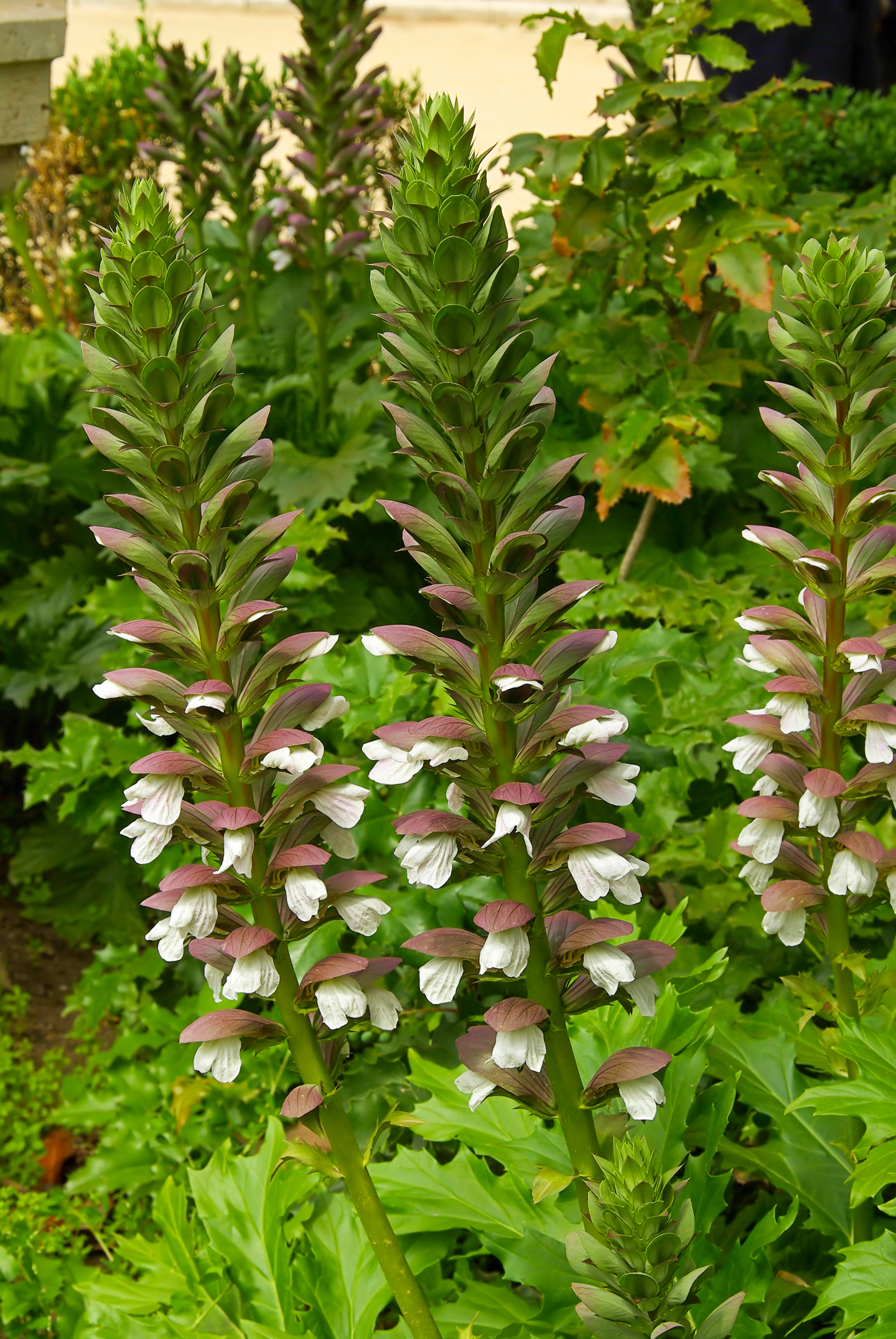
Large stunning green oak-shaped leaves, with mauve-white spires in spring, provide good contrast at the back of the border for smaller leaved perennials.
This easy care fast-growing herbaceous perennial is very tolerant of dry partial shade.
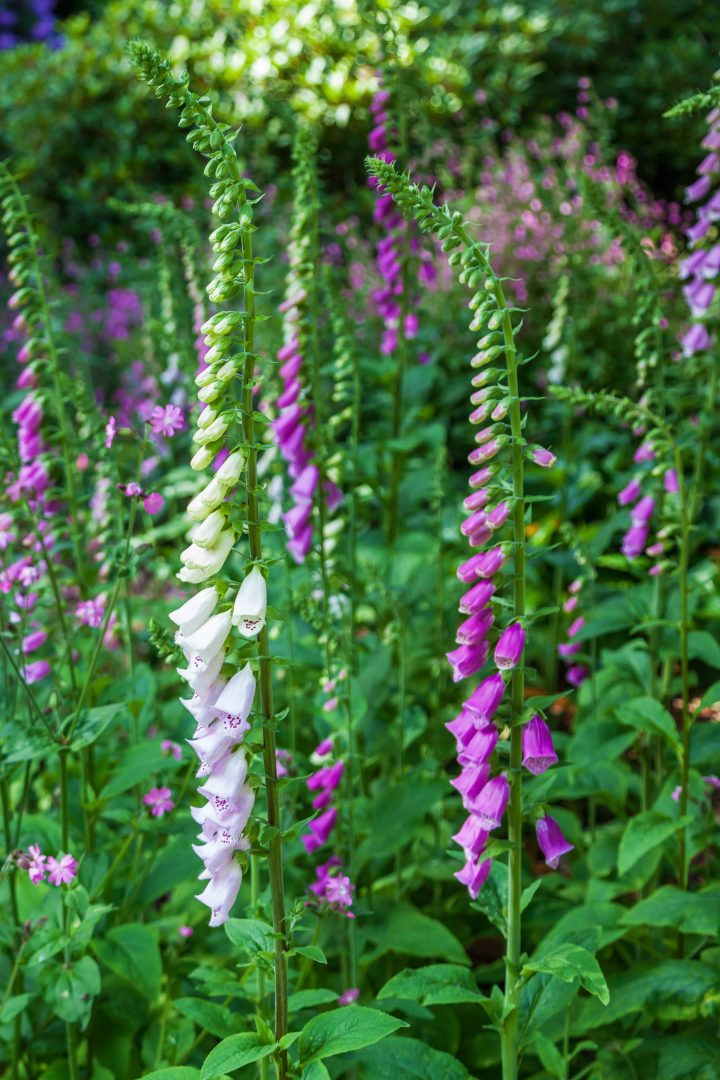
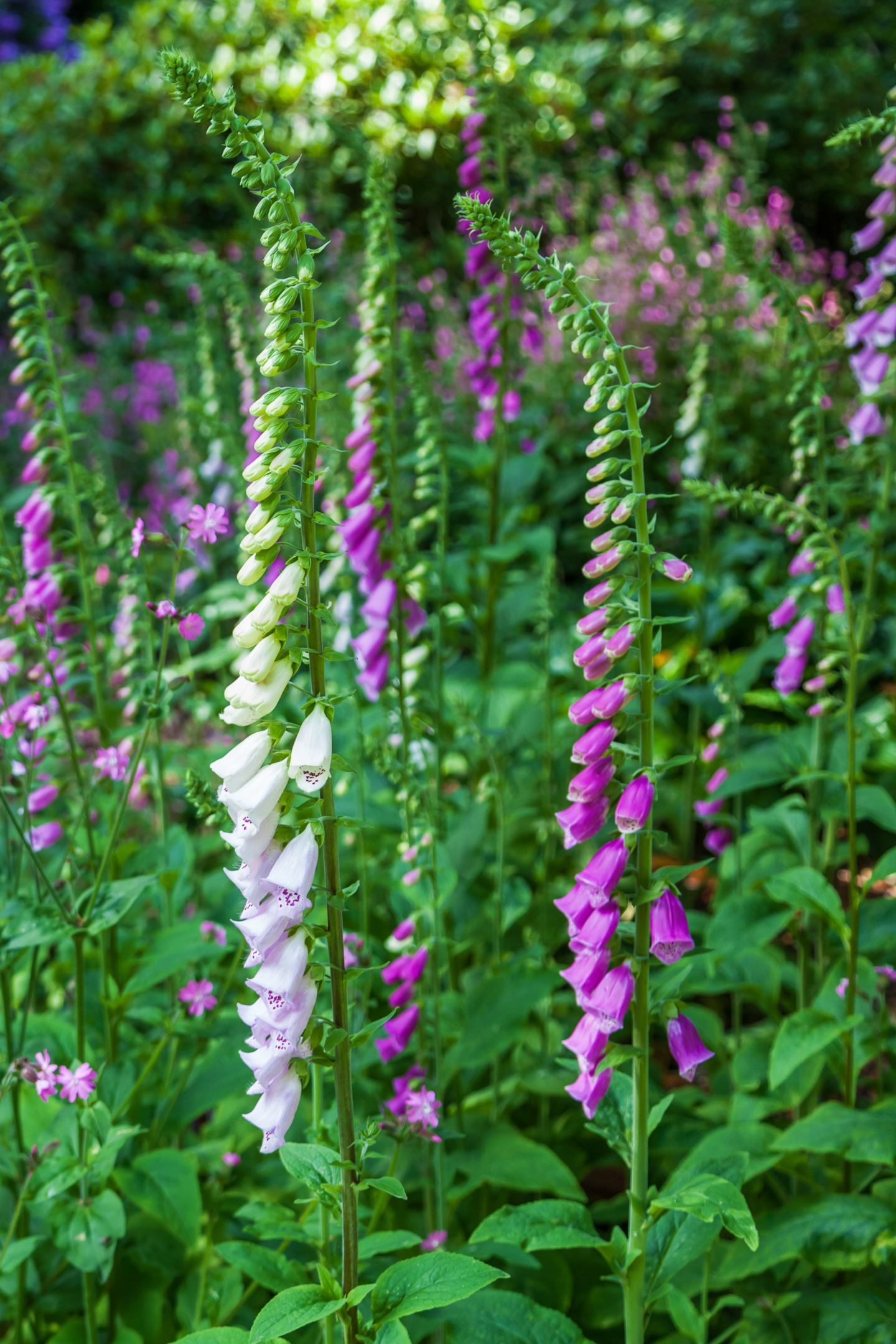
7 | Digitalis purpurea (Foxglove)
Zones: 4 – 10
Exposure: Part shade
Bloom Time: Early summer
Height: 2’ – 5’
Foxglove, a biennual, has a stunning spired blossom that attracts pollinators, including hummingbirds.
It will self-seed readily if it is not deadheaded. (Although since it is a biennial, you will need to let some of the flowers go to seed if you want the foxgloves to grow back in future years).
The distinctive blossom, which comes in a variety of colors, looks beautiful poking through a bed of pachysandra ground cover.
It likes dappled or partial sun.
Safety note: Be aware that foxglove is poisonous to people and pets if eaten.
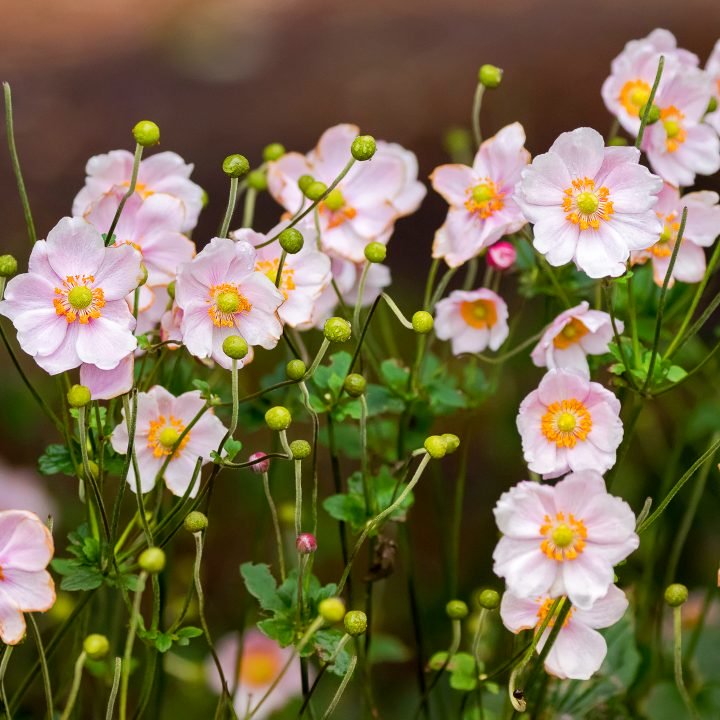
8 | Japanese anemones (Windflower)

Zones: 4 – 8
Exposure: Part shade
Bloom Time: Fall
Height: 2’ – 4’
Japanese anemones have delicate pink or white flowers that sway in the late summer wind until frost.
An easy-care plant that spreads by rhizomes.
These are not difficult to remove to maintain the size of the clump.
Hummingbirds are attracted to Japanese anemones, but deer and rabbits are not.
Grow in any soil, in partial shade.
These are pure joy in the autumn landscape!
Read more about Japanese Anemones HERE.
9 | Pachysandra terminalis (Japanese spurge)

Zones: 4 – 8
Exposure: Part shade to shade
Bloom Time: Spring
Height: 6” – 12”
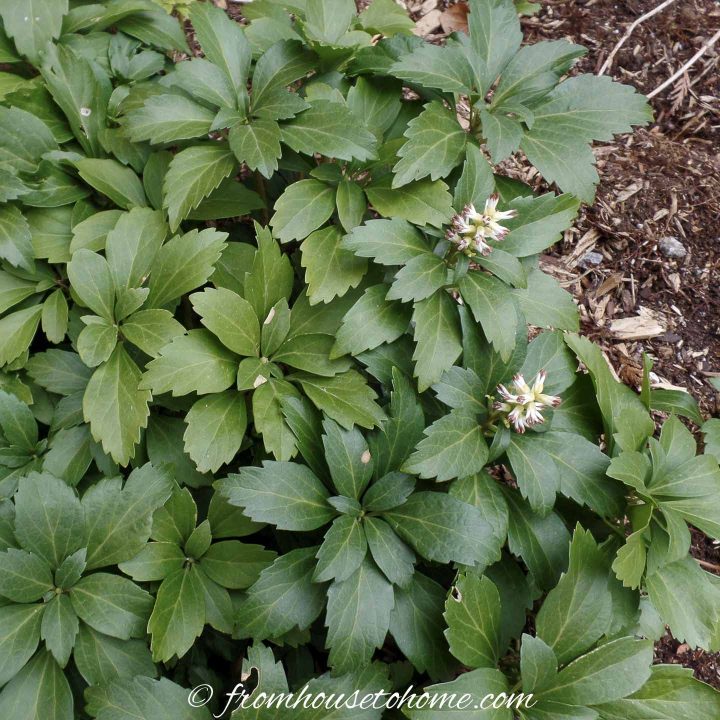
Not to be confused with wood spurges of the Euphorbia family, pachysandra is a member of the boxwood genus.
It is the perfect answer for an evergreen ground cover in the hard to grow areas of dry shade and clay soil.
Although it produces insignificant white flowers in spring, it is grown for its deer and rabbit resistant dark green foliage.
It spreads by runners and so forms a dense weed barrier.
The rhizomes need to be dug up annually or barriers need to be installed to contain the spread of pachysandra, otherwise this is a good low maintenance ground cover.
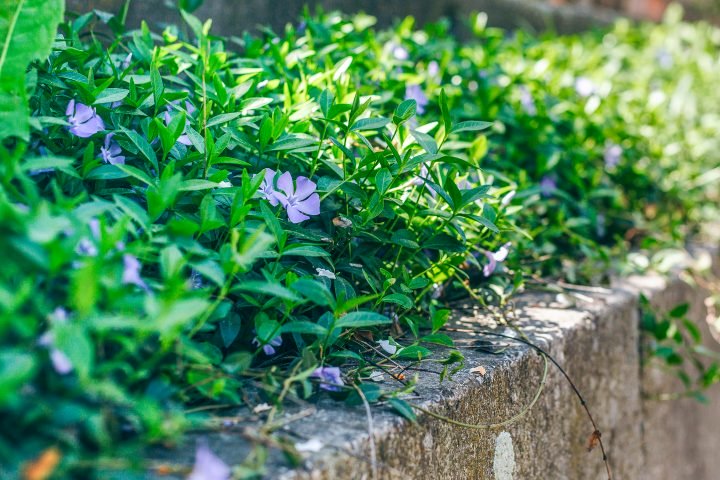
10 | Vinca minor (Periwinkle)

Zones: 4 – 8
Exposure: Part shade to shade
Bloom Time: Spring
Height: 3” – 6”
Periwinkle has evergreen leaves and pretty, blue, or violet flowers in the spring.
It is a vine that roots at the stem joints and spreads rapidly.
Although it is an attractive ground cover, Vinca can be difficult to contain once established and can take over even in dry, total shade.
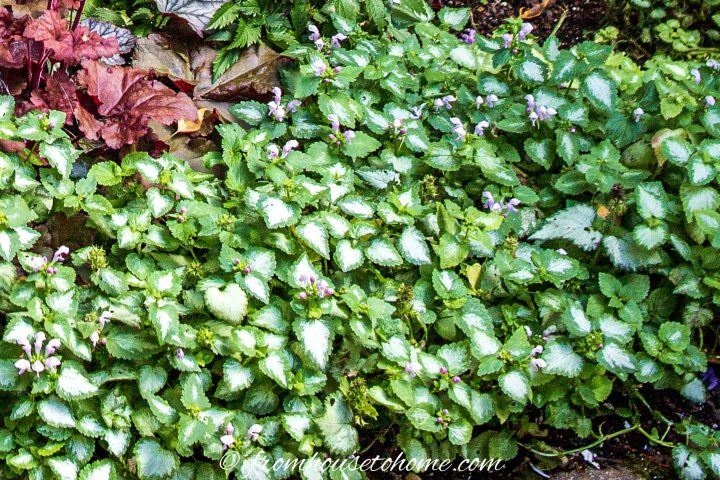
11 | Lamium maculatum

Zones: 2 – 9
Exposure: Part shade to shade
Bloom Time: Summer
Height: 3” – 8”
The silver leaves of Lamium are lined with dark green and the flowers range from pink to purple.
It is a pretty plant that makes a good edging or ground cover in difficult growing conditions.
It tolerates drought and shade.
An evergreen that needs to be cut back in late winter, it blooms all summer.
It rapidly spreads by rooting at the stem joints and is considered mildly invasive.
I find it easy to contain by pulling out the unwanted plants.
I use it as an edging between the public sidewalk and my picket fence in my north facing front garden.
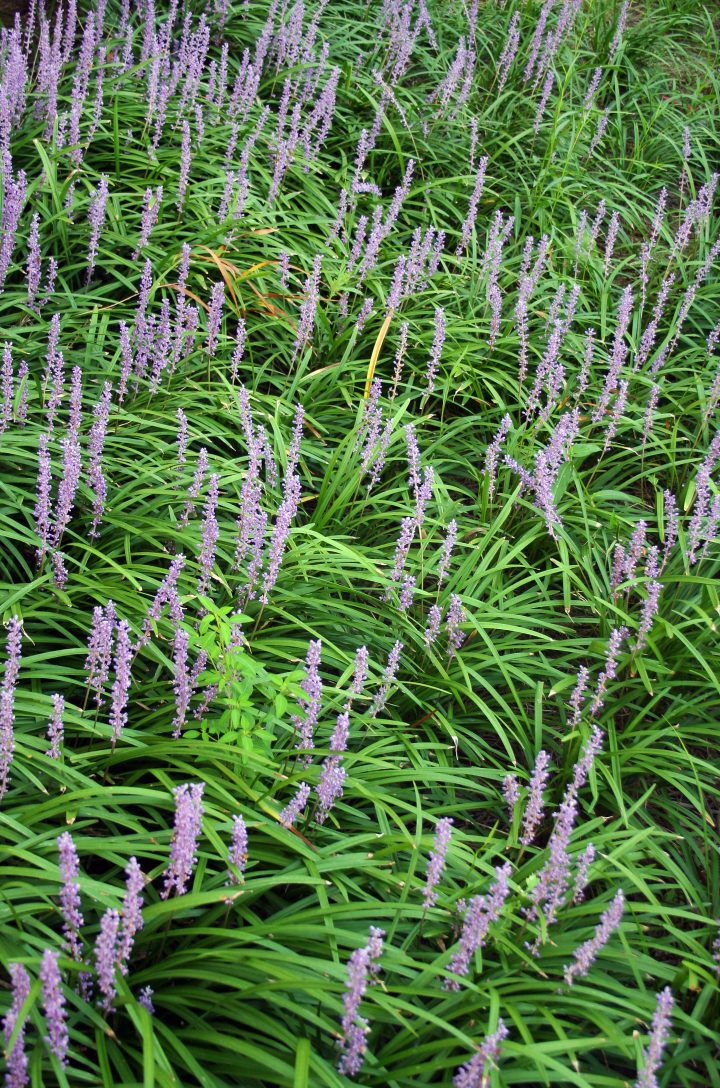
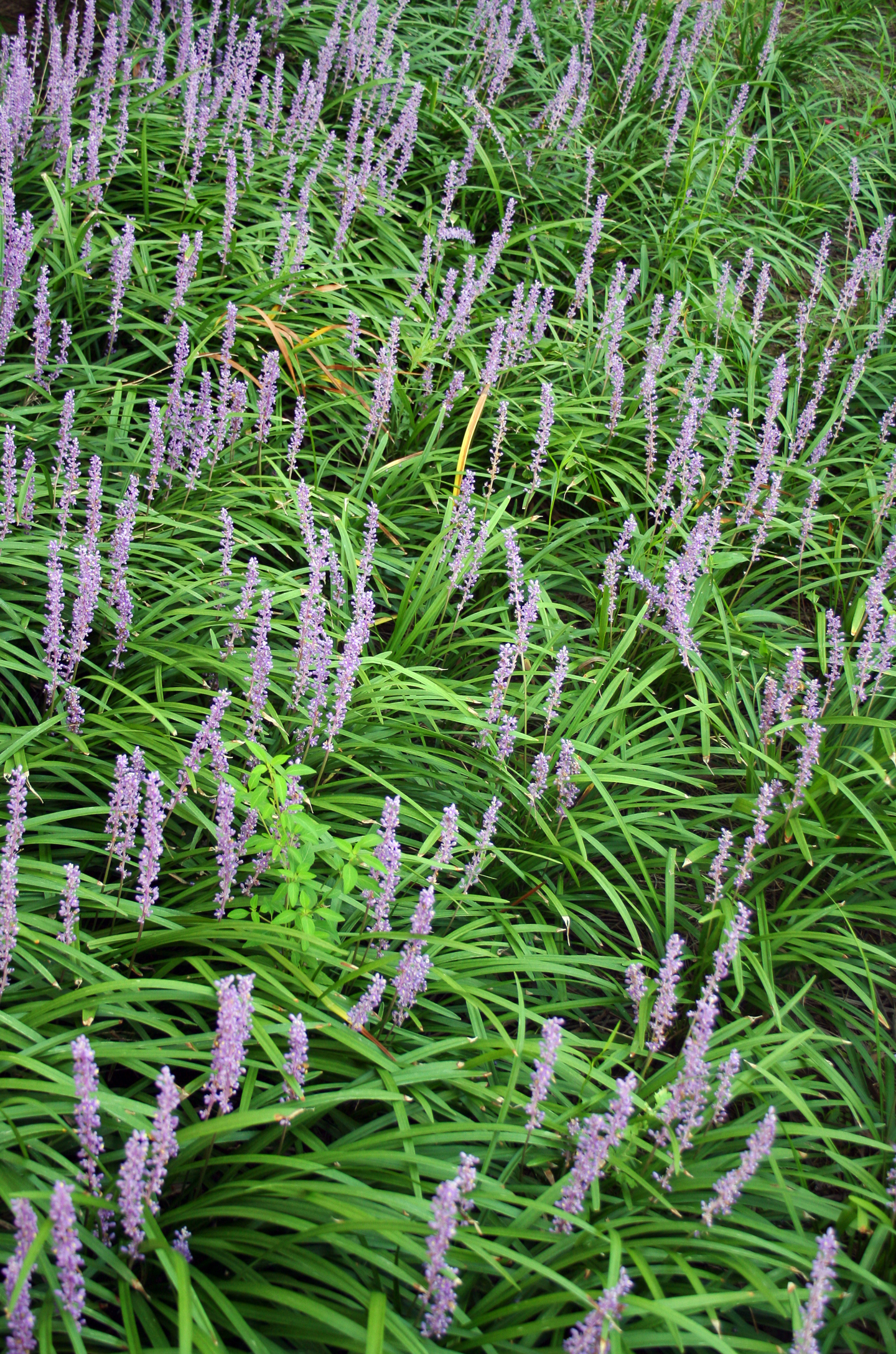
12 | Liriope (Lilyturf)
Zones: 4 – 10
Exposure: Part shade to shade
Bloom Time: Late summer / Early fall
Height: 9” – 18”
Lilyturf looks like grass but is a member of the lily family.
It has lavender or white spiked flowers in late summer above a sea of dark green blades.
It grows well in part shade, in any soil type and will rot if too moist.
Lilyturf is used for edging and mass planting under trees.
It spreads aggressively via rhizomes so be aware that it can be invasive.
To keep it tidy, mow it off to the ground in the late winter before the new growth begins.
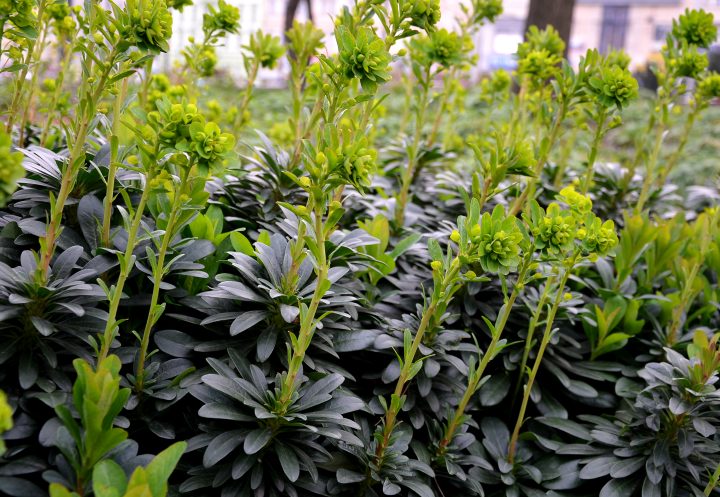
13 | Euphorbia amygdaloides var. robbiae (Woodland spurge)

Zones: 6 – 9
Exposure: Part shade
Bloom Time: Early summer
Height: 1’ – 2’
Euphorbia is perfect to plant under large trees.
It spreads by runners to form a thick carpet of evergreen shiny dark green leaves with a host of long-lasting lime-green flowers in early summer.
It will take part to full shade and is drought, deer, and rabbit tolerant.
Wood spurge is toxic to people and animals if ingested.
Wear gloves when dealing with it because the milky sap can cause skin irritation.
It has won the Award of Merit from the Royal Horticultural Society.
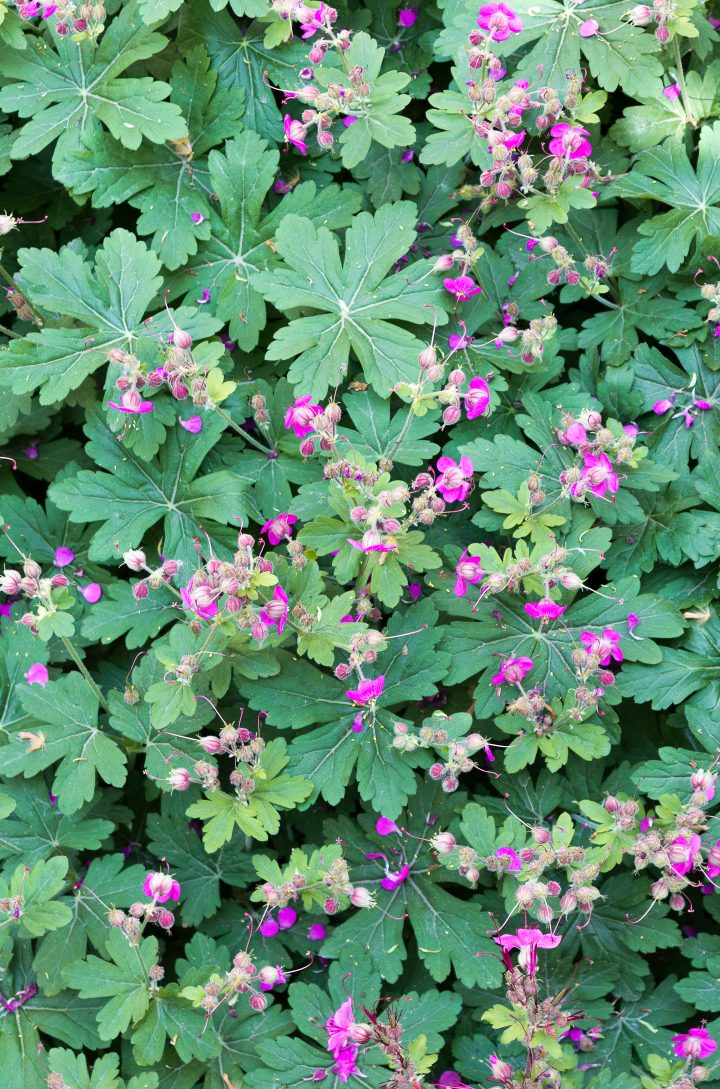
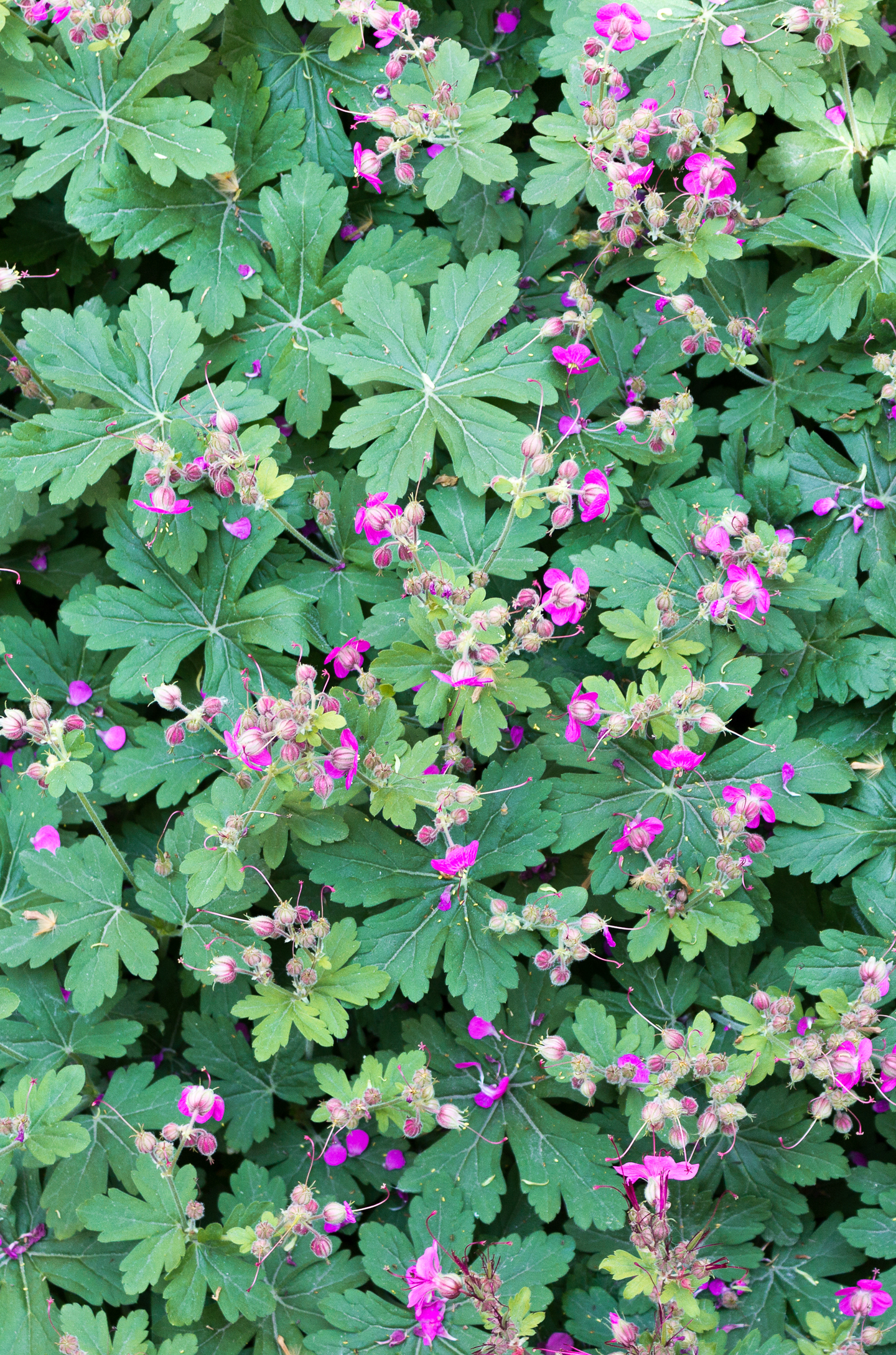
14 | Geranium macrorrhizum ‘Spessart’ (Cranesbill)
Zones: 3 – 8
Exposure: Part shade to shade
Bloom Time: Summer
Height: 8” – 12”
Cranesbill is a hardy, deciduous perennial that produces delicate flowers in a variety of colors (G. spessart is white) that bloom all summer, particularly if spent blooms are removed.
This plant attracts bees and other pollinators.
It spreads by rhizomes but is not difficult to control in my experience.
It tolerates drought and partial to full shade if well mulched.
The leaves turn red or bronze in the fall and are aromatic when crushed.
I have it triple planted with snow drops and Autumn Crocus (Colchicum autumnale) around a Korean lilac shrub.
I shear the geraniums off when they get scraggly in September so that the colchicum blossoms can be seen.
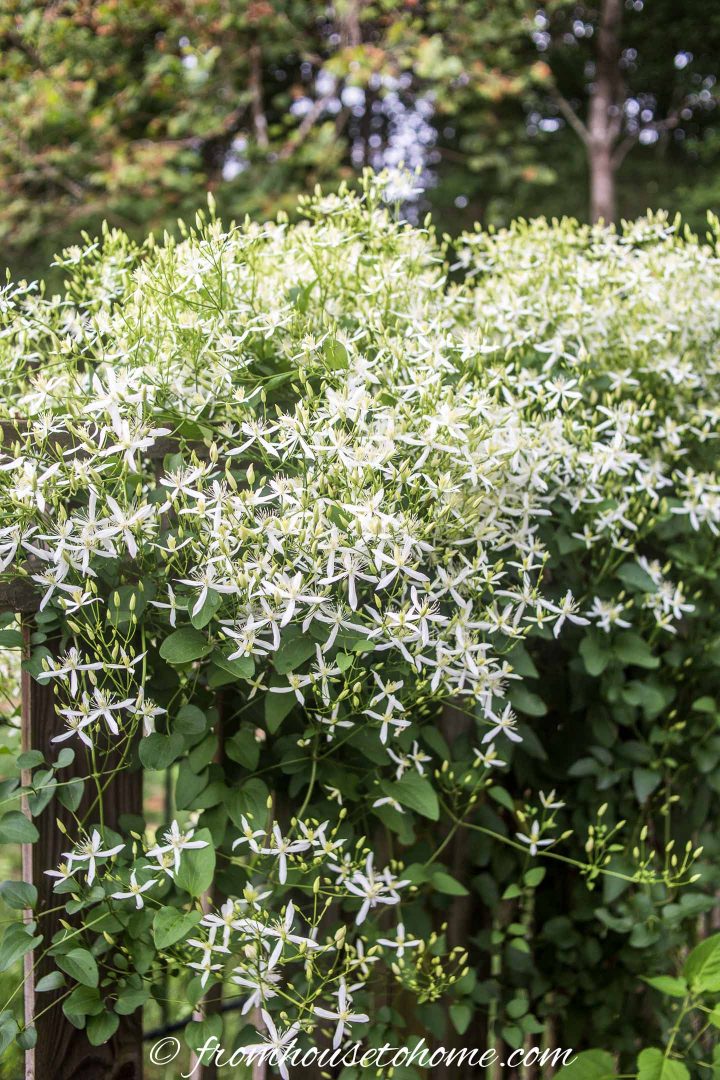
15 | Clematis terniflora (Sweet autumn clematis)

Zones: 4 – 9
Exposure: Part shade
Bloom Time: Fall
Height: 15’ – 30’
From late summer until freeze-up, this fast-growing vine will be covered in masses of very fragrant small creamy-white blossoms that are followed by lacy white seed heads.
I have one C. terniflora planted on the north wall of my house, under the eaves.
It is the least hospitable spot in my garden, yet it thrives year after year.
Because it grows so vigorously, it can be invasive in some areas.
I control it by cutting it back hard to 1 foot from the ground in late fall.
For more information on growing autumn Clematis, click HERE.
How To Grow Plants In Dry Shade
There are a few things to know about growing plants in dry shade:
- To give the plants their best chance of survival, amend the soil with compost prior to planting.
- When planting under trees, dig holes between the roots and add compost to the hole being aware not to raise the level of the soil over the tree roots too much.
- After putting the plant in its hole, water well and add a layer of mulch to help the soil retain moisture.
- Avoid planting too close to tree trunks (no closer than a foot) and keep the mulch at least 6 inches from the trunk.
- Make sure to water well during the first year to help the plants get established.
Other Shade Plants You Might Like
Have suggestions for other dry shade plants? Tell us in the section below.
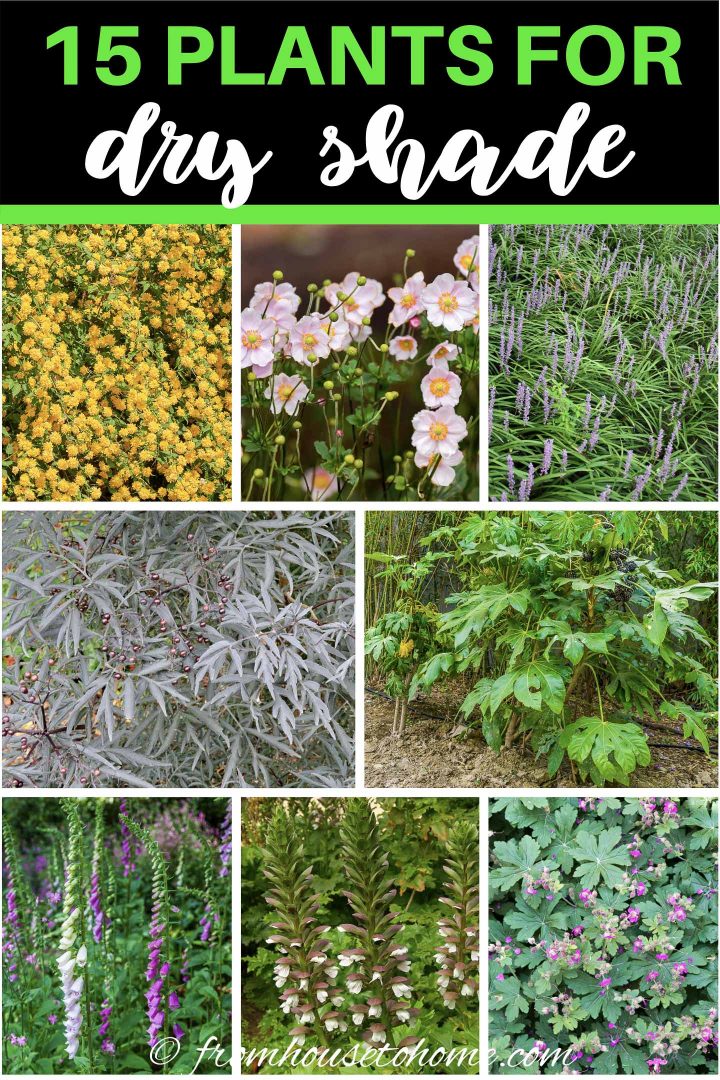
Pin It So You Don't Forget It!
This post was originally published on April 28, 2020 but was updated with new content on November 23, 2024.
Great article. Thank you.
Glad you like it, Jean. I appreciate your kindness in letting us know.
I would suggest Mayapple Podophyllum hexandrum
Thank you for your suggestion, Philip. Mayapple is indeed an attractive little native.
Hi Flora,
I love your blog! I just found the article on DRY SHADE PLANTS and it’s been so helpful. These plants have been a godsend when it comes to planting in our shady backyard where we’ve had trouble growing anything that doesn’t dry out all the time.
Thanks so much!