
15 Easy Ways To Hide Outdoor Eyesores
Learning how to hide outdoor eyesores can instantly boost your curb appeal and make your yard feel more polished and inviting. I’ve tried many of these clever tricks myself, and they’ve transformed messy spots into beautiful, functional parts of my outdoor space.

If you’re like me, you’ve probably got a few outdoor eyesores that you wish you could hide.
Whether it’s a brick wall, an A/C unit, trash cans, or even a neighbor’s clutter, these things can really detract from your yard’s overall look.
That’s why I put together a list of my favorite ways ways to hide garden eyesores.
So you can turn those not-so-pretty spots into something that actually looks good and feels more inviting.
I’ve tried many of these ideas myself, and I can honestly say they work.
From hiding landscape eyesores to disguising backyard clutter, these creative solutions will help you make your yard look neater and more put-together.
1 | DIY outdoor screen
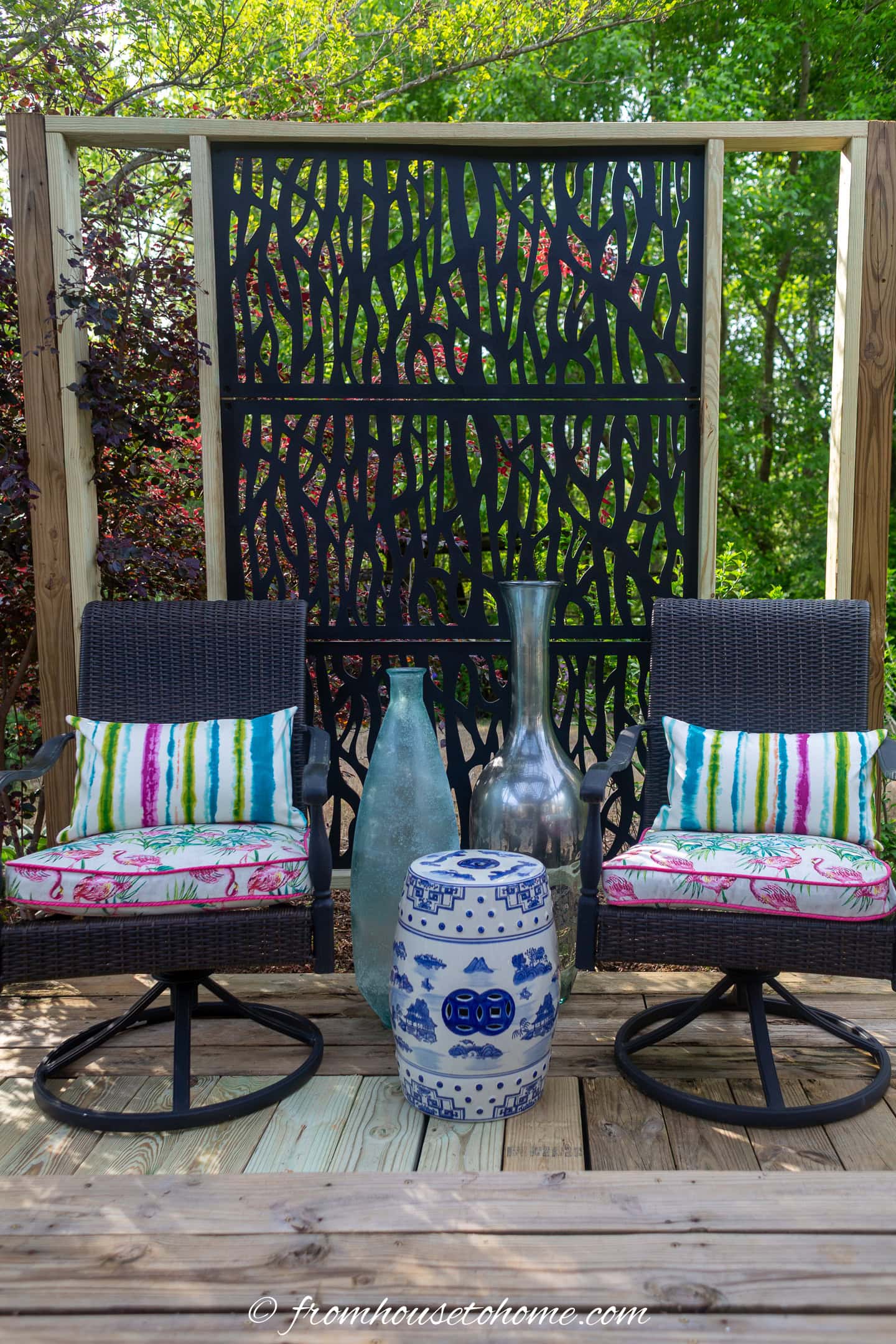
One of my favorite weekend projects was building this privacy screen with a simple wood frame and a decorative panel that looks like wrought iron. But it’s actually weather-proof plastic.
Not only does it hide the neighbors yard perfectly, but it also adds a bit of style to that corner of the garden.
Plus, it holds up beautifully in all kinds of weather (with zero rust to worry about).
It would also work great as a screen around the A/C unit (since it allows ventilation).
Want plants that thrive in the shade?
Get our free 6-part eMail series to the best shade plants when you sign up for our newsletter.
We won’t send you spam. Unsubscribe at any time.
2 | Vertical garden
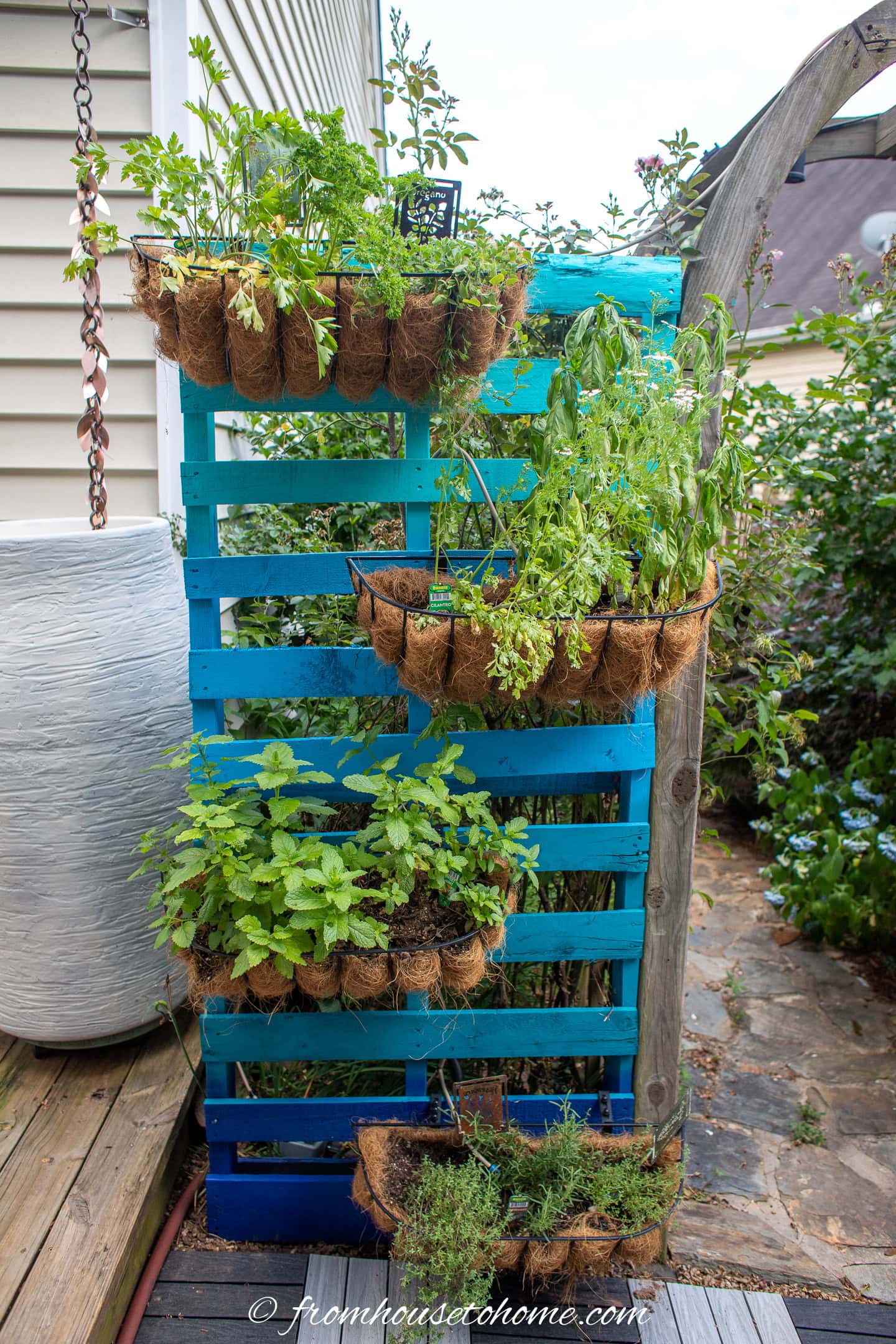
Another one of my favorite DIY projects was turning an old pallet into this vertical herb garden.
I gave it a fresh coat of paint and attached small planters to the front, then filled them with herbs.
Not only did it give me extra space for growing basil, parsley, and mint, but it also made a great cover-up for an unsightly spot along my fence.
Vertical gardens are perfect for small yards or patios, and you can get really creative with what you plant, or even switch it up with the seasons.
3 | Trellises with Climbing Vines
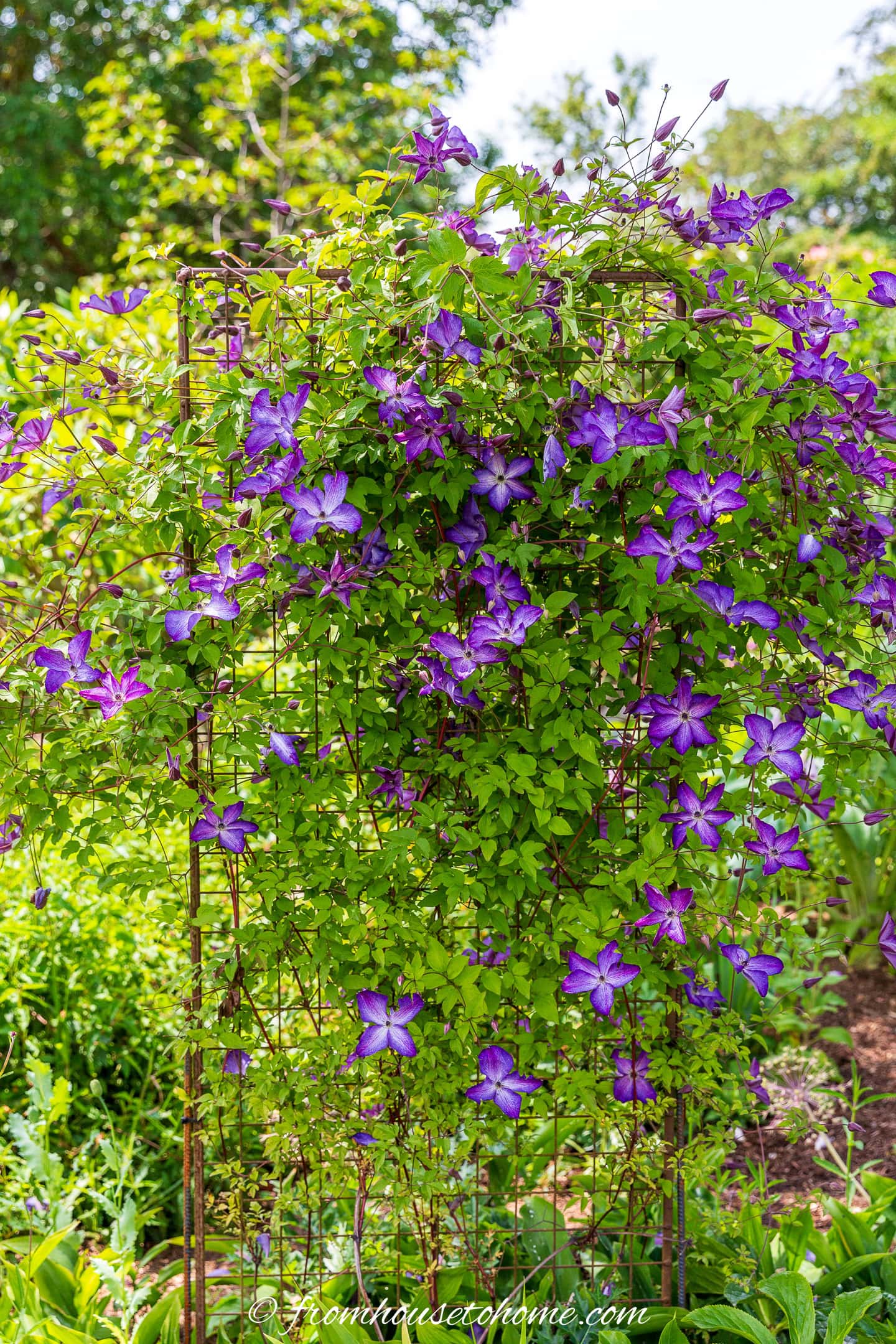
I’m a huge fan of using trellises and fast-growing vines (clematis and jasmine are my favorites).
They can quickly cover up eyesores and give you a gorgeous wall of greenery or flowers.
I love this one made from copper plumbing pipe that I saw at the Bellevue Botanical Garden in Seattle.
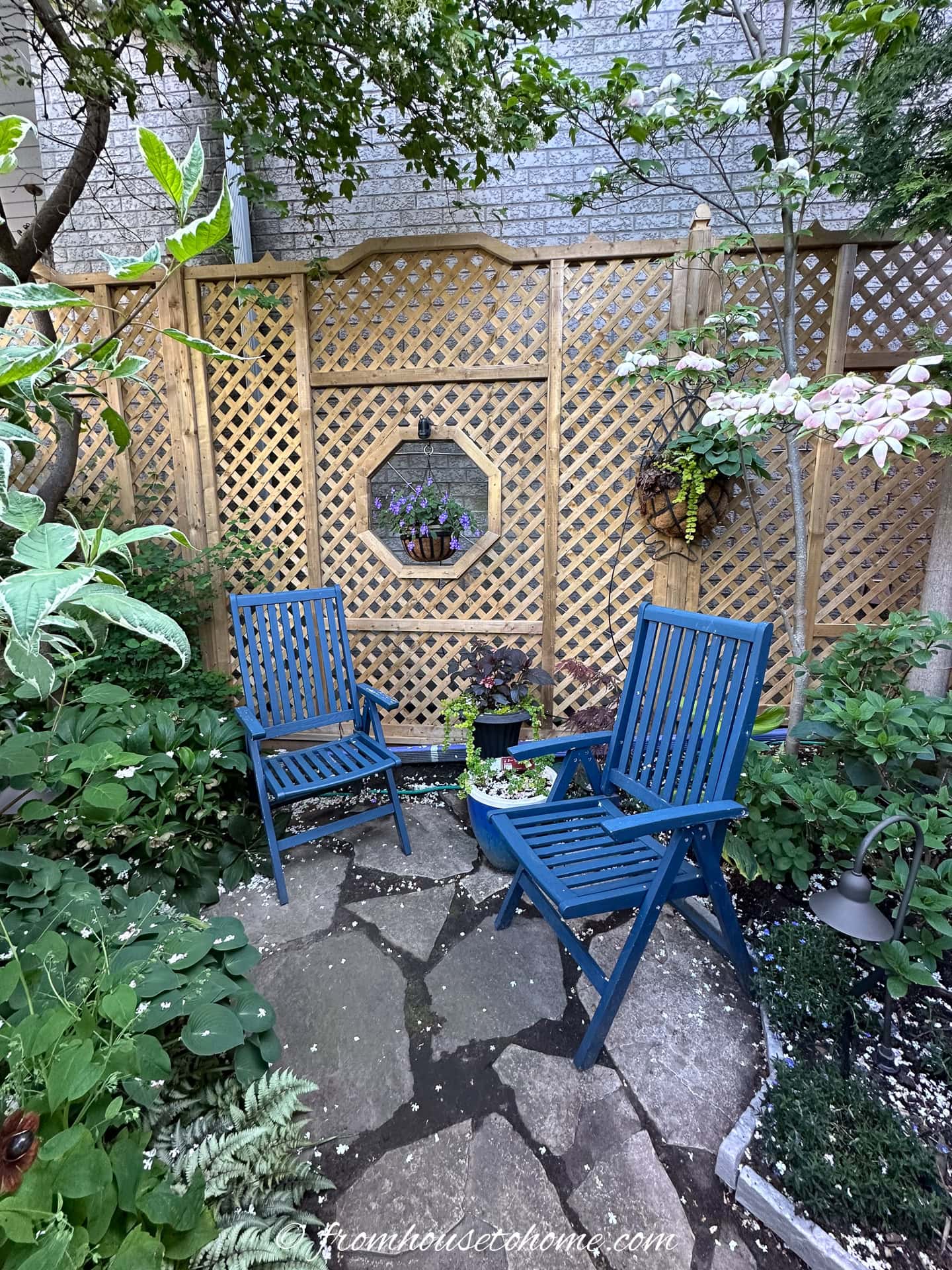
For larger areas (like the large brick wall in my mother’s backyard), wood lattice is a great option.
It covers a lot of space for not much money, and the open design gives your plants plenty to grab onto.
Plus, you can paint or stain it to blend right in with your garden style if desired.
4 | Faux vine panels
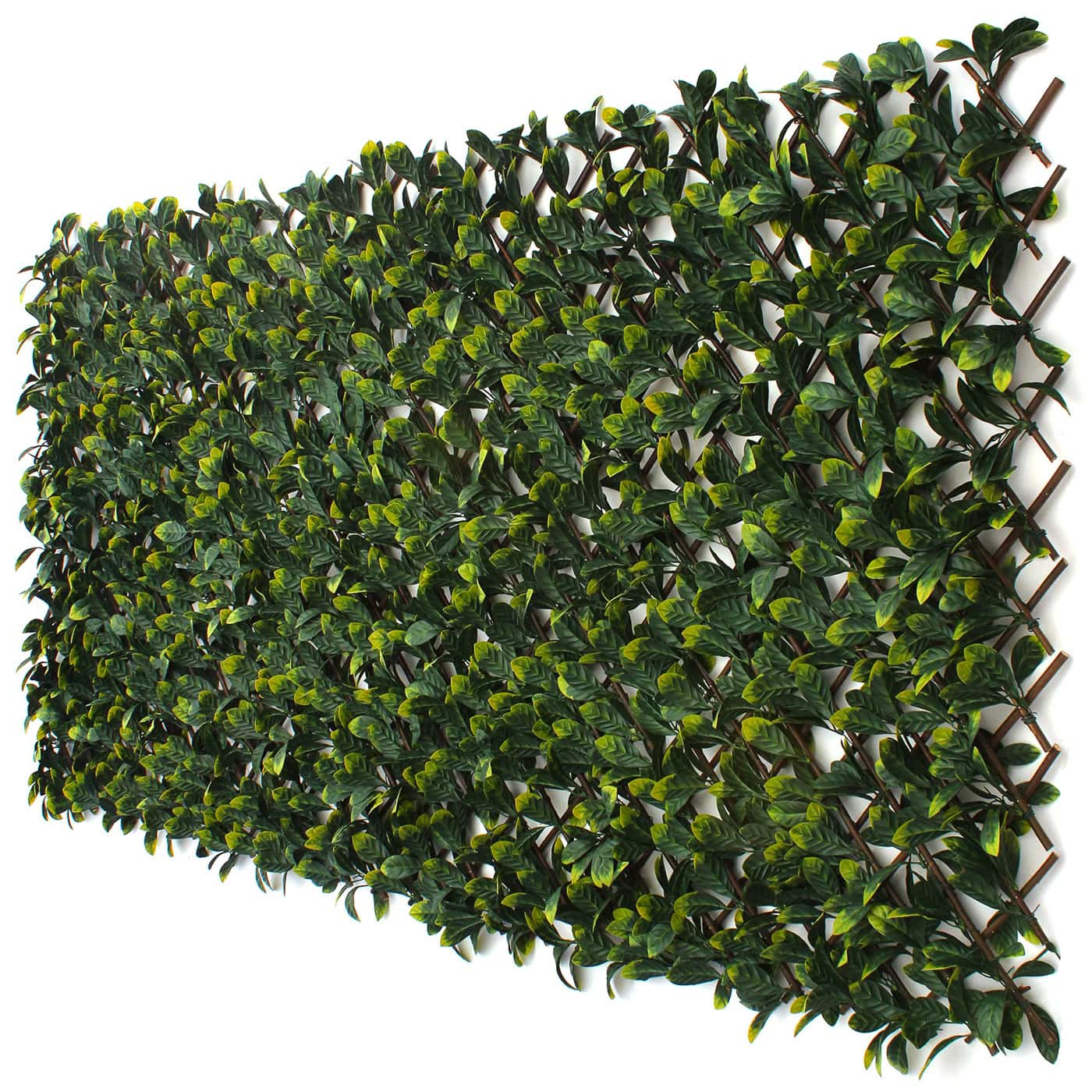
If you want instant greenery (without waiting for anything to grow), these faux vine panels* are a game changer.
You just attach the panels to an existing fence, wall, or even a free-standing frame, and suddenly you’ve got a lush, leafy backdrop that looks good year-round.
It’s perfect if you don’t have the patience for real vines or if you’re dealing with a spot where you can’t grow anything.
5 | Shrubs and evergreens
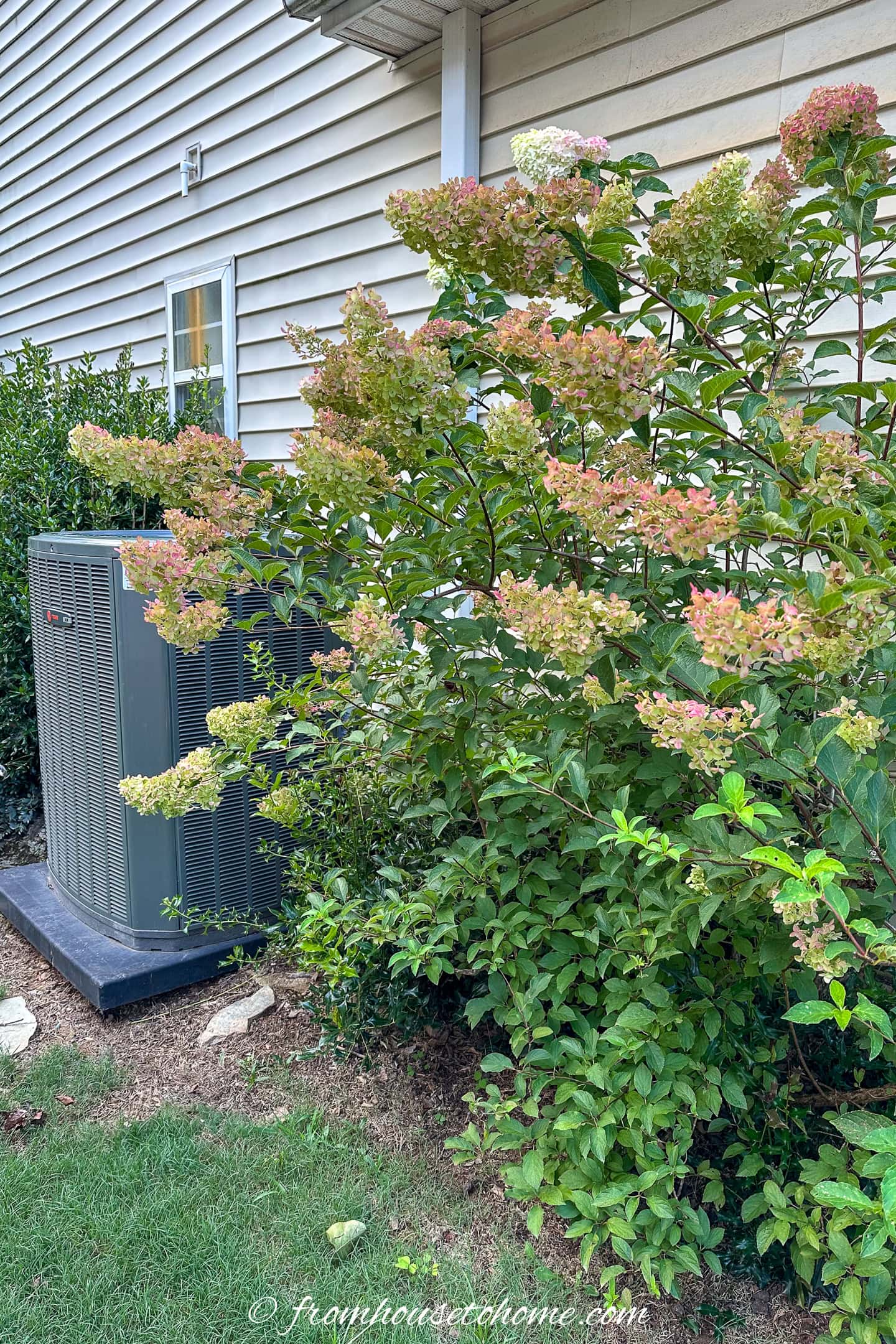
For more permanent coverage, I like to plant evergreen shrubs in front of things like utility boxes and A/C units.
They provide year-round camouflage. But you can still get to what’s behind them when you need to.
And they don’t require much maintenance, other than occasional pruning.
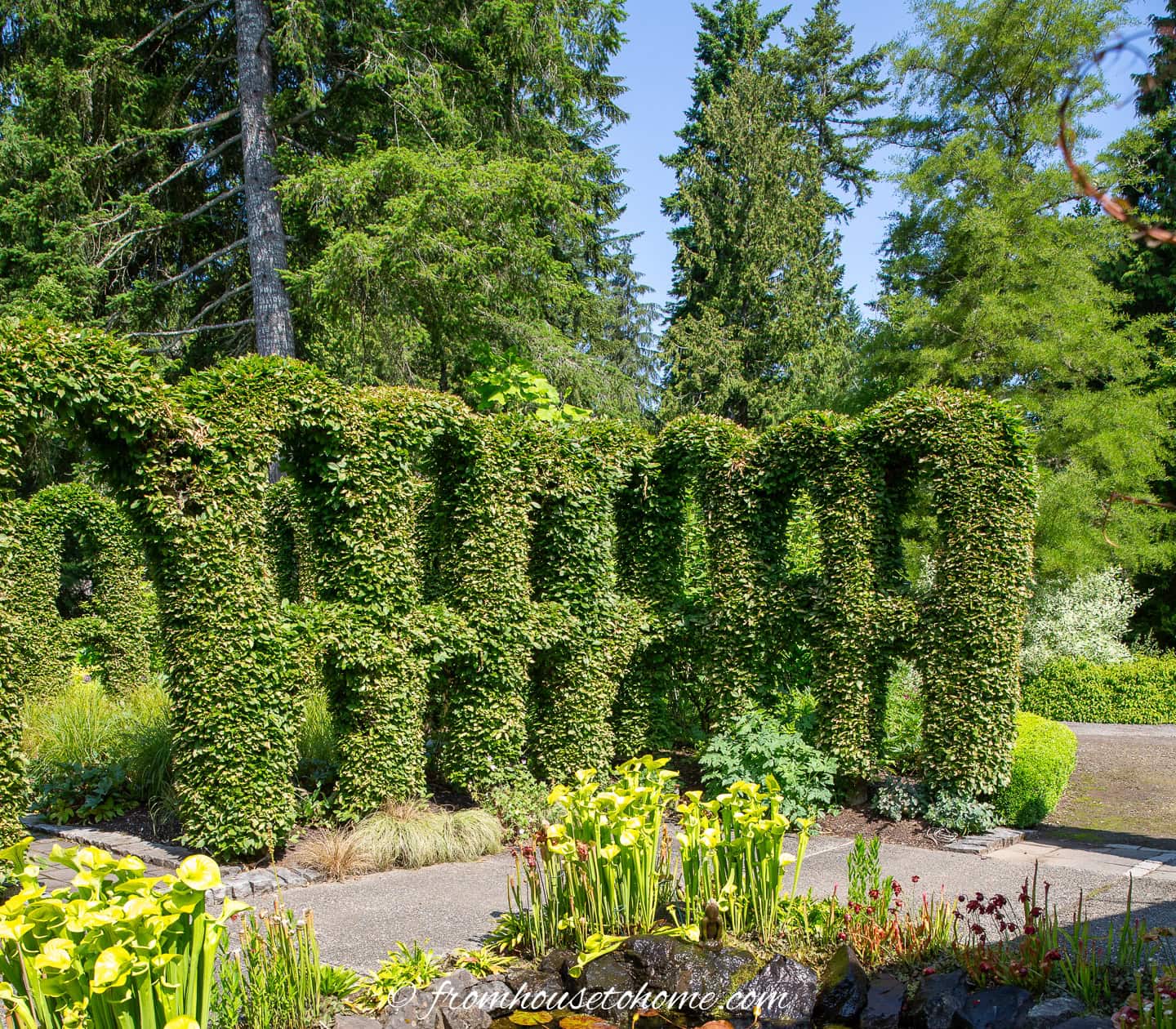
Unless you want to go all-out and create a design from the shrubs like this topiary screen at Herronswood garden.
6 | Add a distraction
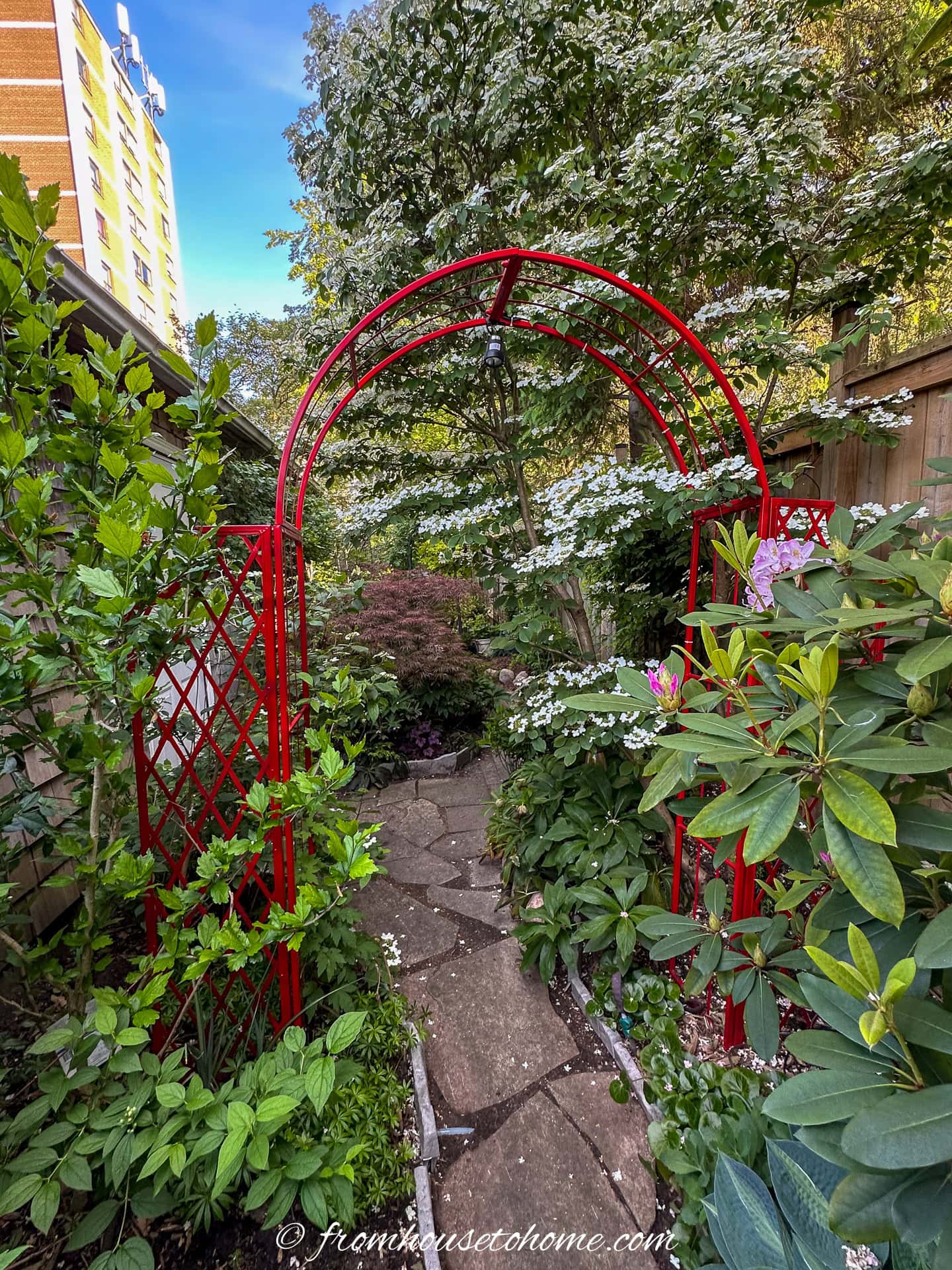
Sometimes, the best way to distract from an eyesore is to give people something better to look at.
Think statues, birdbaths, and other garden art placed in just the right spot so they call attention to themselves instead of the eyesore.
Or in my mother’s case, a bright red arbor that draws your eye into the garden. So you barely notice the large apartment building in the background.
7 | Tall Planters and Container Gardens
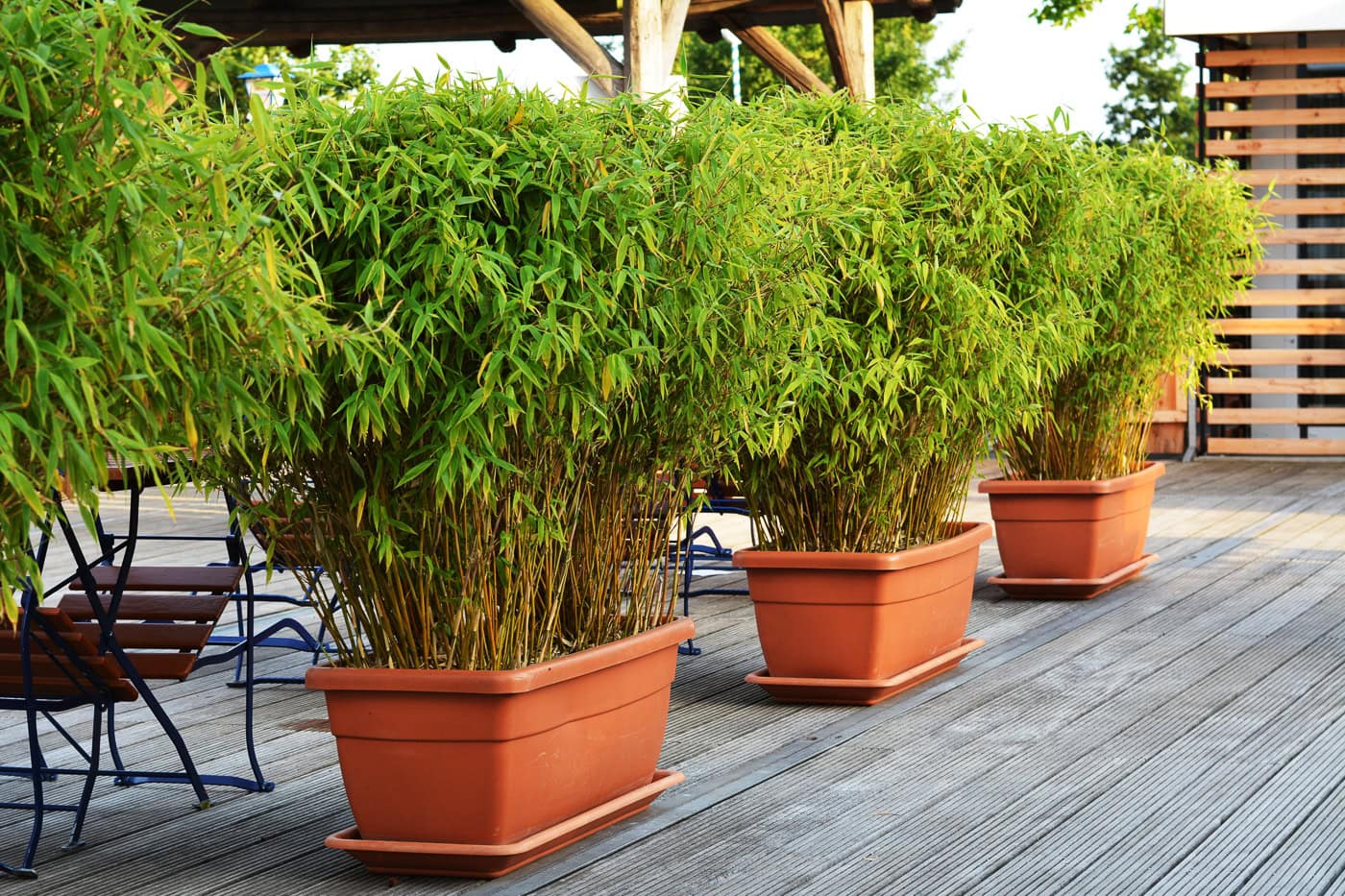
©doji1989 – stock.adobe.com Sometimes, all you need is a couple of big pots filled with tall grasses, bamboo or leafy plants.
This trick works really well when you need something quick and flexible.
The pots can be moved if necessary. And the greenery softens the space and completely hides what’s behind it.
8 | Hose pot
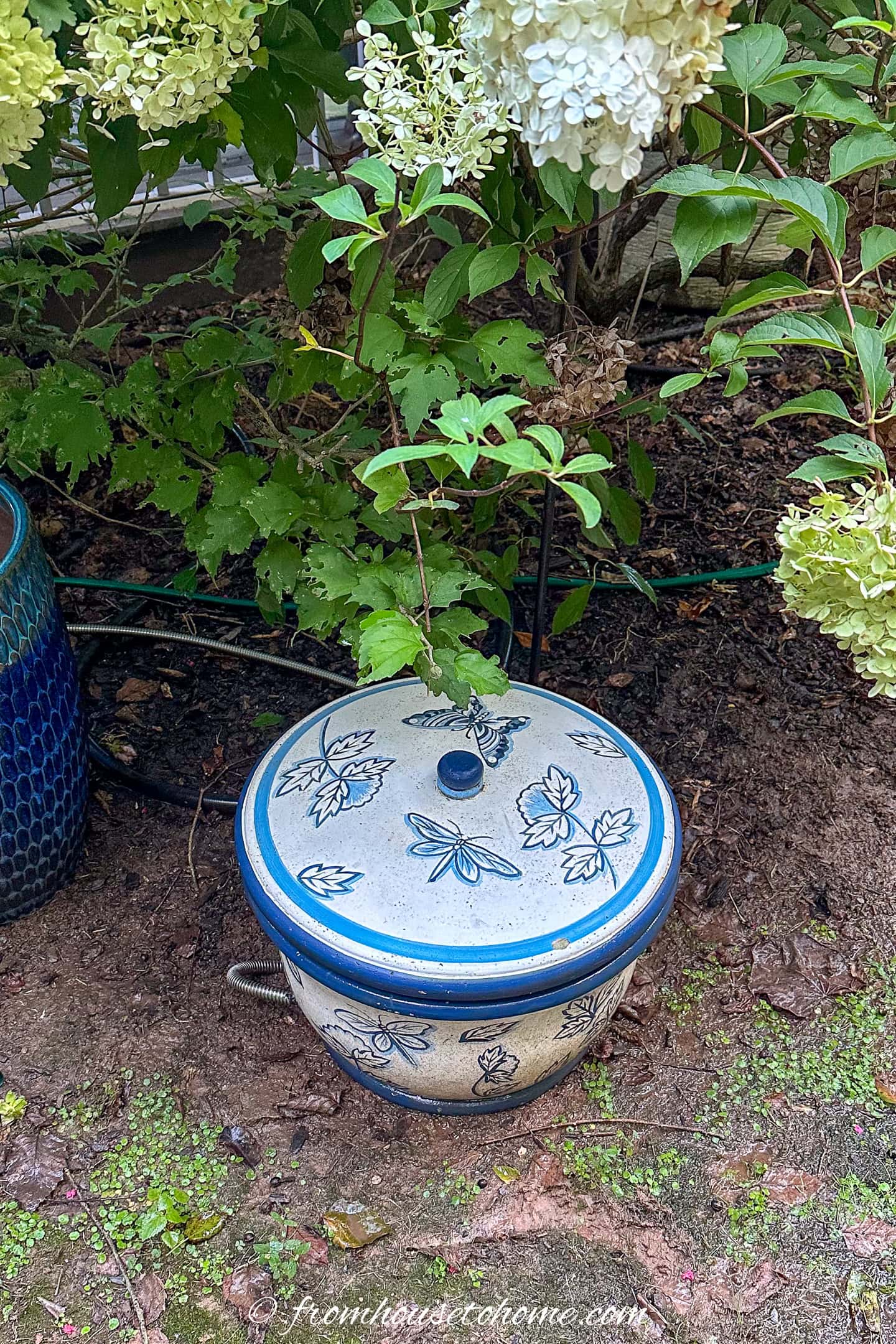
If you’re tired of staring at a tangled garden hose (or tripping over it), a hose pot is a simple solution I’ve used to keep things neat and hidden.
There are so many attractive options now. Everything from classic pottery styles to decorative metal.
You just coil up your hose inside, pop on the lid, and suddenly that messy pile disappears.
It looks like a garden accent, but it’s secretly doing double duty as storage.
9 | Paint it out
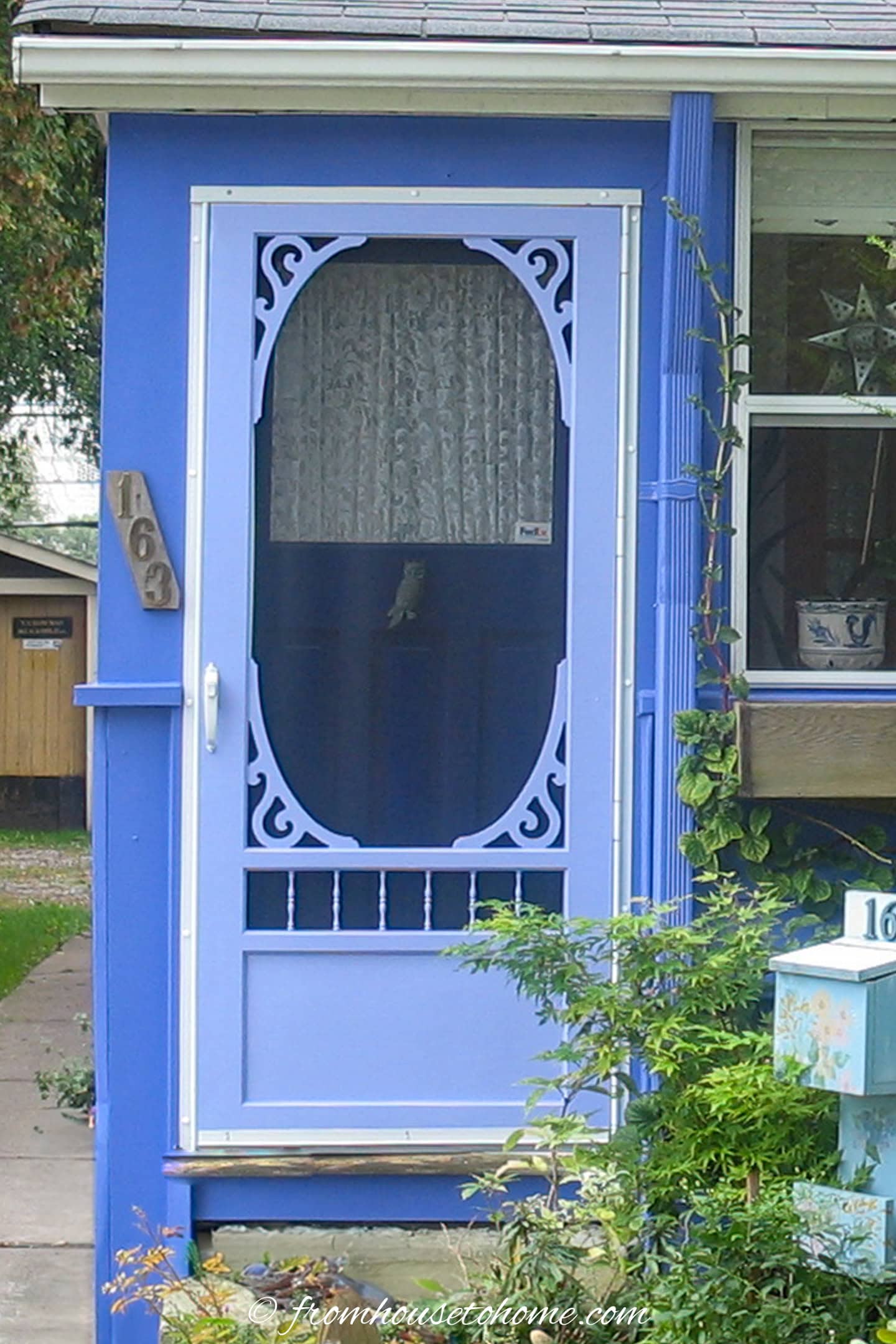
If you can’t hide it, sometimes you just have to camouflage it by painting it to match its surroundings.
This works very well for things like painted pipes and utility boxes that are up against the house.
Like the downspout that is right beside my mother’s front door.
She painted it purple to match the house color and now you hardly notice it at all.
10 | Faux rocks
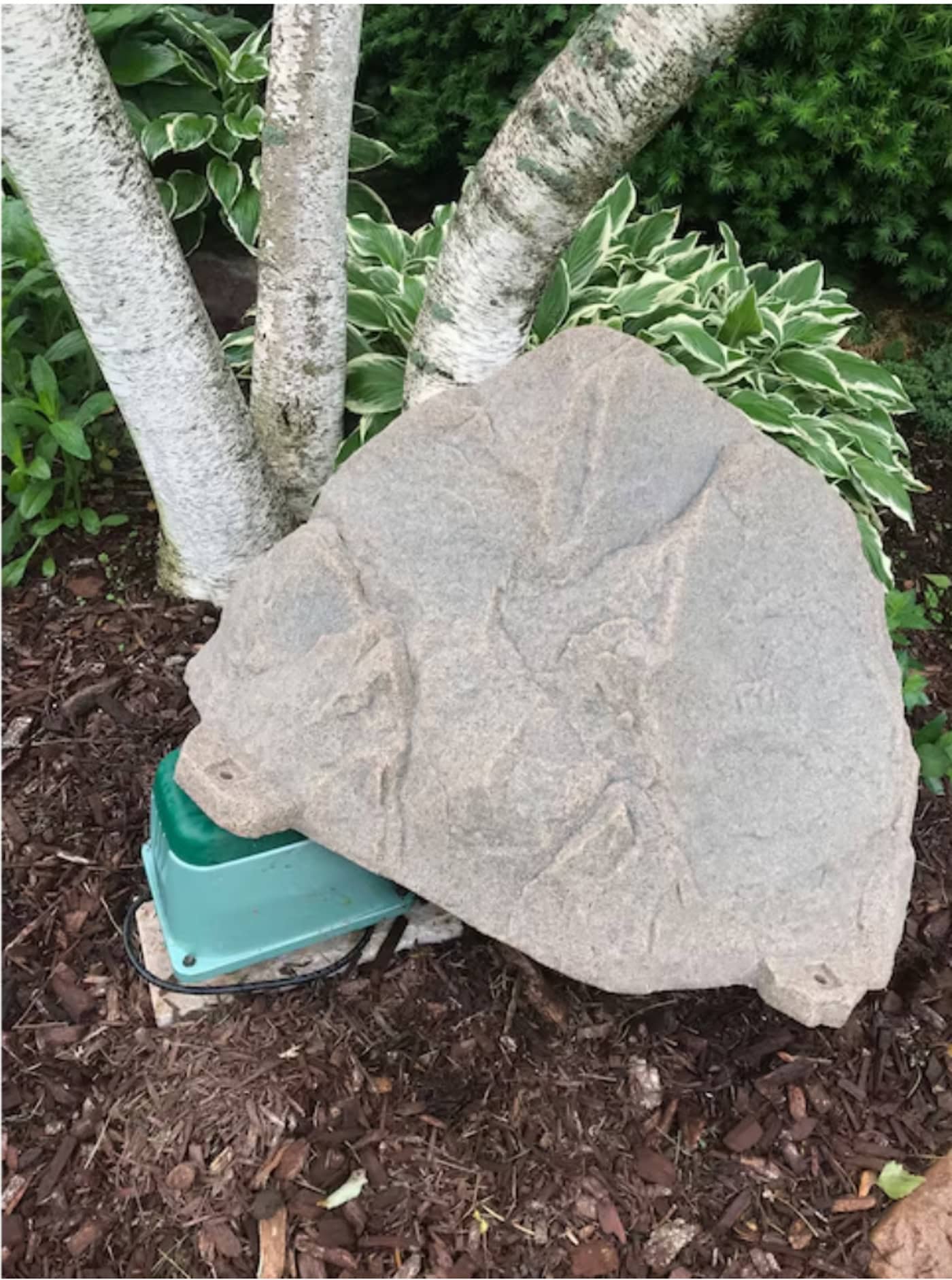
For awkward things like septic lids or well pumps, you can cover them with faux boulders* that look surprisingly real.
They are made for this purpose so are fairly light and usually come with stakes to hold them down.
But you can easily lift them when necessary. And they just disappear into the landscape.
11 | Garden structures
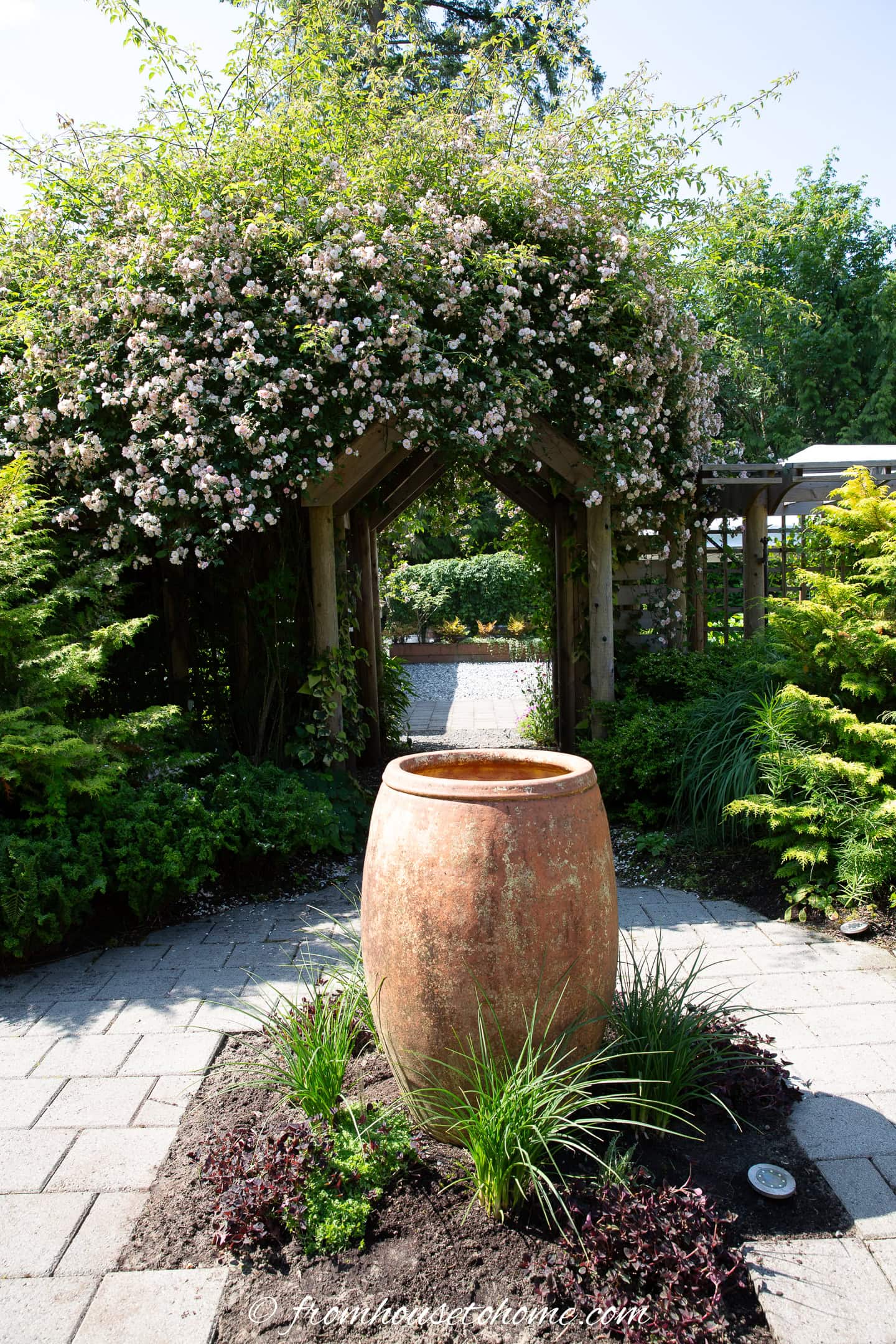
A pergola or arbor isn’t just pretty, it can block the view of something less attractive, too.
Especially if you plant something to grow over them. Like this arbor covered in roses at Herronswood garden in the Seattle area.
If you put them in a strategic spot, they also double as great focal points in the garden.
12 | DIY A/C enclosure
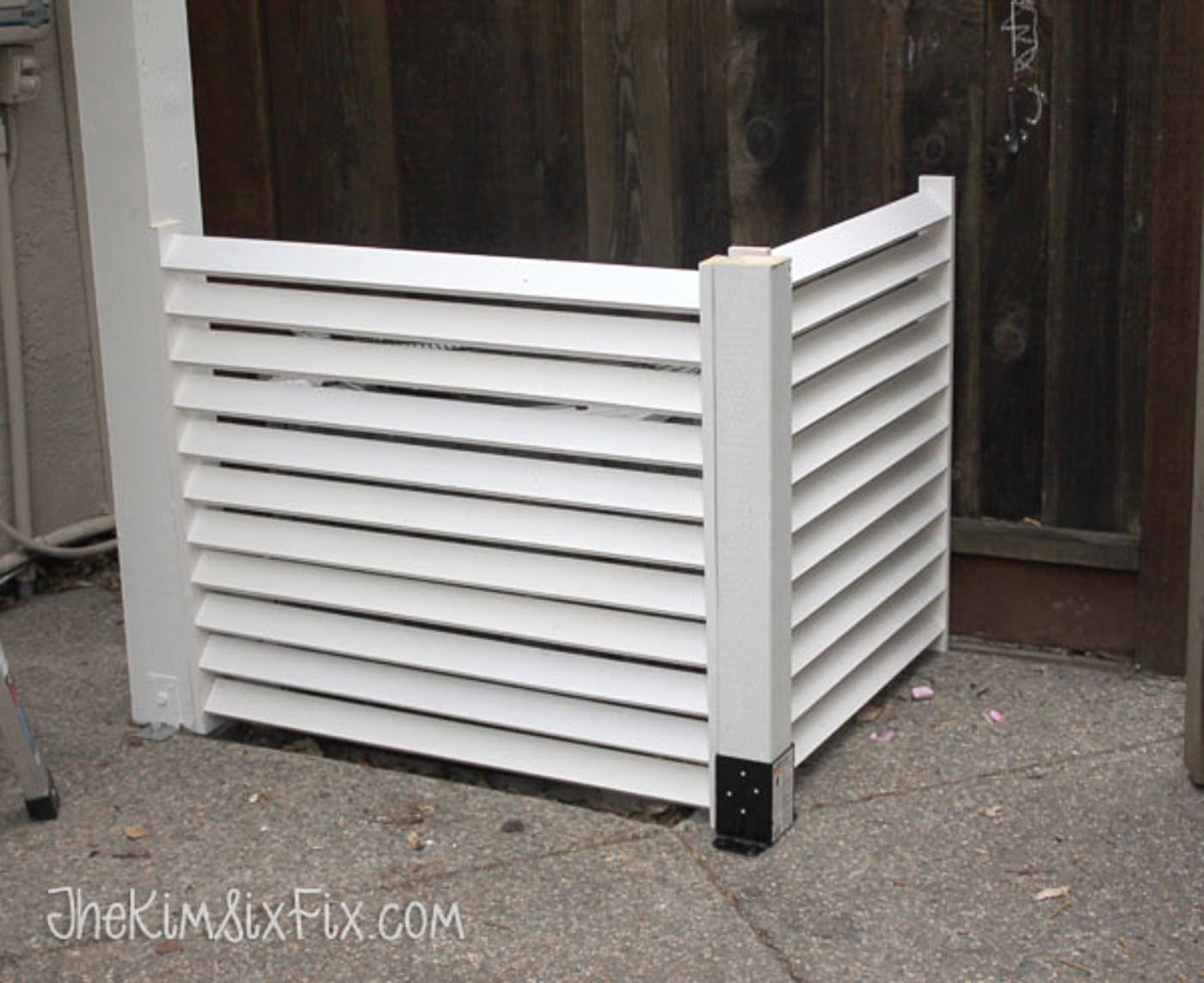
If you have an outdoor air conditioning unit that’s an eyesore (but still needs good airflow), a custom enclosure may be just what you need.
This one from the Kim Six Fix uses slats spaced far enough apart to keep the air circulating.
You can paint or stain it to match your house, or even add a little decorative detail to dress it up.
It hides the unit nicely, looks much more finished, and keeps the yard looking tidy. Just make sure to leave enough space for maintenance and ventilation!
13 | Large water fountain

If you want to add both beauty and a little privacy, a large water fountain can work wonders.
My mother actually made this wall fountain for the corner of her deck, and it completely blocks the view of the narrow corridor between her house and the neighbor’s.
Not only does the fountain hide what you don’t want to see, but the soothing sound of running water also helps mask noise and creates a relaxing atmosphere.
Whether you buy a ready-made fountain or go the DIY route, it’s a clever way to turn an awkward spot into a highlight of your outdoor space.
14 | Outdoor curtains
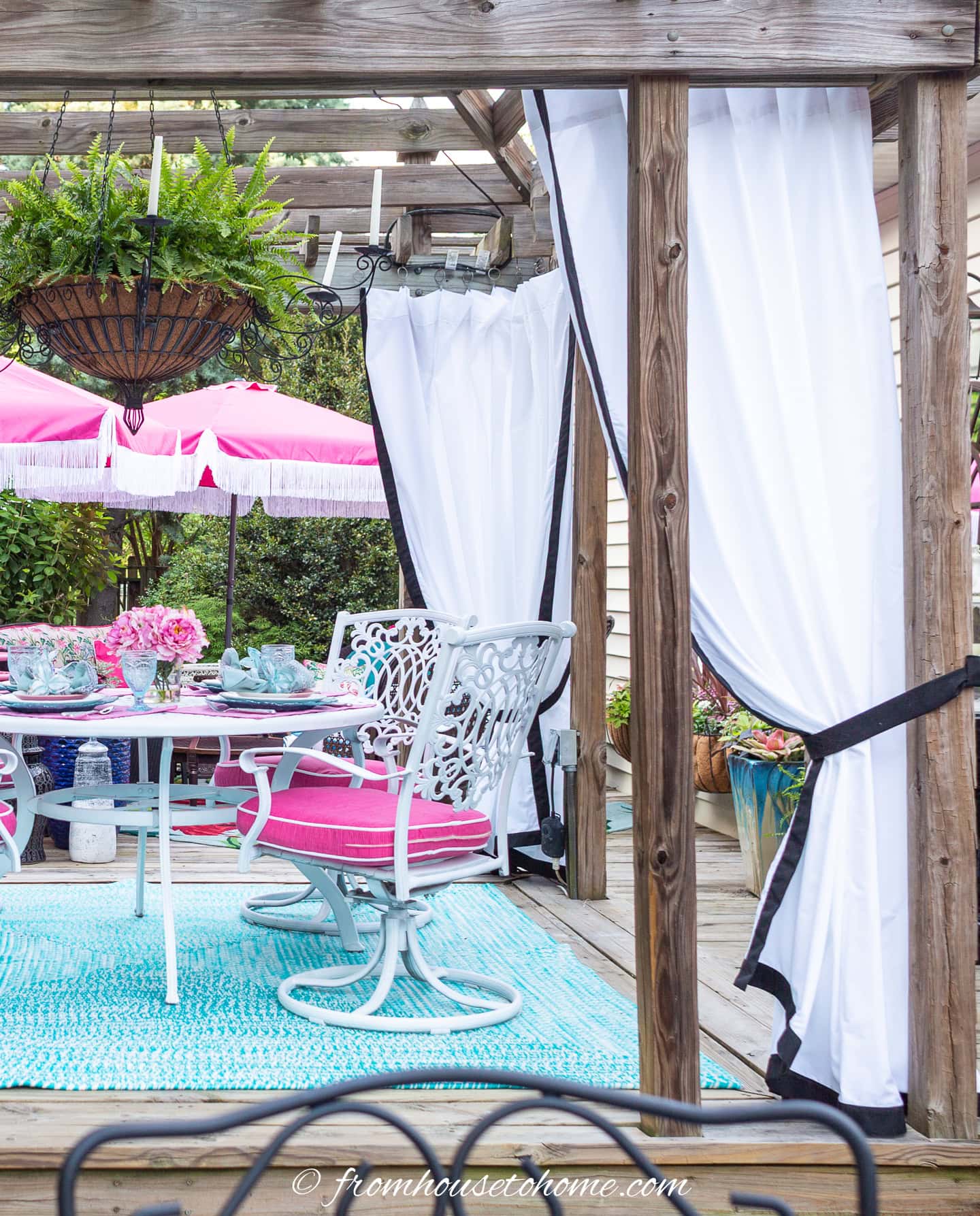
Sometimes the simplest solutions are the most effective.
I used outdoor curtains on my gazebo and they instantly hid the view of neighbor’s house while adding a breezy, resort-like feel to the space.
And they’re easy to open or close depending on what you want to see (or not see!) that day.
You can find weather-resistant fabric panels in all sorts of colors and patterns.
Or make your own using our simple DIY outdoor curtain tutorial.
15 | Hanging screen
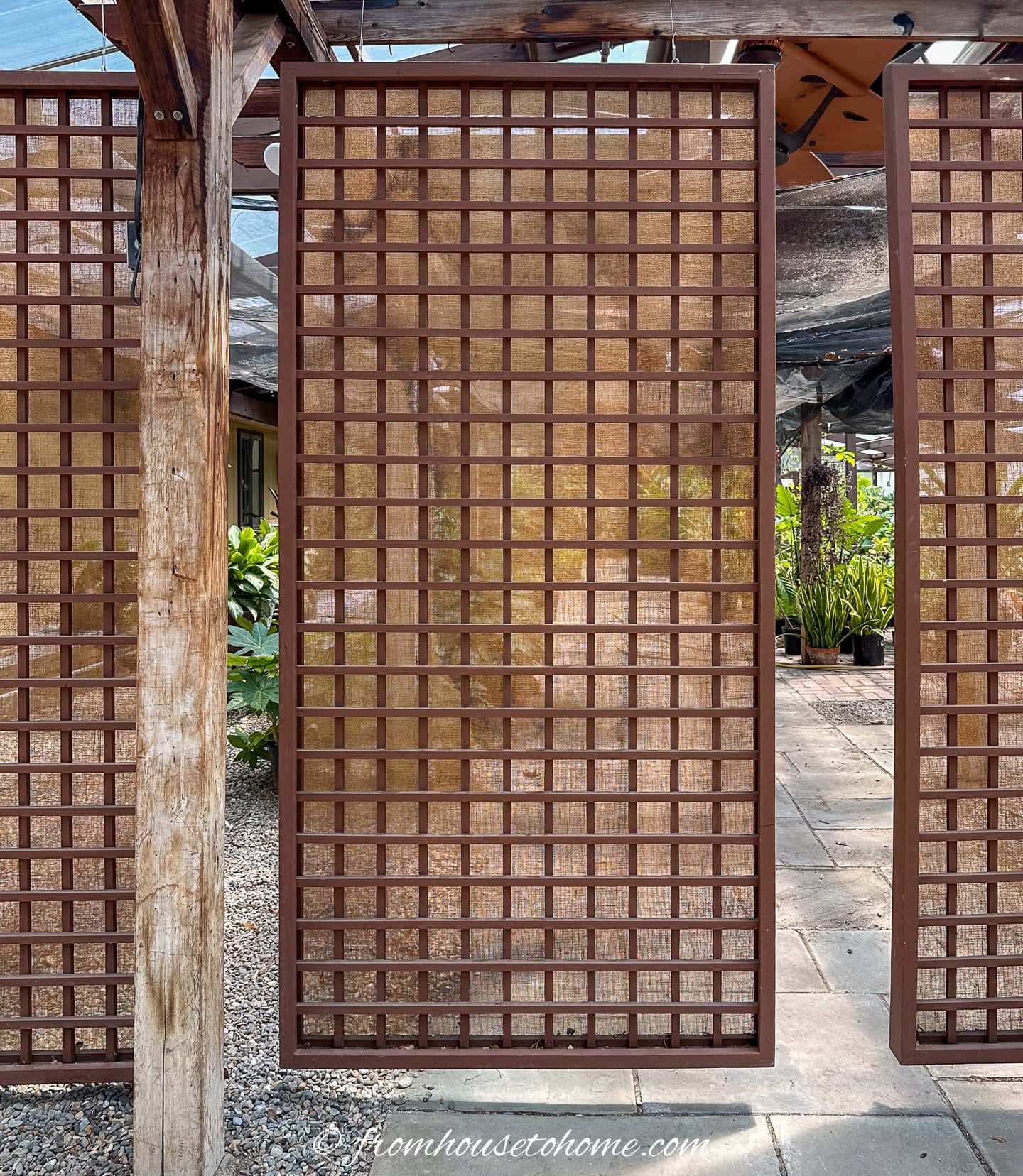
For a creative way to block unwanted views without building a permanent wall, consider hanging screens from an overhead structure (such as a pergola).
I first saw this idea at Meadowbrook Farm (in the Philadelphia area), where they hung panels from above to hide their potting area.
It worked beautifully. They added privacy and style, but still let in plenty of light and air.
You can use wood lattice, metal panels, or even sturdy outdoor fabric, depending on the look you want.
It’s a smart solution for areas where a full wall or fence isn’t practical, and it turns an eyesore into an interesting garden feature.
Have comments or questions about how to hide outdoor eyesores? Tell us in the section below.