
Paint Sheens: What To Use Where (And How To Get A More Custom Look)
This paint sheens guide will help you understand the different finishes and how to use them to create a more personalized, polished look in your home. It’s full of practical tips on choosing the right sheen for each space, plus my own tricks for adding drama and style with flat and gloss finishes.

Choosing the right paint sheen can totally change the vibe of a room, but with so many options out there, it’s easy to feel a little overwhelmed.
I want to help you make sense of it all, so you can pick the perfect finish for every space and get that custom look you’re after.
In this paint sheens guide, I’ll walk you through where to use each sheen and share practical tips for making your paint choices work harder for you.
And give you some of my favorite (not-the-usual) ways to use paint sheen that will add interest and drama to your rooms.
Trust me, a little bit of know-how can make a big difference in how your home feels and looks!
Looking for more paint tips? You'll love Best Paint Primer and Paint Your Walls And Ceiling The Same Color.
Some of the images below are not mine and cannot be pinned from this page. Please click through to the original source to save them.
1 | What are paint sheens?
Paint sheen refers to how much light the paint reflects once it dries.
The more reflective the finish, the higher the sheen. The less reflective, the flatter the finish.
Here’s a simple breakdown from lowest to highest sheen:
Flat (Matte)
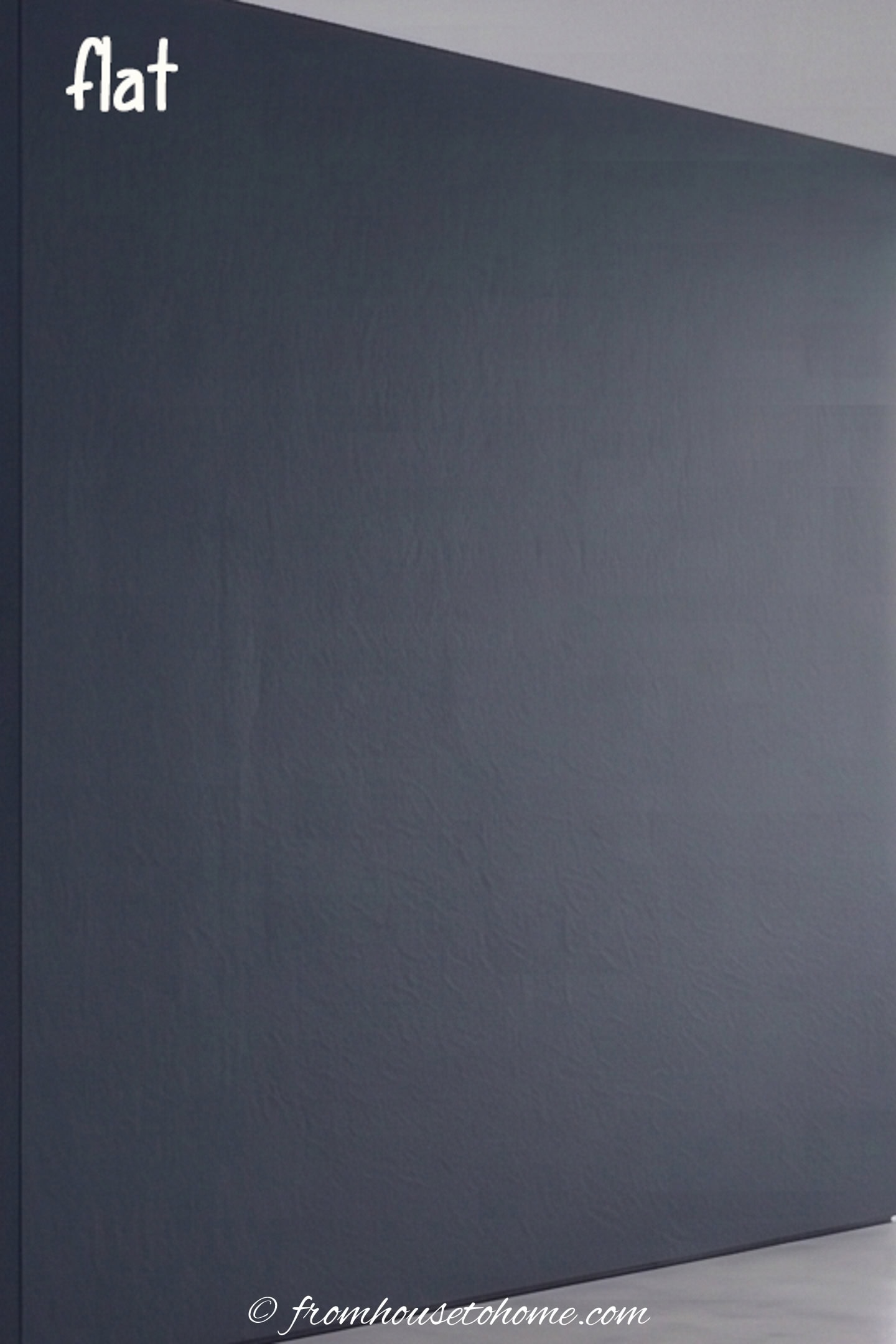
- No shine at all.
- Soft, velvety look.
- Best at hiding imperfections.
- Not easily wash-able.
Satin or Eggshell

- Very slight sheen.
- Looks mostly matte but a little smoother.
- More durable than flat.
Semi-Gloss
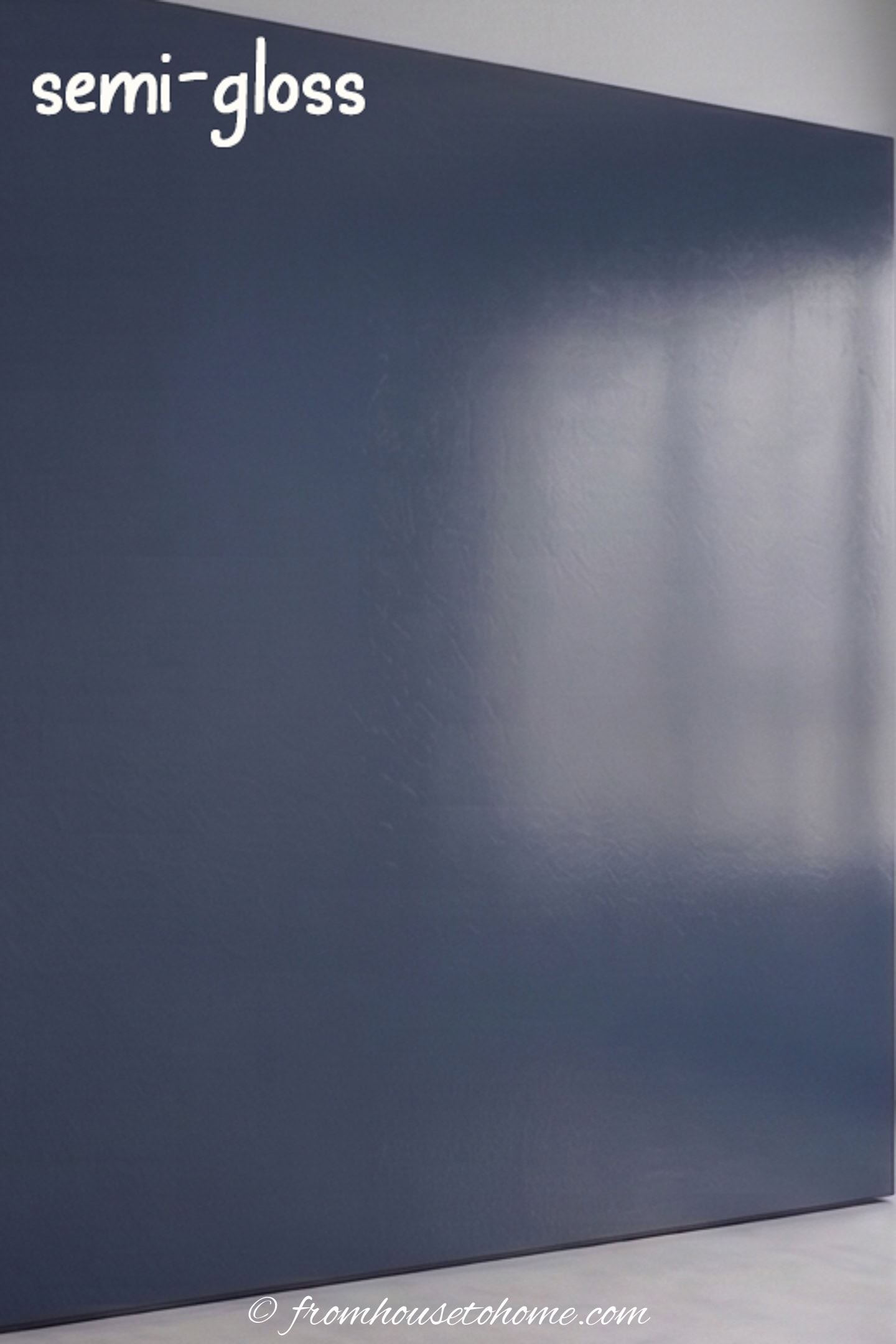
- Clearly shiny.
- Very durable.
- Easy to clean and moisture-resistant.
High Gloss

- Very shiny and reflective.
- The most durable finish.
- Creates a dramatic, polished look.
2 | Why paint sheen makes such a big difference
Sheen changes how light moves around the room.
- Higher gloss reflects more light and feels brighter and more dramatic
- Lower sheen absorbs light and feels softer and cozier
So even if you use the exact same color, the finish can completely change the look.
3 | The standard paint sheen rules (and why they work)
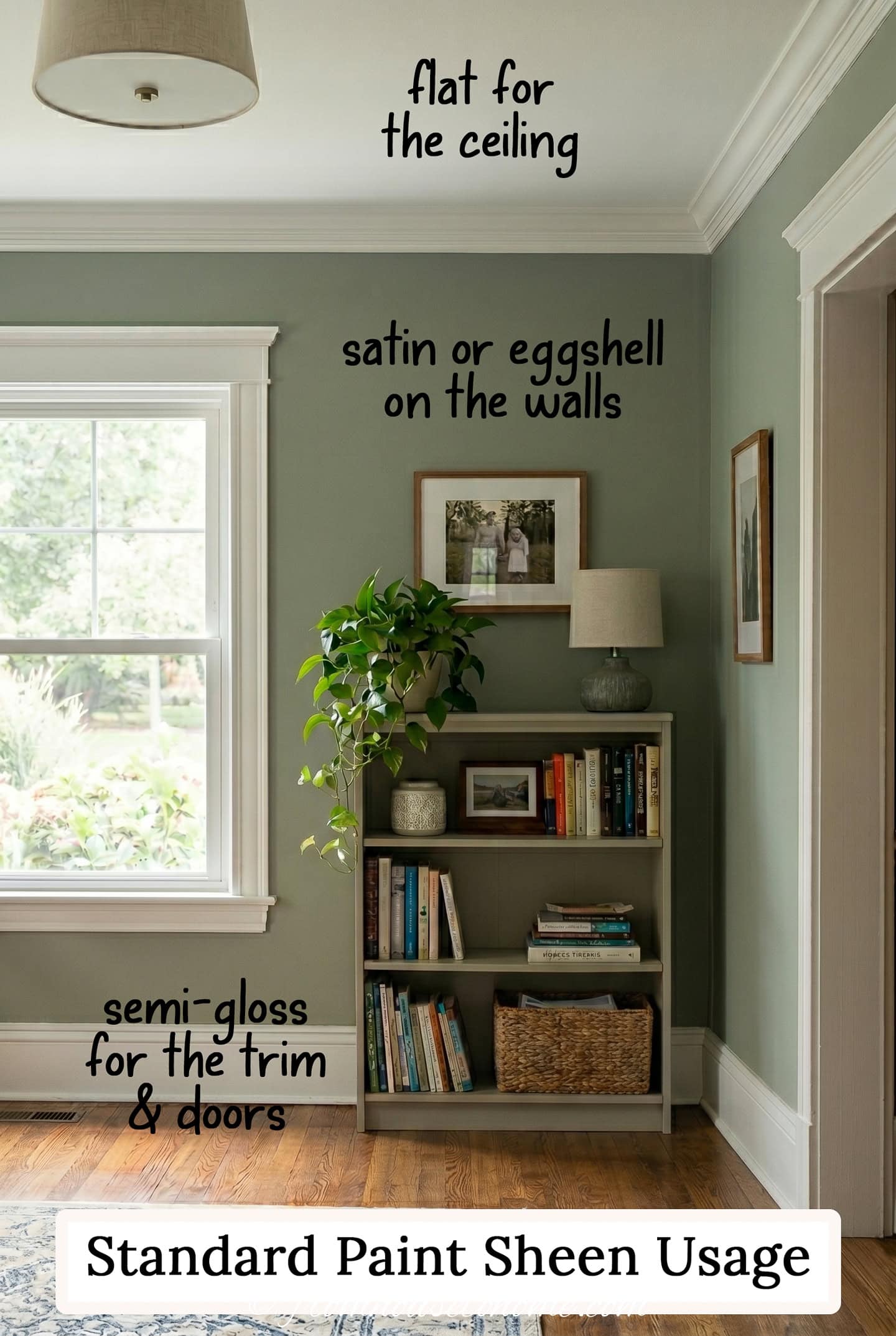
These are the guidelines you’ll see everywhere:
Flat (Matte) – use for ceilings- Usually the least expensive.
- Hides texture (like popcorn ceilings) the best.
Eggshell (or Satin) – most popular for walls
- Can handle light cleaning so it’s the standard choice for most walls.
Semi-Gloss – trim, doors, kitchens, bathrooms
- Holds up to moisture and can be scrubbed.
These rules are popular because they’re safe and practical. If you follow them, your paint will hold up and look good.
But they’re not the only option.4 | My favorite way to use flat paint
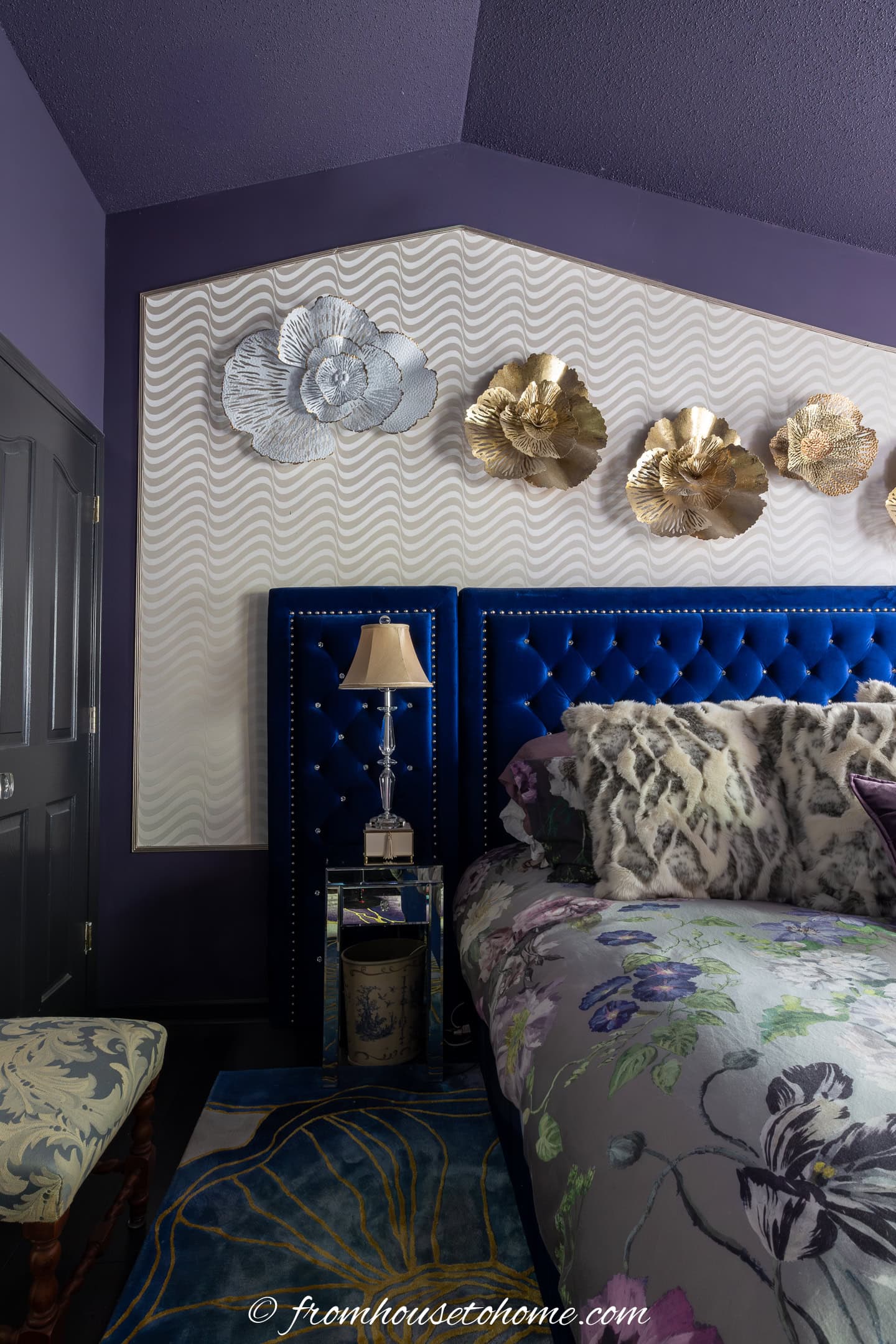
This is where I like to break the rules.
In low-traffic rooms like bedrooms or guest rooms, I use flat paint on the walls. (As well as on the ceiling.)- It has a soft, almost velvety look.
- Dark colors feel richer.
- The room instantly feels calmer and more finished.
If you’ve ever painted a dark color and thought it looked a little harsh, switching to flat can fix that.
5 | When high gloss is totally worth it
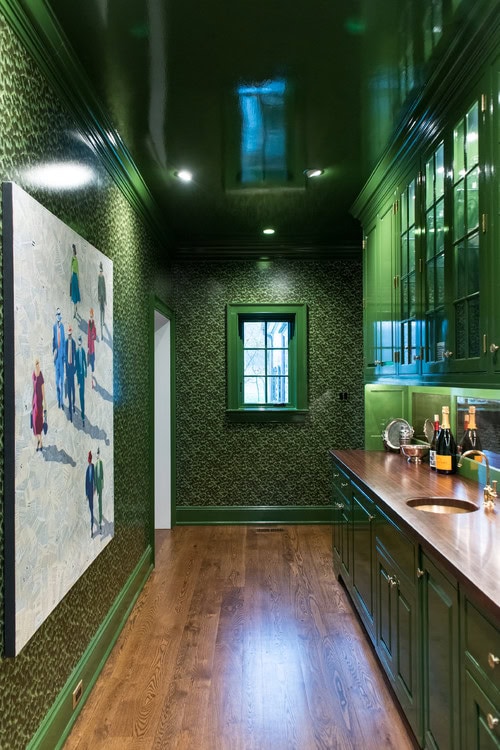
photo by Cullen Construction Inc. (via houzz.com) When I want drama, I go all in with high gloss.
- It reflects light like crazy.
- Makes colors look deeper.
- Adds a really polished, designer feel.
I especially love it on:
- Ceilings (if they’re flat).
- Furniture and cabinets – lacquer is my favorite!
- Walls – when you really want to up the glam factor.
But here’s the trade-off. High gloss shows every flaw.
So before using it, you need to:
- Fill holes.
- Sand rough spots.
- Smooth everything out.
If you skip that step, you’ll see it.
6 | Mixing sheens
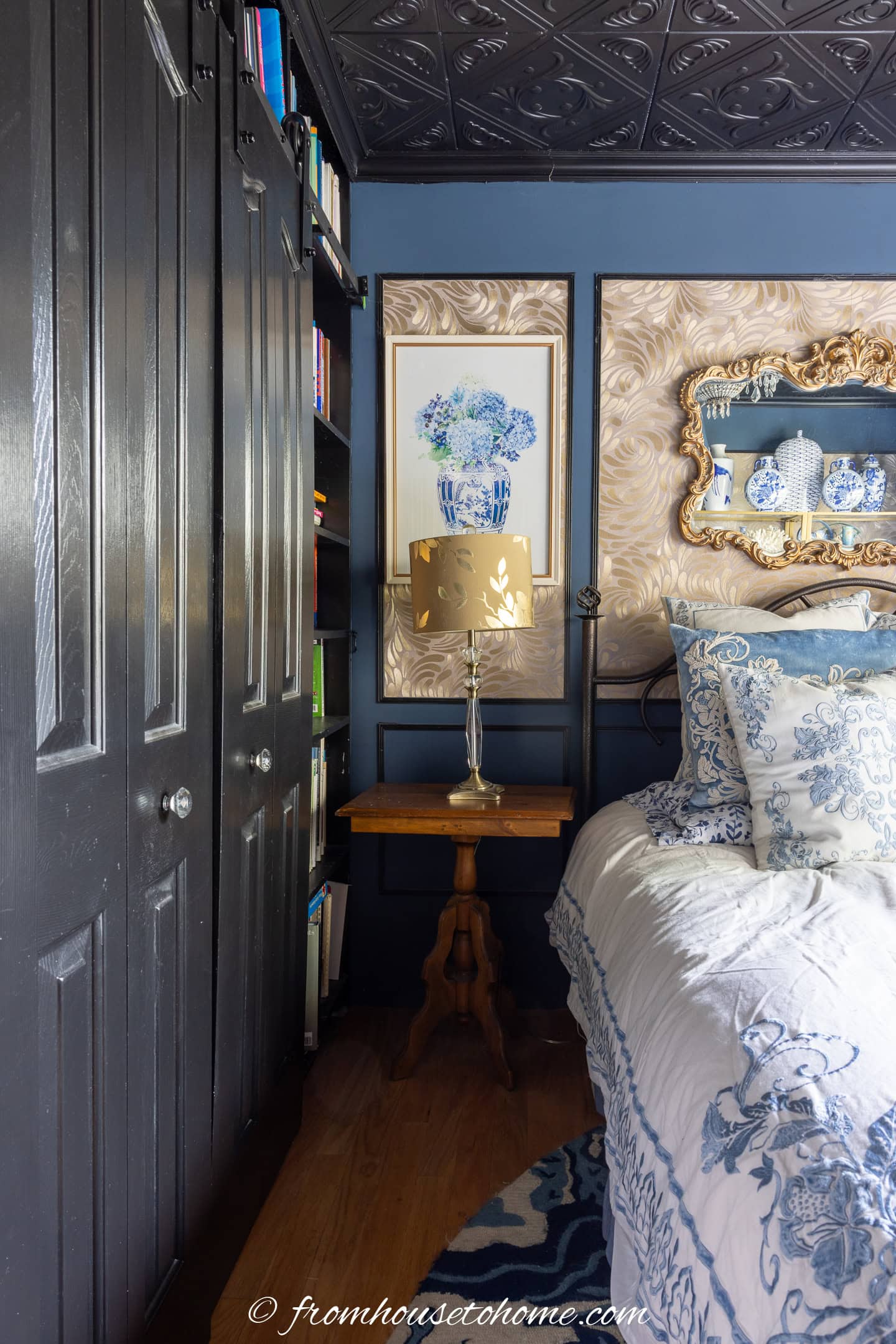
Mixing flat and gloss sheens is the easiest way to make a room look more custom without changing your color.
My favorite formula is flat walls with high-gloss trim, doors, and moldings.- The contrast adds depth.
- The trim stands out in a clean, polished way.
- The walls stay soft and elegant.
For the ceiling, you can go either way. (Both work. It just depends on the vibe you want.)
- Flat for a seamless, cozy look.
- Higher sheen if you want a little extra light and contrast.
7 | How to choose the right paint sheen
Instead of following one rule for every room, think about this:
How much wear does the room get?- High traffic means you need more durable finishes.
- Low traffic means you can go flatter.
Do you want cozy or dramatic?
- Cozy means lower sheen.
- Dramatic means higher sheen.
How smooth are your walls?
- Imperfect walls need flat paint.
- Smooth walls can handle gloss.
8 | The bottom line
The standard paint rules are a good starting point.
But if you want your home to feel less builder-grade and more custom, changing the sheen is one of the easiest upgrades you can make.
Honestly, I use flat and high gloss more than anything else. And combining the two is where the magic really happens.
Have comments or questions about our paint sheens guide? Tell us in the section below.