
Azalea Companion Plants (What To Plant With Azaleas)
Azalea companion plants can transform your garden into a vibrant, multi-layered paradise by complementing the beauty of azaleas and enhancing their growth. Learn from my personal experience to find the perfect plant pairings that will elevate your garden’s aesthetic and ensure thriving azaleas.
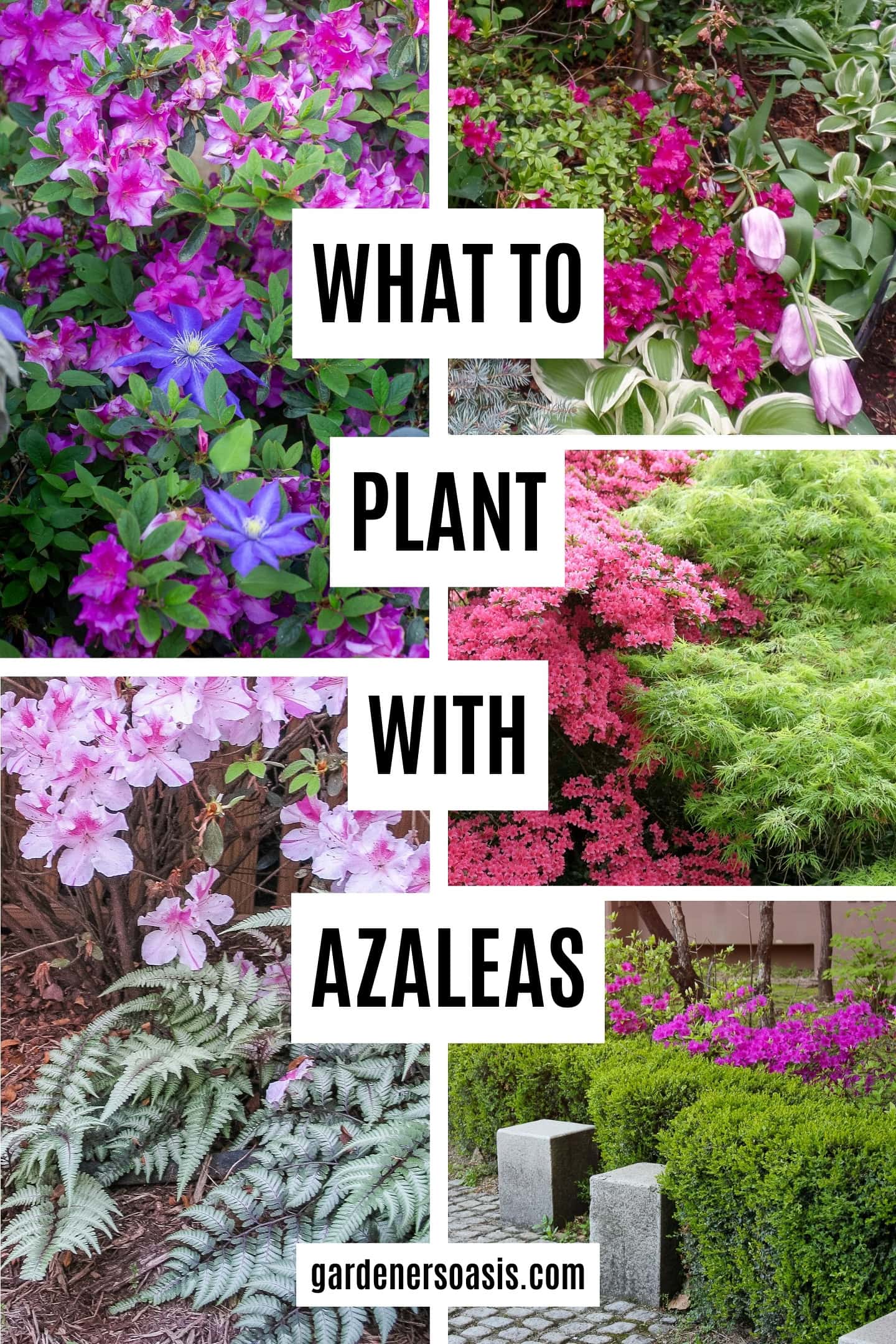
Having spent years nurturing azaleas in my garden, I know firsthand the challenges of finding the perfect companion plants for these stunning shrubs.
It took me a while to figure out what works best alongside them, but the results are worth it.
The right azalea companion plants can enhance their beauty even more and create a lush, layered garden.
By choosing compatible neighbors, you can create a vibrant tapestry of colors and textures that will make your garden look beautiful throughout the seasons.
Whether you’re looking to fill in gaps or create a lush backdrop, these companions for your azaleas can transform your garden into a flourishing oasis.
Note: Keep in mind that most Azaleas thrive best in part shade, but some varieties will do fine in the sun. So for the best results, make sure to pick companion plants that grow in the same light level as your Azalea.
Looking for more shade shrubs? You'll love Mountain Laurel and Japanese Pieris.
1 | Spring bulbs
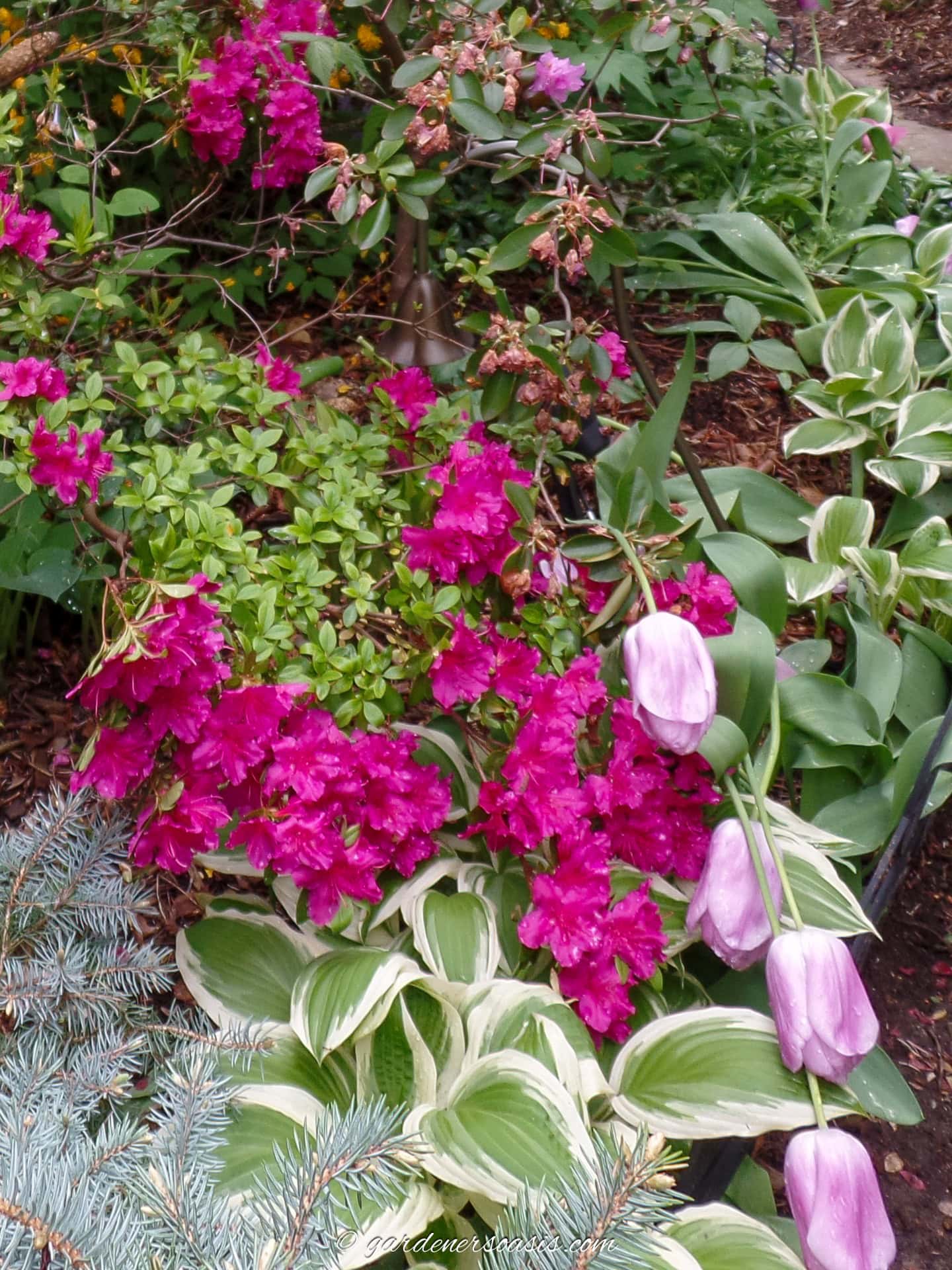
Spring bulbs (like tulips, daffodils and hyacinths) make great companion plants for Azaleas.
They bloom at the same time and come in a variety of colors so they can either add contrast or create a monochromatic look with your Azalea flowers.
And the difference in leaf shapes adds some extra interest to the garden.
Earlier blooming bulbs that require more sun will still do well with Azaleas if they are planted under deciduous trees. That way the bulbs will get the sun they require before the leaves come out on the trees. And the Azaleas will get the shade they need when it starts to get warmer.
Spring bulb suggestions:
- Daffodils
- Tulips
- Hyacinths
- Muscari
To fill in the gaps left when bulbs go dormant (and to help hide the leaves), I like to plant them with late-growing perennials such as Hostas (which also happen to look good with Azaleas).
2 | Disappearing shade perennials
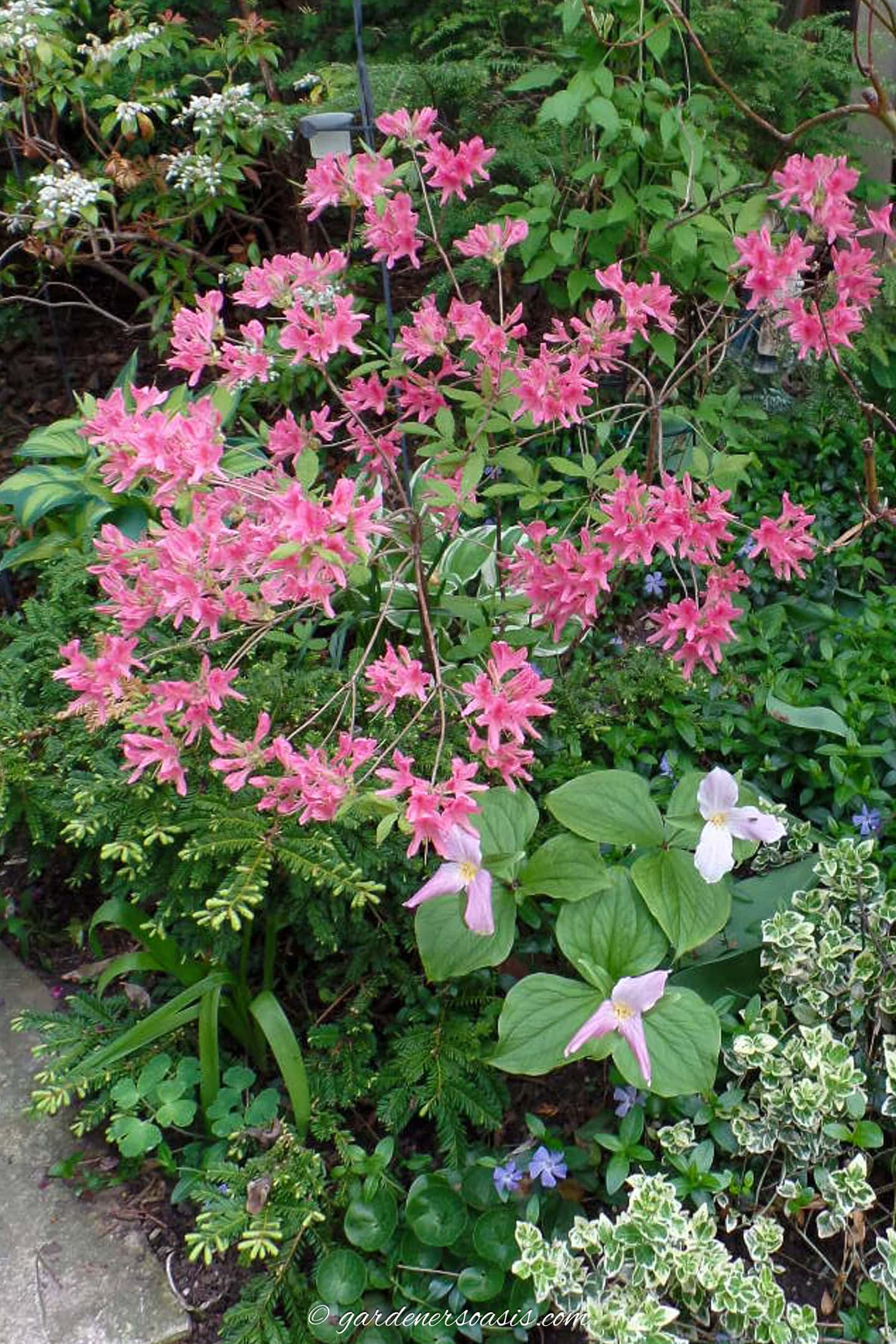
In the garden, trilliums, Virginia bluebells, and many bleeding heart varieties are what I like to call disappearing shade perennials since they go dormant in the summer.
They all make great Azalea companion plants because they bloom at exactly the right time to create a spectacular display of color and life.
Then gracefully retreat as the temperatures rise, allowing other plants to take the spotlight. And after the blooms are done, their leaves are usually less messy looking than bulbs so your garden stays looking neat.
Shade perennial suggestions
- Trillium
- Bleeding Heart
- Virginia Bluebells
3 | Perennials with interesting foliage
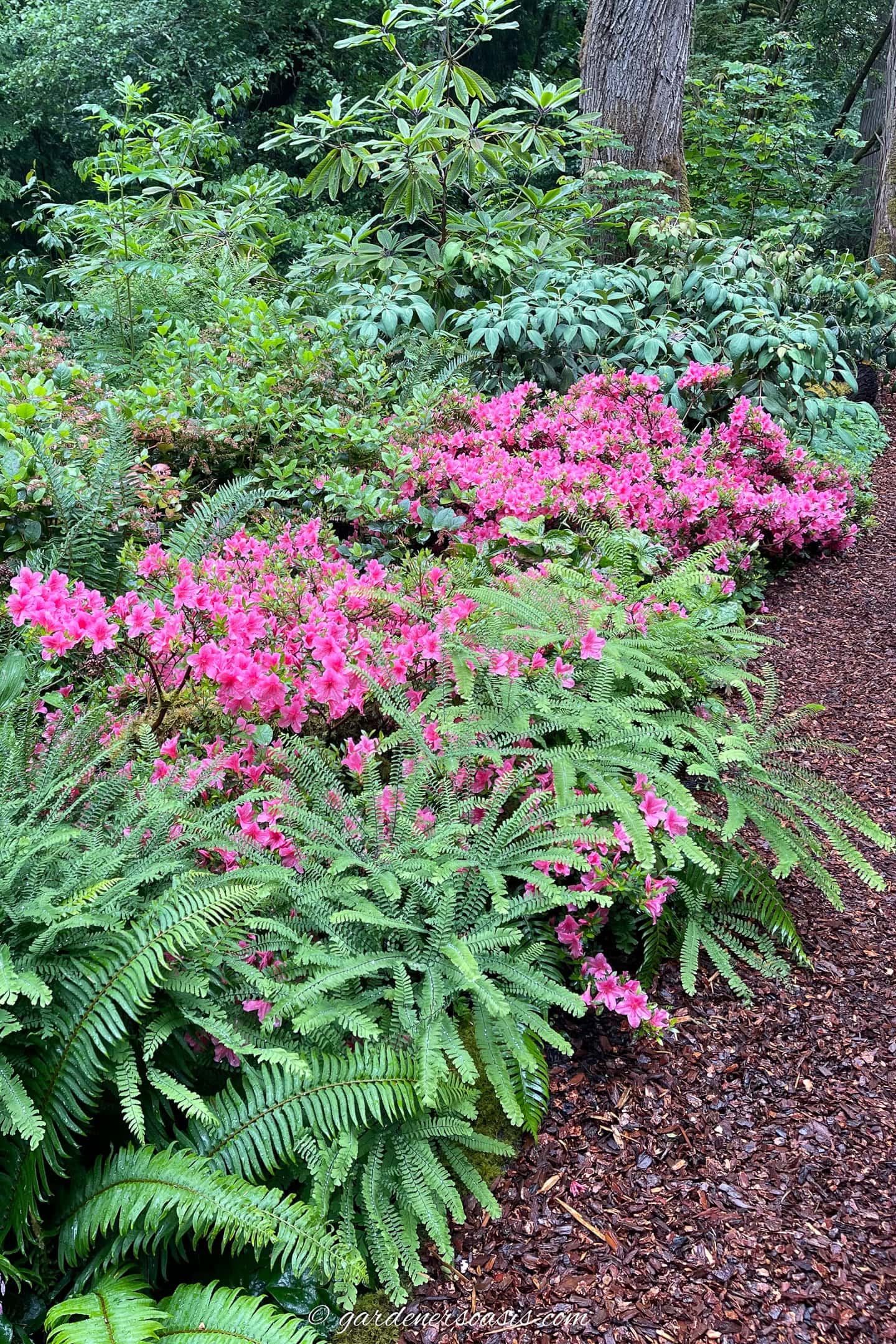
Pairing Azaleas with other plants that have different leaf shapes, sizes and colors adds interest to your garden all season long. Not just when the Azaleas are blooming.
I particularly like using Hostas and ferns for this purpose.
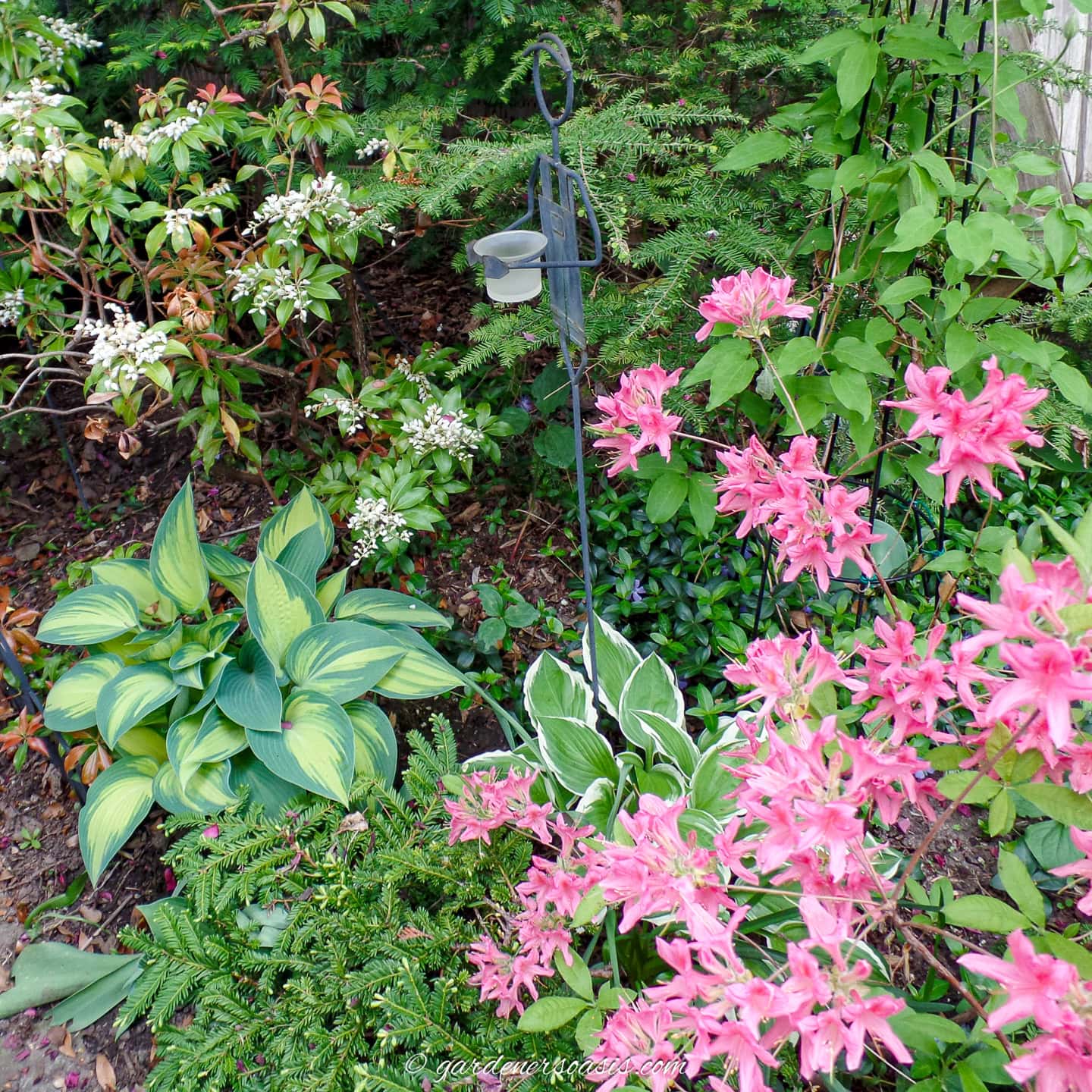
Hostas have large, wide leaves available in a variety of colors.
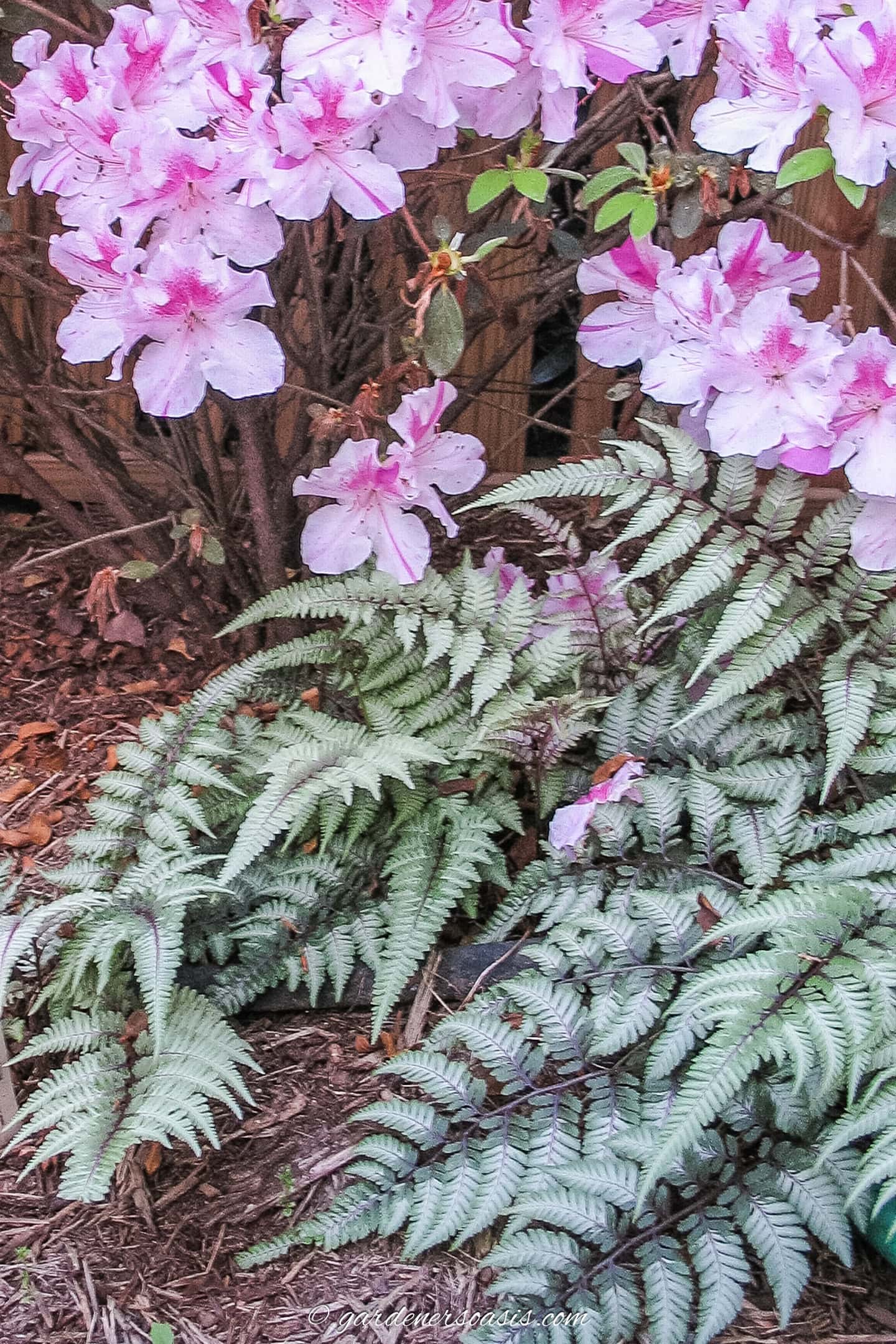
While ferns bring a touch of elegance with their delicate, lacy fronds. And Japanese painted ferns also add interesting foliage colors.
Both of these plants thrive in the same conditions as many azaleas, making them easy plants to grow together.
Perennial suggestions:
- Hosta
- Ferns
- Japanese Painted Fern
- Hellebores
- Coral bells
4 | Ground covers
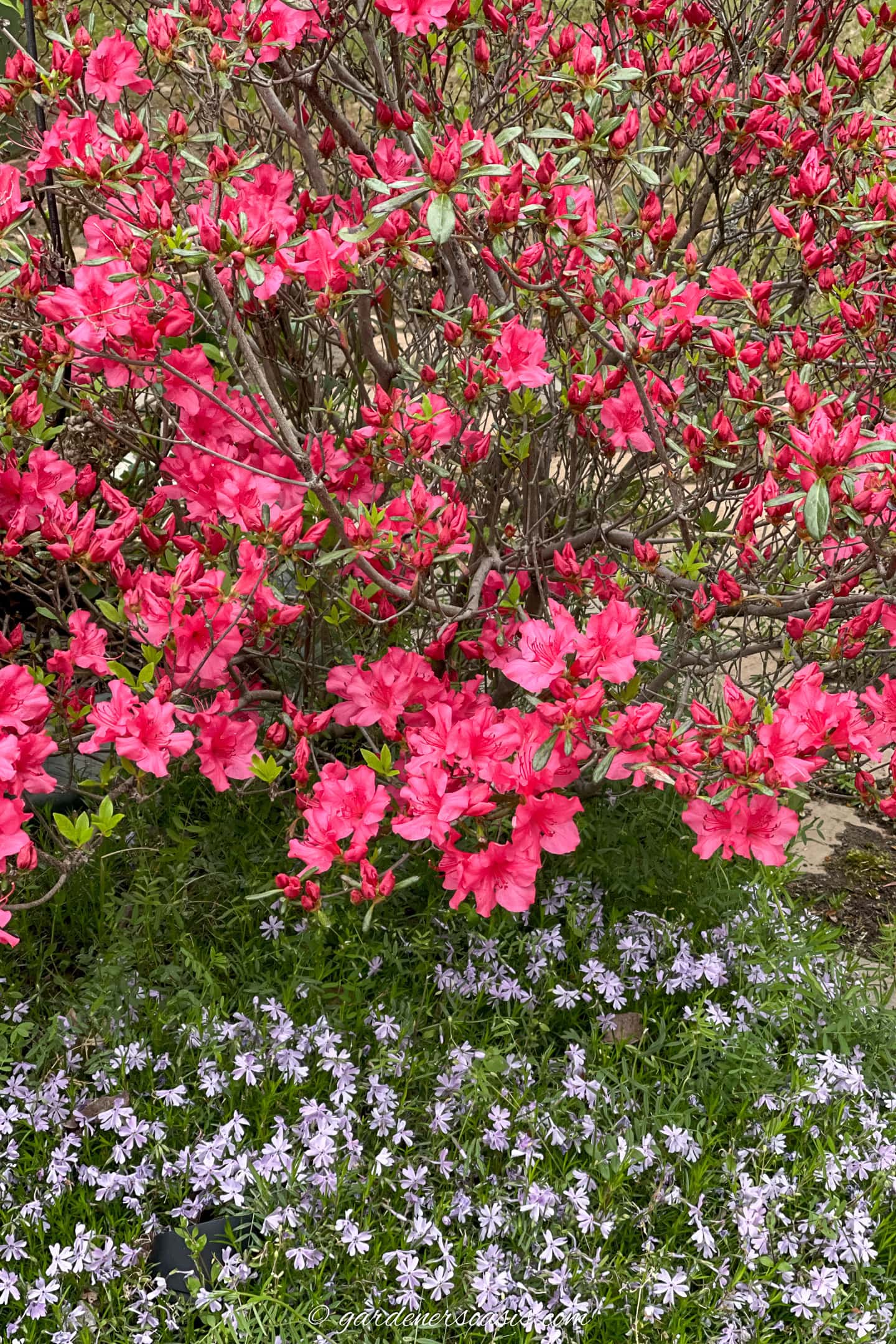
Deciduous Azaleas have a tendency to become a bit leggy, so I like to plant ground cover under them to fill in those gaps.
Denser varieties like Encore Azaleas don’t leave much room or light for planting underneath, but adding ground cover in front can enhance their overall appeal.
In sunnier spots, consider Creeping Phlox (like the picture above).
It blooms at the same time as early-blooming azaleas, and you can choose a blue or purple variety for a striking contrast. Or go for pink if you prefer a monochromatic look.
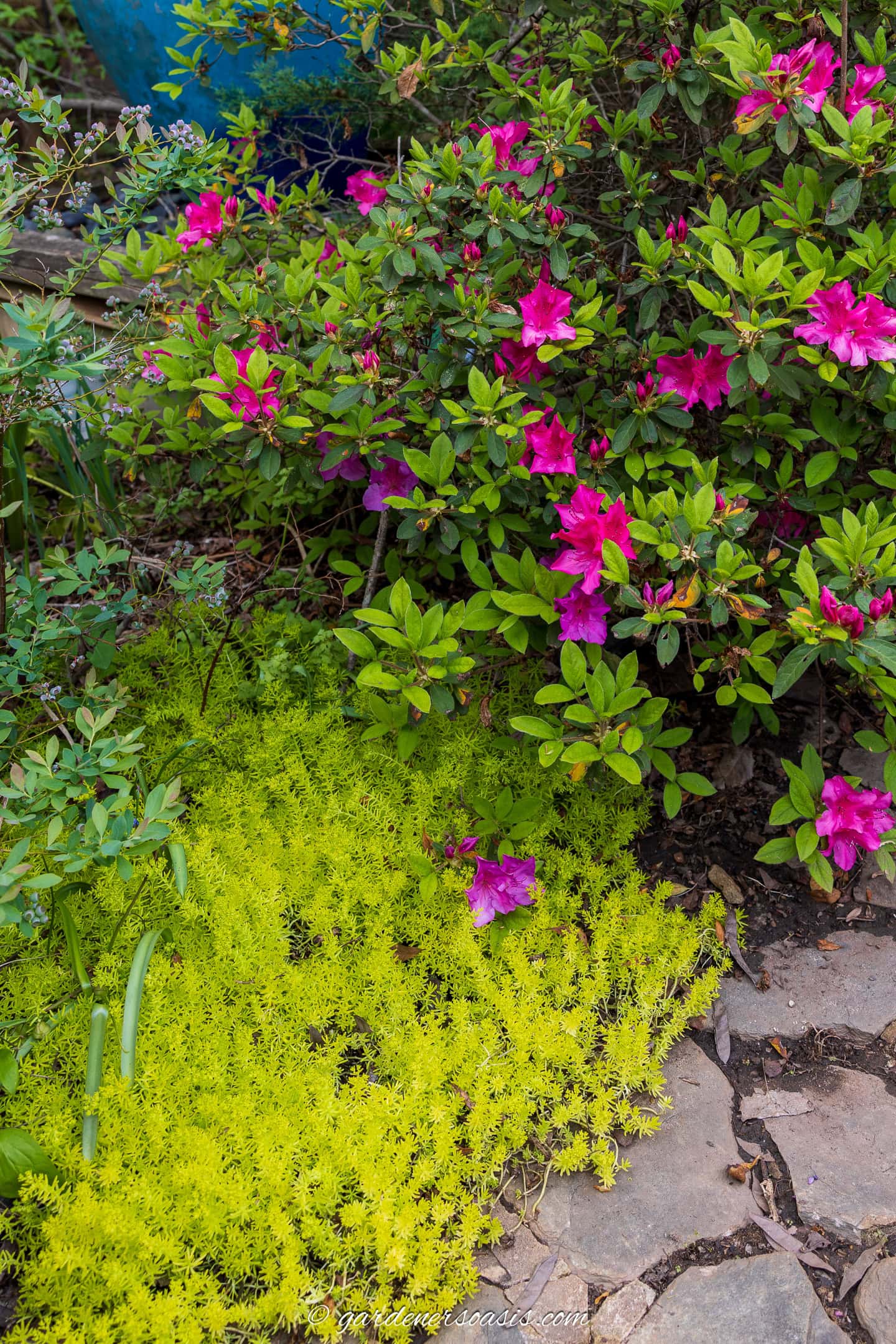
Lemon Coral Sedum is another great option. Its lime-green foliage pairs wonderfully with pink azalea flowers. While it is usually sold as an annual, it easily survives over the winter in my zone 7b/8a garden. And it is evergreen so you get that extra pop of color all year!
For shadier areas, traditional ground covers like European ginger, Pachysandra and Periwinkle work well, especially in a woodland setting.
Ground cover suggestions
- Creeping Phlox
- Lemon Coral Sedum
- European ginger
- Most shade ground covers
Be cautious with shade ground covers as some of them can spread quickly given the right conditions. So it’s a good idea to consult with your local nursery before planting them in your garden beds.
5 | Vines
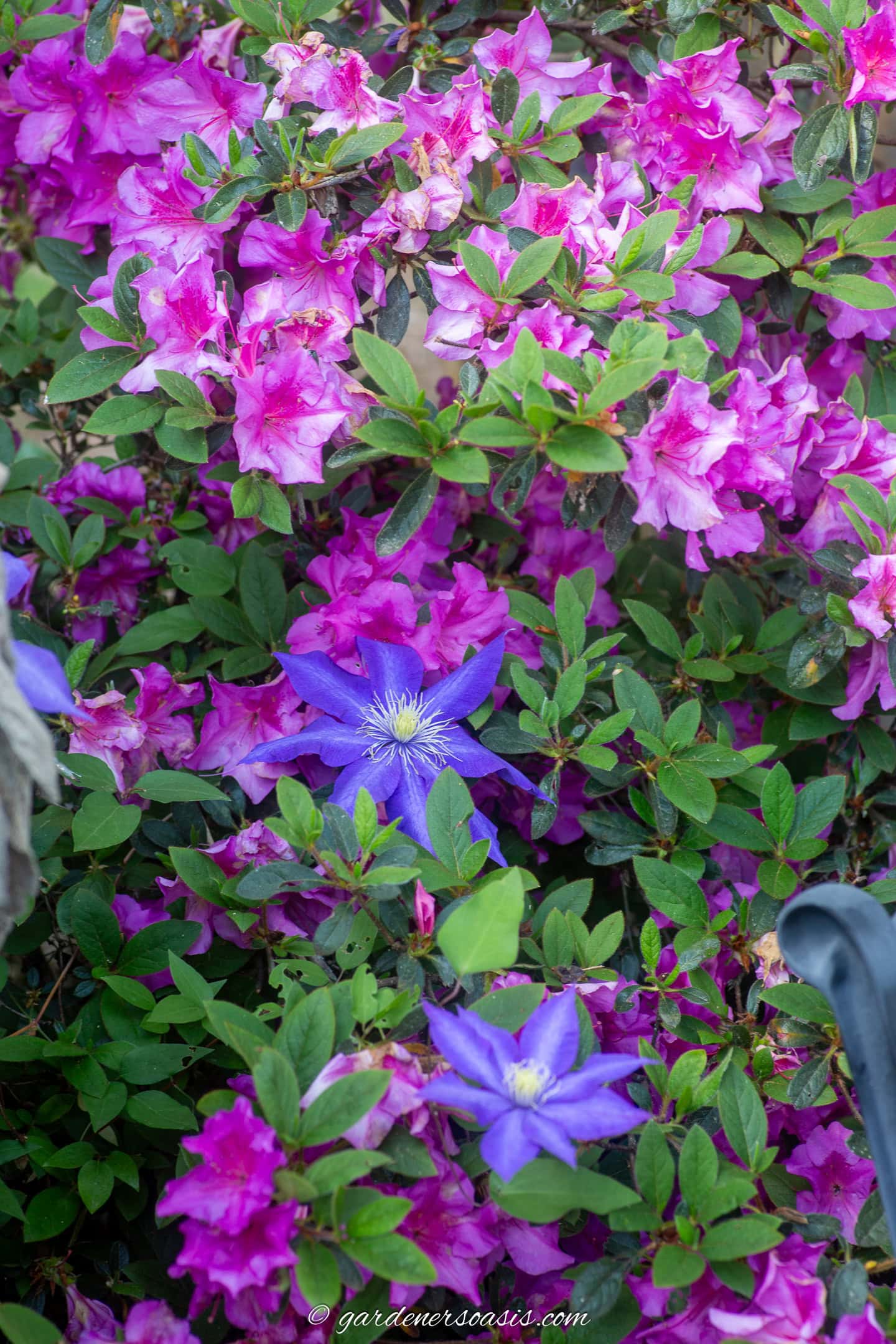
Non-aggressive vines like Clematis are another great companion plant choice.
You can let them weave through your Azaleas so the blooms look like they are coming from the shrub.
For a big spring show, choose a variety that blooms at the same time in a contrasting color. That way you can see both flowers easily and they will make each other pop.
Or you can select a plant that flowers at a different time to bring vibrant hues to your azalea foliage throughout the season.
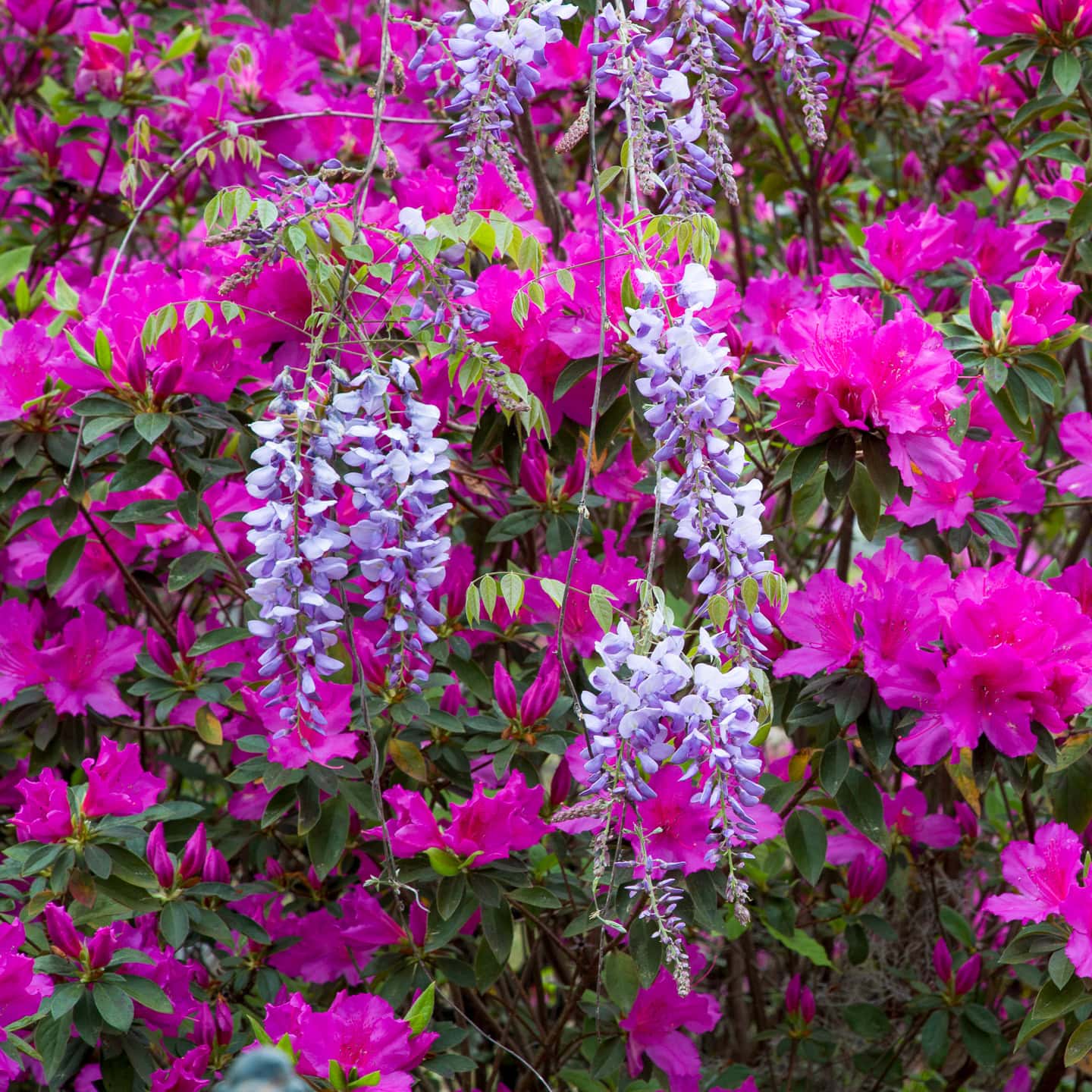
© Danita Delimont – stock.adobe.com If you’re willing to do a lot of maintenance, Wisteria also looks beautiful with Azaleas. But it grows very fast so requires a lot of pruning to keep it in check. (And can be invasive).
You can also use denser climbers such as Euonymus as a backdrop behind azaleas. This not only highlights the beauty of the azalea blooms but also serves a practical purpose by concealing any unsightly views.
Vine suggestions
- Clematis
- Wisteria (with caution)
- Climbing roses
- Wintercreeper
6 | Other Azaleas and Rhododendrons

© Loraine – stock.adobe.com Azaleas truly shine when mass-planted alongside other Azaleas and Rhododendrons, creating a stunning visual impact that will enhance any garden.
Consider using a whole line of the same variety as foundation plants to beautifully frame the front of your house or to elegantly line a driveway or walkway.

Or if you prefer a more relaxed and informal aesthetic, mix and match different varieties to add a charming and diverse touch to your landscape.
I like to use Encore Azaleas for this type of mass planting. They are evergreen, very low maintenance, have a tidy shape and they re-bloom. The spring bloom is usually the biggest show, but they will provide some color throughout the summer and fall.
7 | Deciduous shrubs
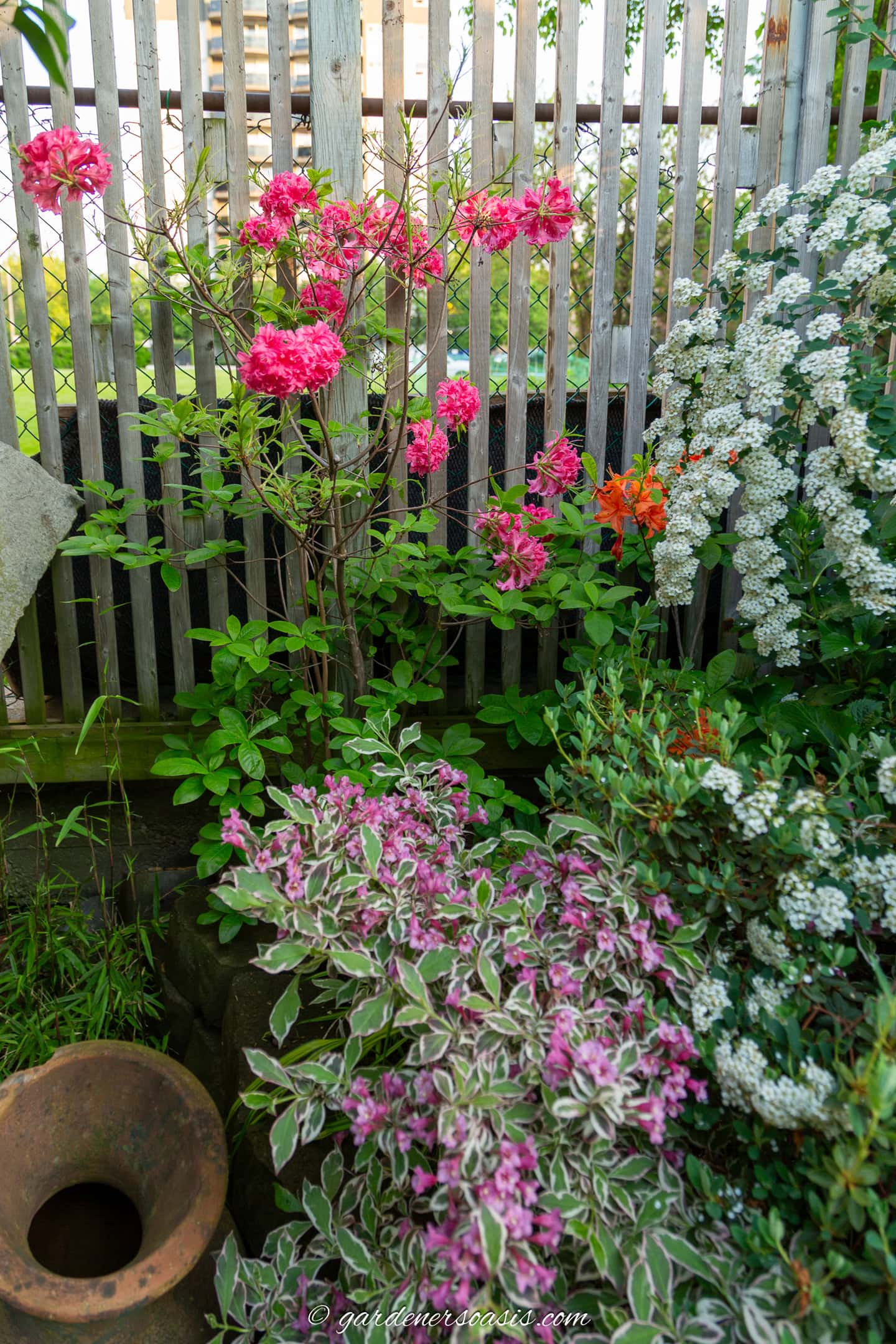
Pairing azaleas with deciduous shrubs like roses, Weigela, or Spiraea provides a variety of plant, leaf, and flower shapes, sizes and bloom times that add interest to your garden throughout the growing season.
Especially if you use evergreen Azaleas that add some winter color when the other shrubs are dormant.
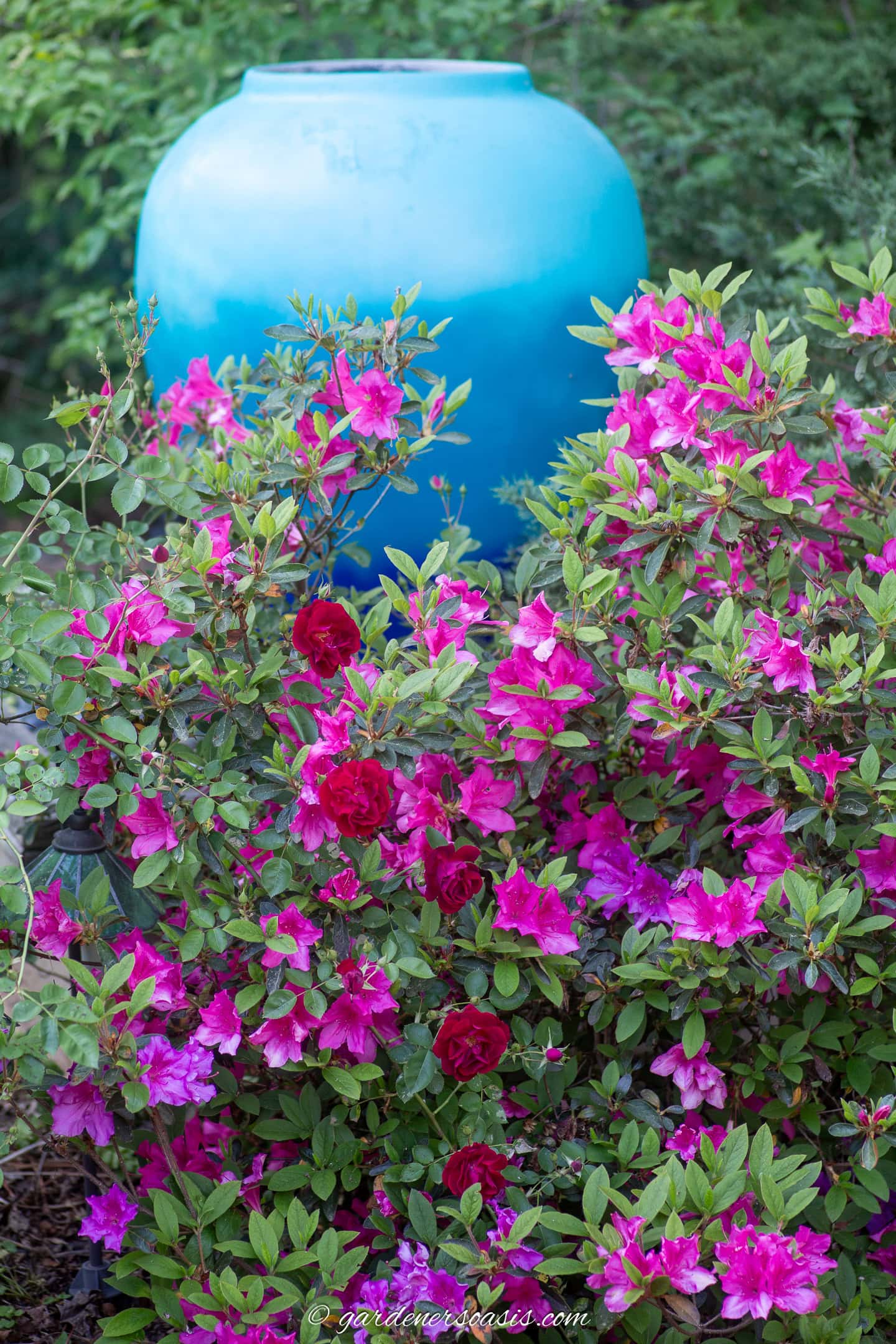
This mix of texture and structure is perfect for the back of your garden border.
And creates a more dynamic and engaging landscape.
Deciduous shrub suggestions
If you are combining Azaleas with sun-loving shrubs such as roses, make sure to buy a variety that can take more sun. Many of the Encore Azaleas fall into this category.
8 | Evergreens
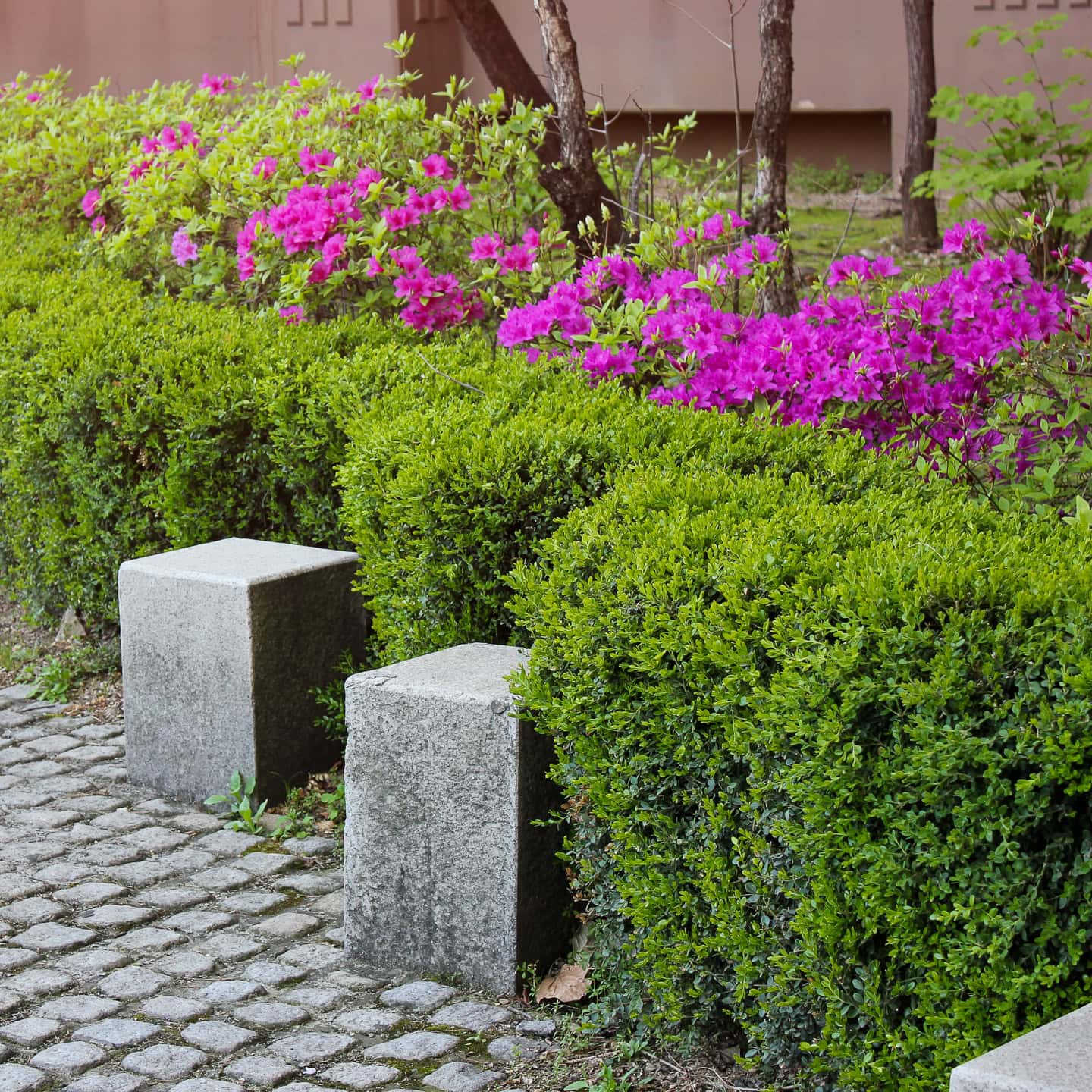
© binimin – stock.adobe.com Azaleas also pair beautifully with evergreen shrubs.
Evergreens are denser than many deciduous Azaleas so they add an interesting texture contrast, as well as adding color to the garden in the winter.
While Evergreen Azaleas don’t need the winter color infusion, combining them with needled evergreens provides foliage contrast that adds more interest to your garden.
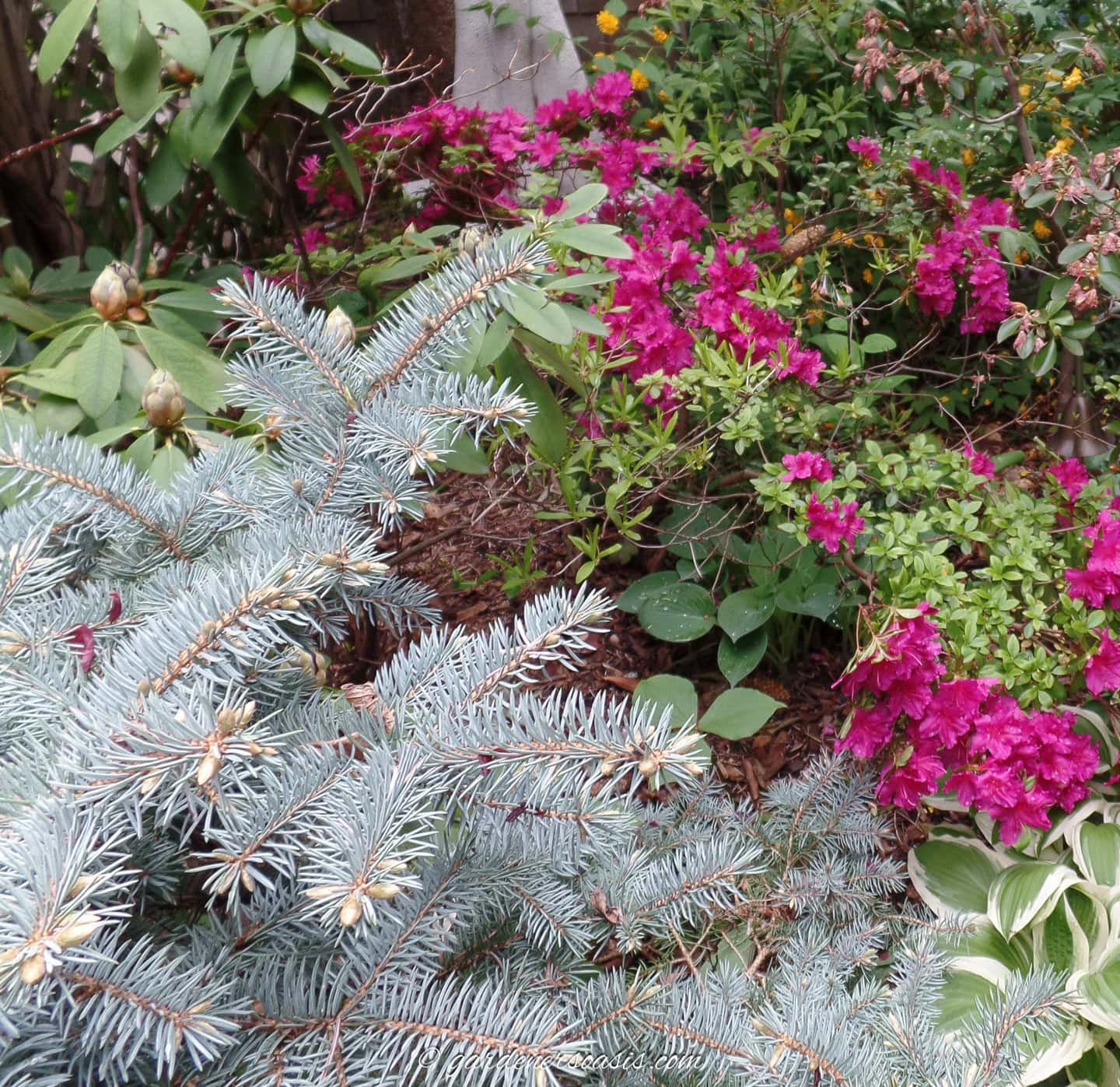
Especially blue-needled evergreens that contrast with both their shape and color.
In any case, the Azaleas will add a splash of vibrant color to the evergreen backdrop when they are blooming. And create that beautiful spring display everyone loves.
Evergreen plant suggestions
- Boxwood
- Bird’s Nest Spruce
- Dwarf Alberta Blue Spruce
9 | Under trees
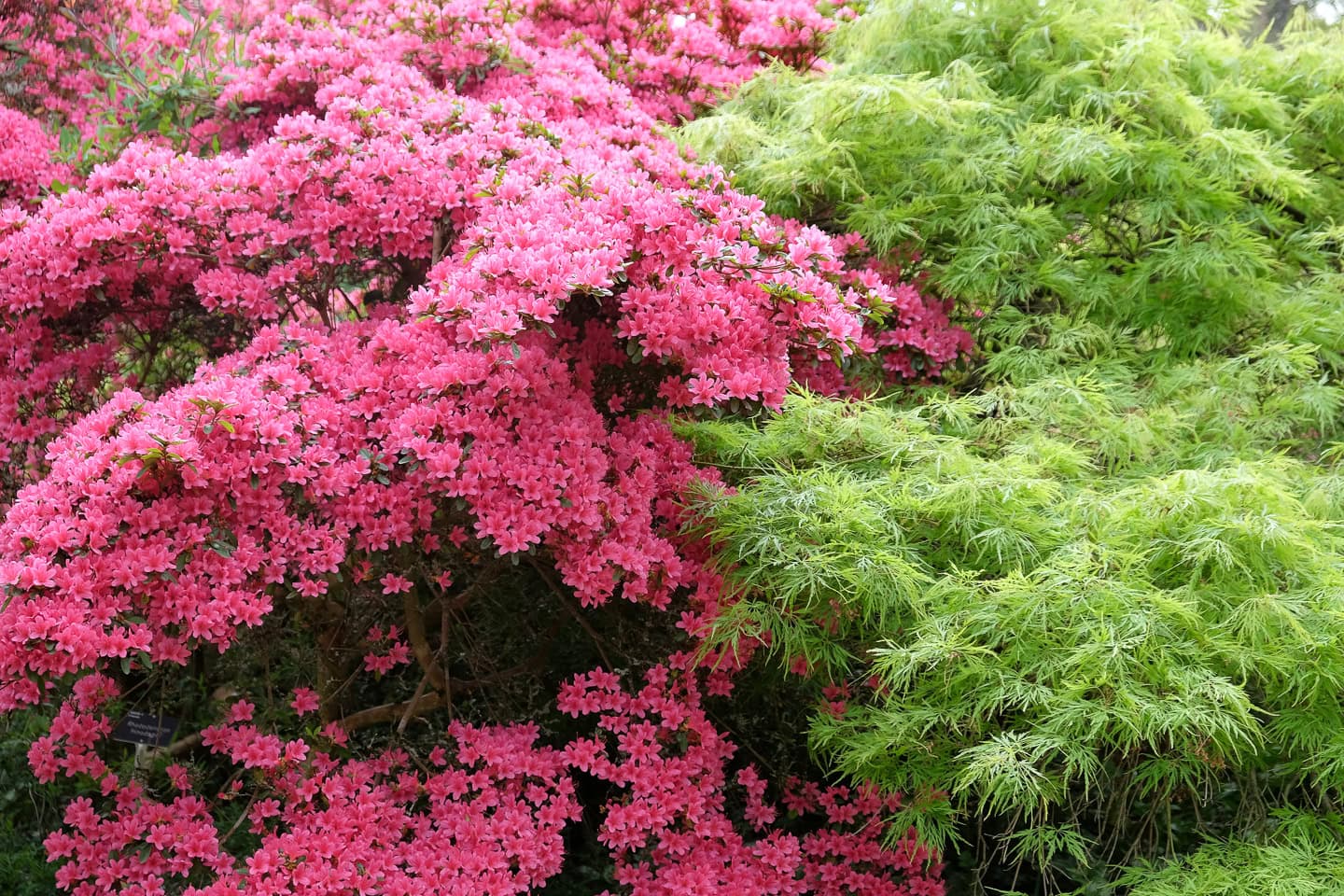
© Alexandra – stock.adobe.com Native azaleas thrive in woodland settings, making them perfectly suited for growing under trees.
So, many trees serve as ideal companions for these beautiful plants.
One combination that stands out is Japanese Maples paired with Azaleas.
The contrast in leaf shape between the two is striking, and since neither plant is particularly aggressive, they can be planted fairly close together.
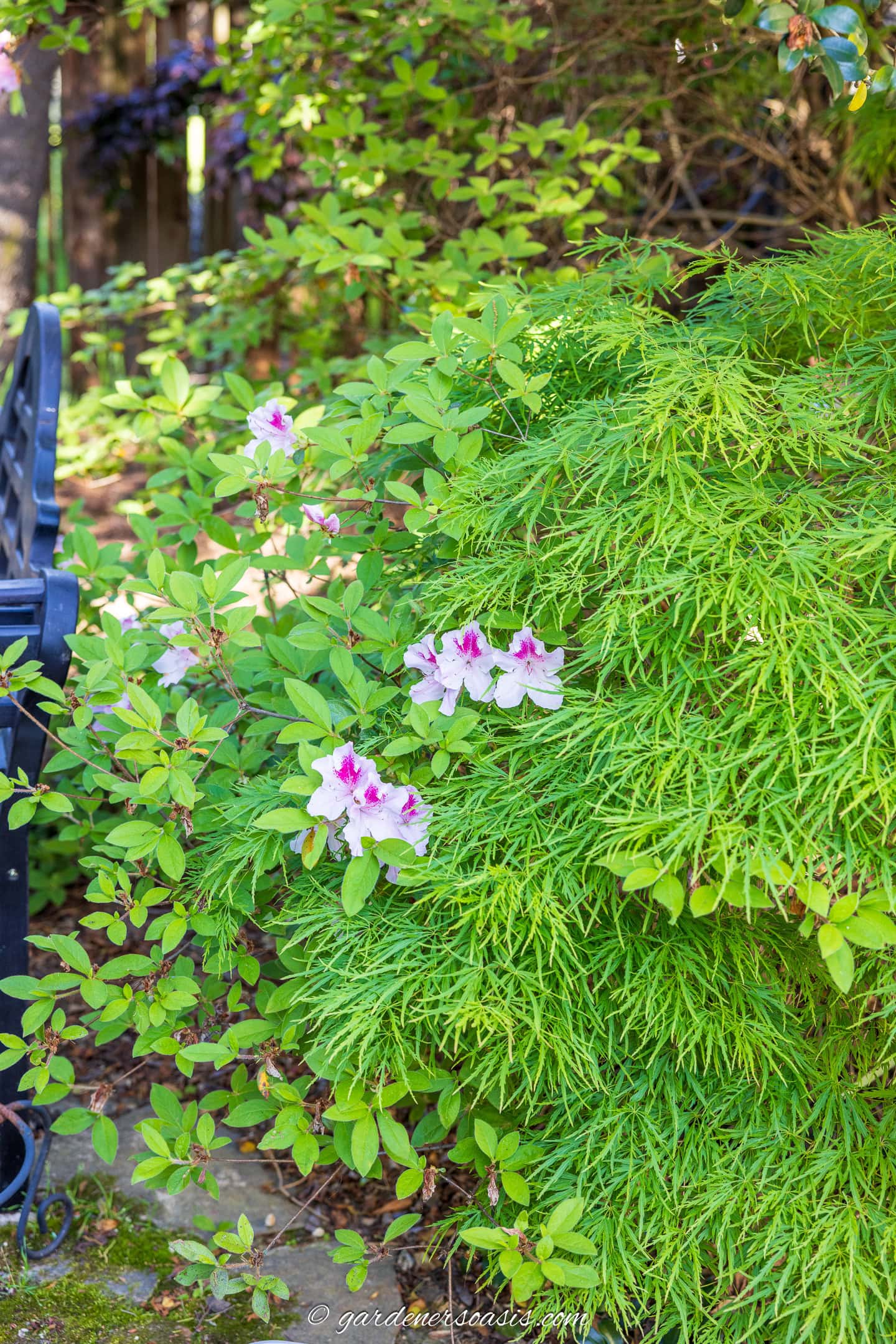
This allows the Azalea flowers to gracefully grow up through the branches of the Japanese Maple.
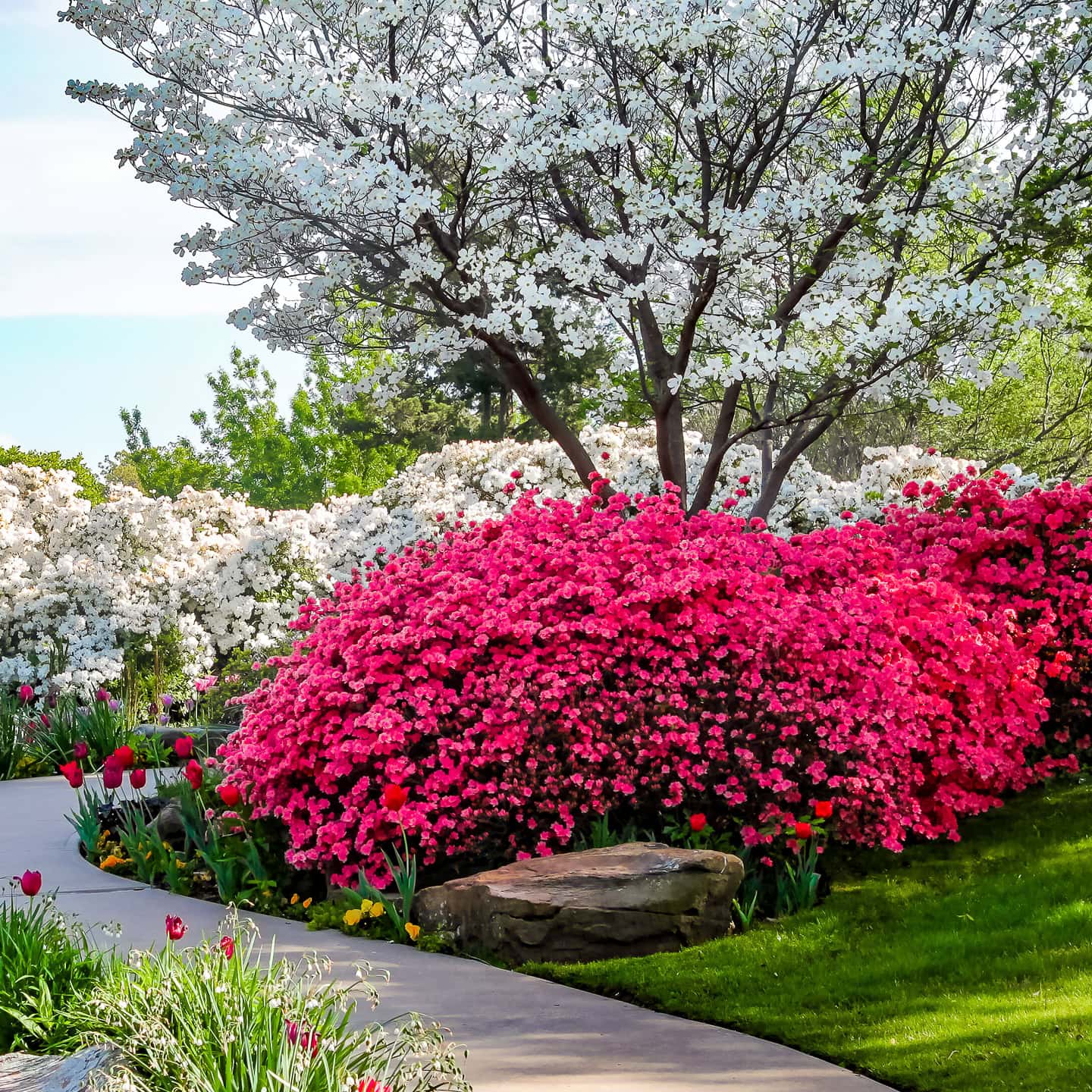
© Susan Vineyard – stock.adobe.com Dogwoods also make a wonderful choice, as they bloom around the same time as Azaleas. Their pretty branching pattern complements the more compact Azaleas beautifully.
However, don’t limit yourself. Many Azaleas will flourish under most deciduous trees, provided they receive adequate water.
Tree suggestions
- Japanese Maple
- Dogwood Trees
- Crepe (or Crape) Myrtle
- Japanese cherry trees
- Redbud tree
Have comments or questions about our azalea companion plants? Tell us in the section below.