
15 Living Room Accent Wall Ideas That Make A Statement
Looking for living room accent wall ideas that go beyond choosing a different paint color? A blank wall, fireplace or built-ins can all become a focal point with the right treatment. These ideas will give you plenty of inspiration for adding more interest and personality to your living room.
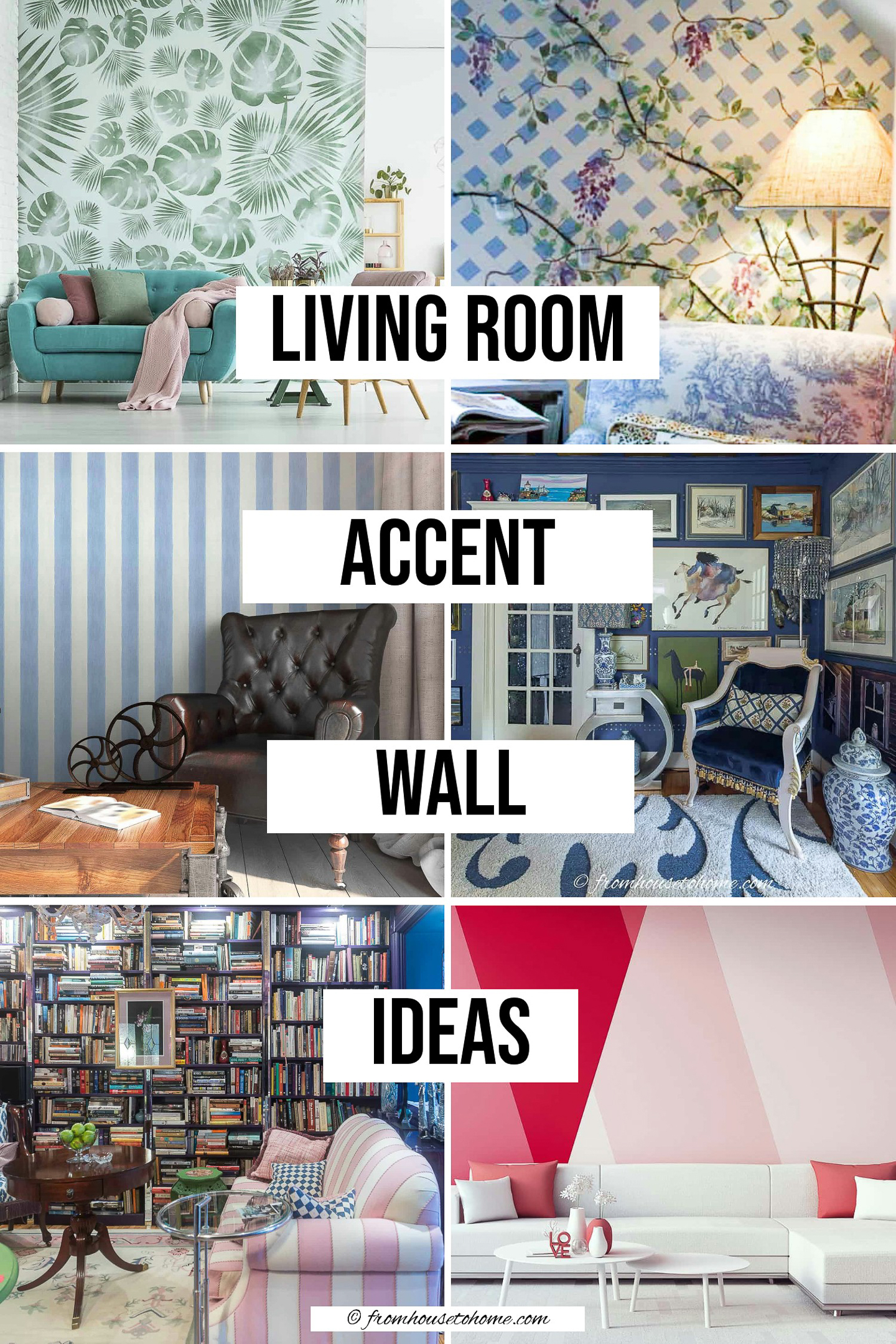
I love using color and pattern when I’m decorating, and I’m usually quite happy to use a lot of both.
But I know that for some people, covering an entire living room in a bold color or dramatic wallpaper can feel like a pretty big commitment.
That’s where an accent wall comes in.
You still get to use something that adds personality to the room, but on a smaller scale.
It’s also a good opportunity to try something you might not normally use throughout the whole space.
And you’re not limited to simply choosing a different paint color.
There are lots of ways to create a focal point, depending on the look you want and what you’re starting with.
So I’ve put together some of my favorite living room accent wall ideas to give you plenty of inspiration to choose from.
1 | Paint a bold color
Painting one wall a bold color is one of the simplest ways to create an accent wall. It’s a great option if you love color but are a little nervous about using it everywhere, since you can get the impact without committing to it on every wall.
Choosing the right wall to put it on is important. In this room, the deep blue wall is behind the main sofa, so it anchors the seating arrangement and creates a natural focal point rather than drawing attention to a random part of the room.
The same blue shows up in the patterned chairs and accessories, which spreads the color around the room and prevents the dark wall from making the space feel lopsided. Repeating the accent color in a few other places helps the whole room feel balanced and connected.
The added panel molding gives the blue surface some depth, while the strong contrast with the lighter surrounding walls makes this wall command attention.
2 | Use wallpaper to highlight one wall

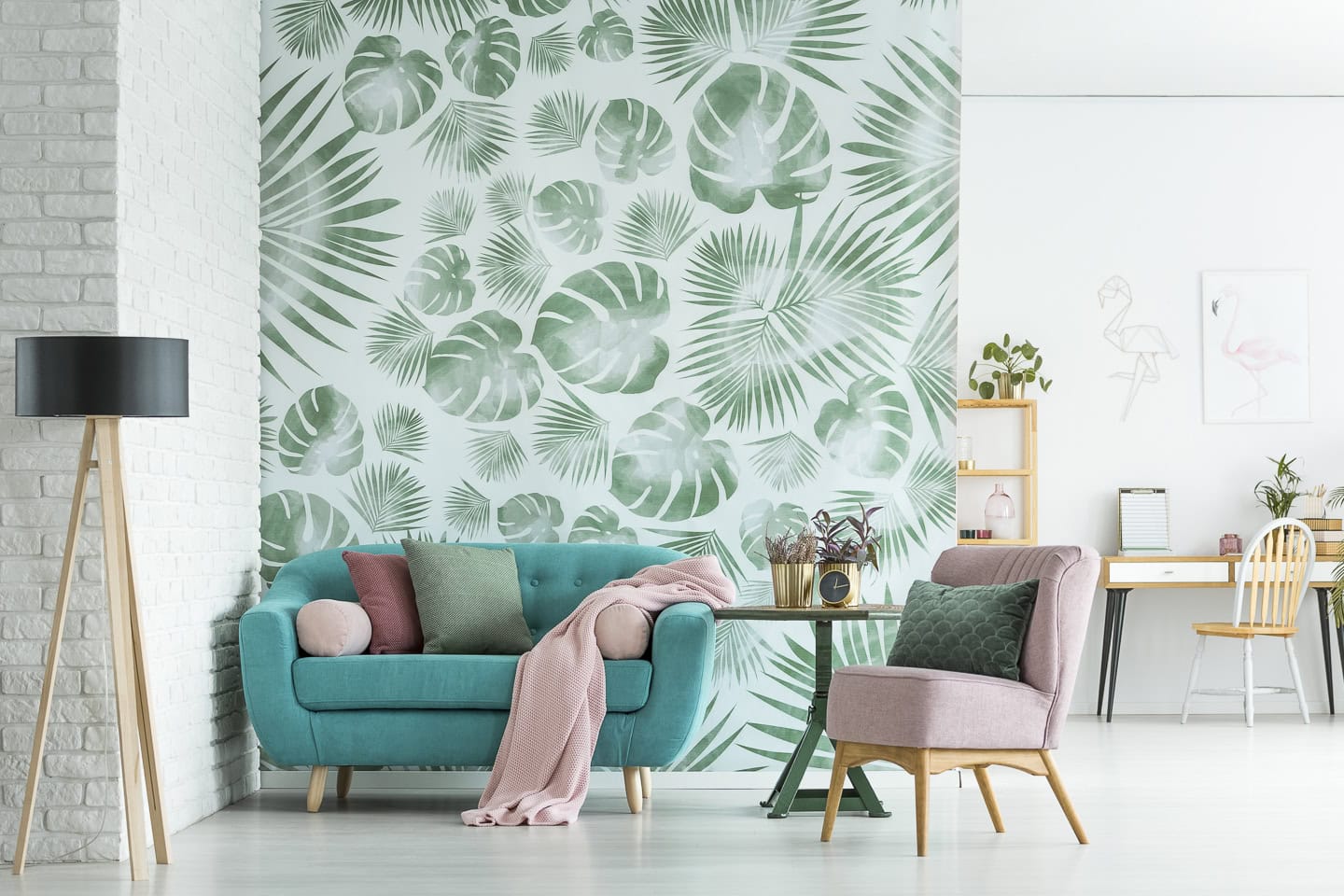
©Photographee.eu – stock.adobe.com Similarly, a wallpaper accent wall is especially effective when you love a large or busy pattern but do not want it covering the entire room.
The oversized tropical leaves here immediately define the seating area, while the surrounding white walls give your eye somewhere to rest.
Again, repeating the color in the rest of the room helps to make the space look cohesive.
In this case, the green from the leaves is repeated in the pillows and plants, and the aqua sofa gives the wall enough color nearby that it does not feel isolated.
Using a pattern on just one wall also lets you choose something much bolder than you might be willing to use on all four walls.

An accent wall can be more than just a different paint color.
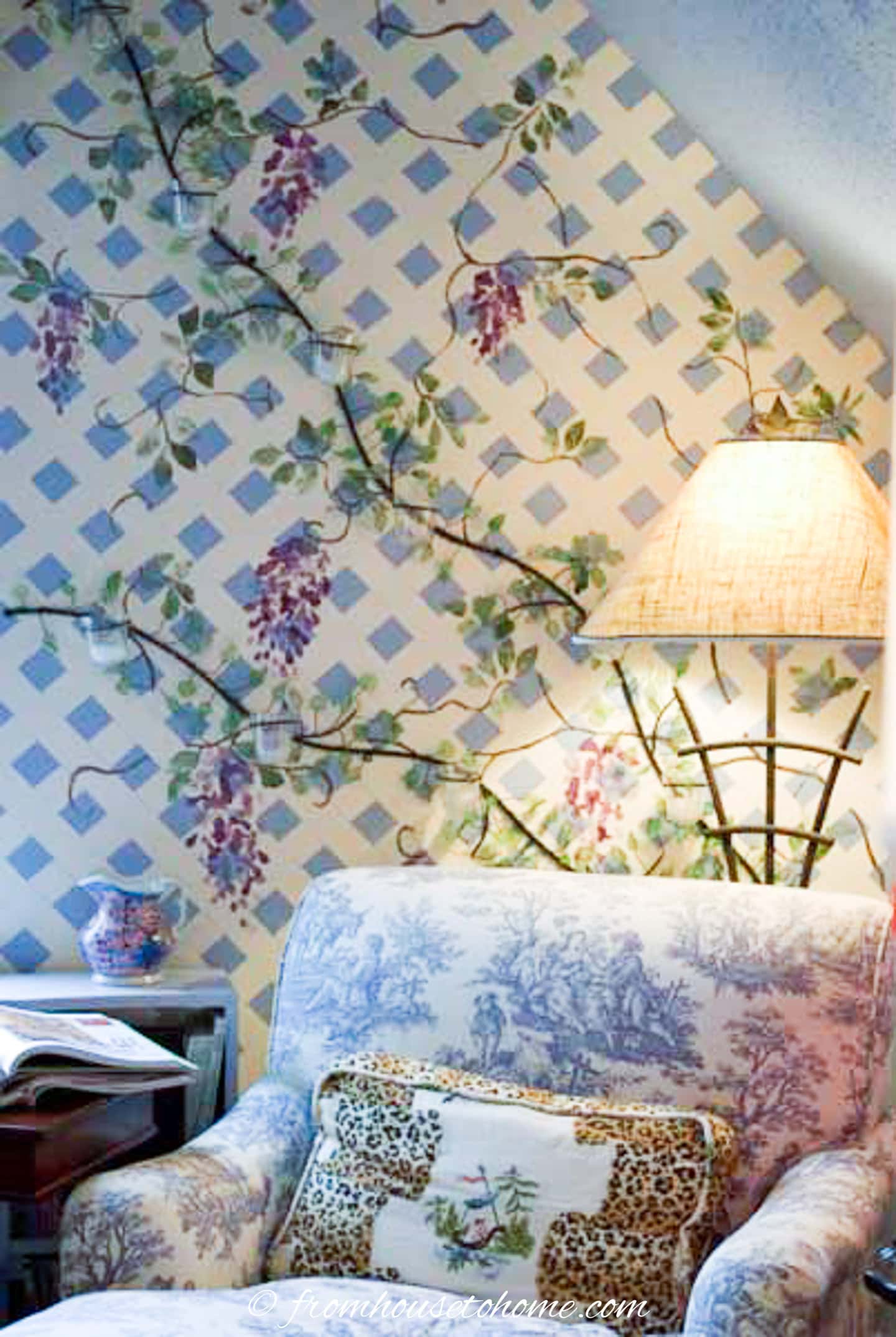
Painting a pattern gives you another way to add color while also bringing more detail and personality to the wall.
For this wall, I painted a lattice to create the look of a garden trellis, then added vines, leaves and flowers to make it feel like an indoor garden.
The pale blue and white lattice is fairly simple on its own, which gives the branches and purple flowers room to stand out.
A painted pattern also gives you the freedom to design the wall specifically for your room.
In this case, the garden theme works with the rest of the decorating rather than adding a pattern just for the sake of having one.
4 | Add architectural detail with molding
Molding is a good option when you want an accent wall that gets its interest from texture and shadow rather than a contrasting color.
The geometric trim pattern on this wall stretches all the way up into the peaked ceiling, which emphasizes the height and unusual shape of the room.
Because the molding and wall are painted the same light color, the pattern is subtle until the light catches the raised edges.
That makes it detailed enough to be a focal point without overwhelming the room.
5 | Paint horizontal stripes
Horizontal bands are a great way to turn a plain wall into a feature while also changing how the proportions of the room feel.
Because the lines draw your eye across the space, they make the room feel wider. Which is especially helpful in a narrow living room. (Just make sure your accent wall in on the the short wall, otherwise they will make the long wall look even longer.)
You can get this effect with crisp, evenly spaced stripes, like the living room above.
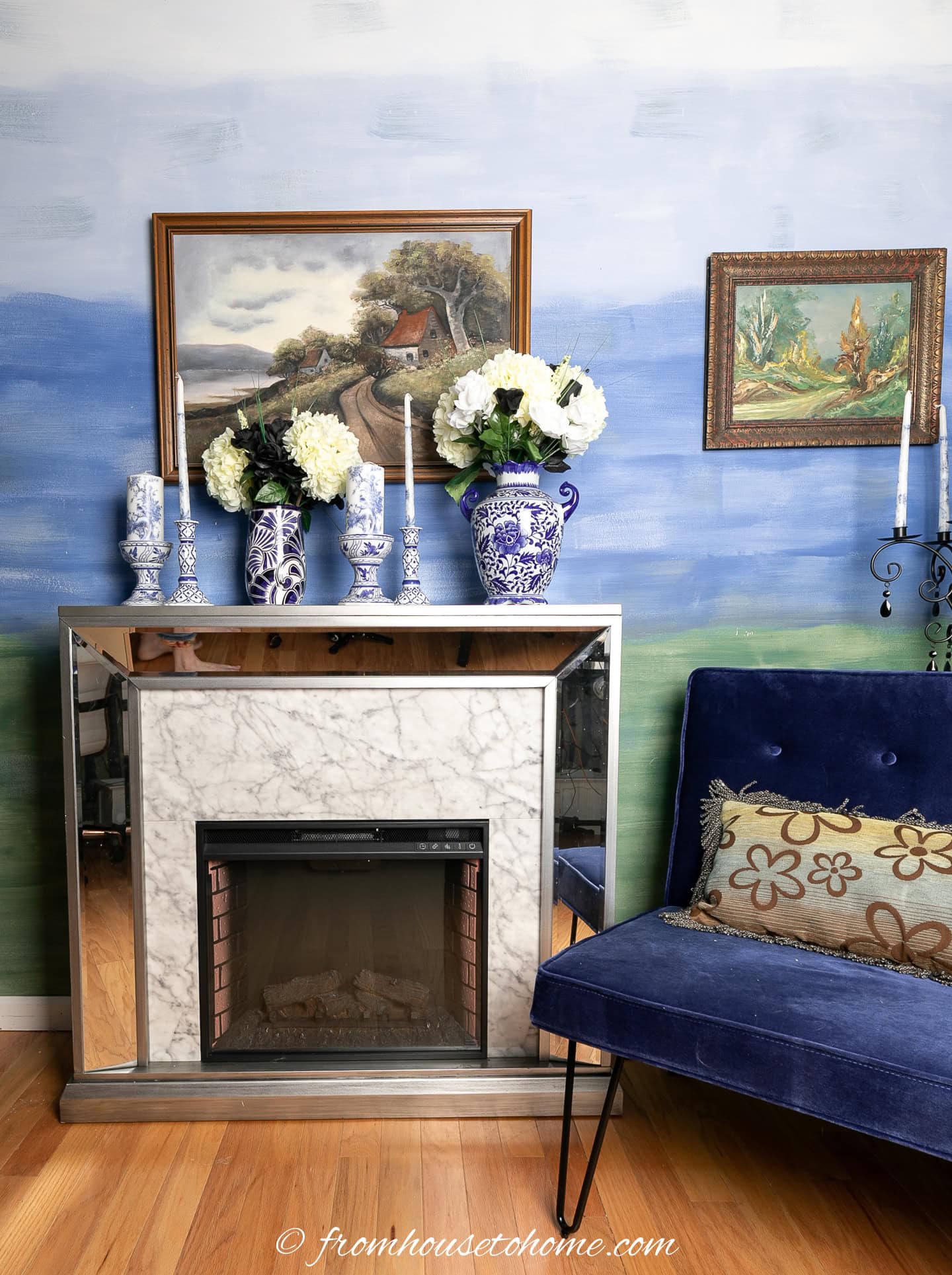
But I didn’t feel like measuring and marking out perfectly even widths on my wall.

Instead, I used a watercolor technique, with bands of blue that gradually get lighter as they move toward the ceiling and a narrow band of green near the floor.
The loose, visible brushstrokes and soft transitions mean the bands don’t have to be exactly the same width or perfectly straight.
It still gives the wall enough pattern and color to make it a focal point, but with a softer, more free-form look than traditional stripes.

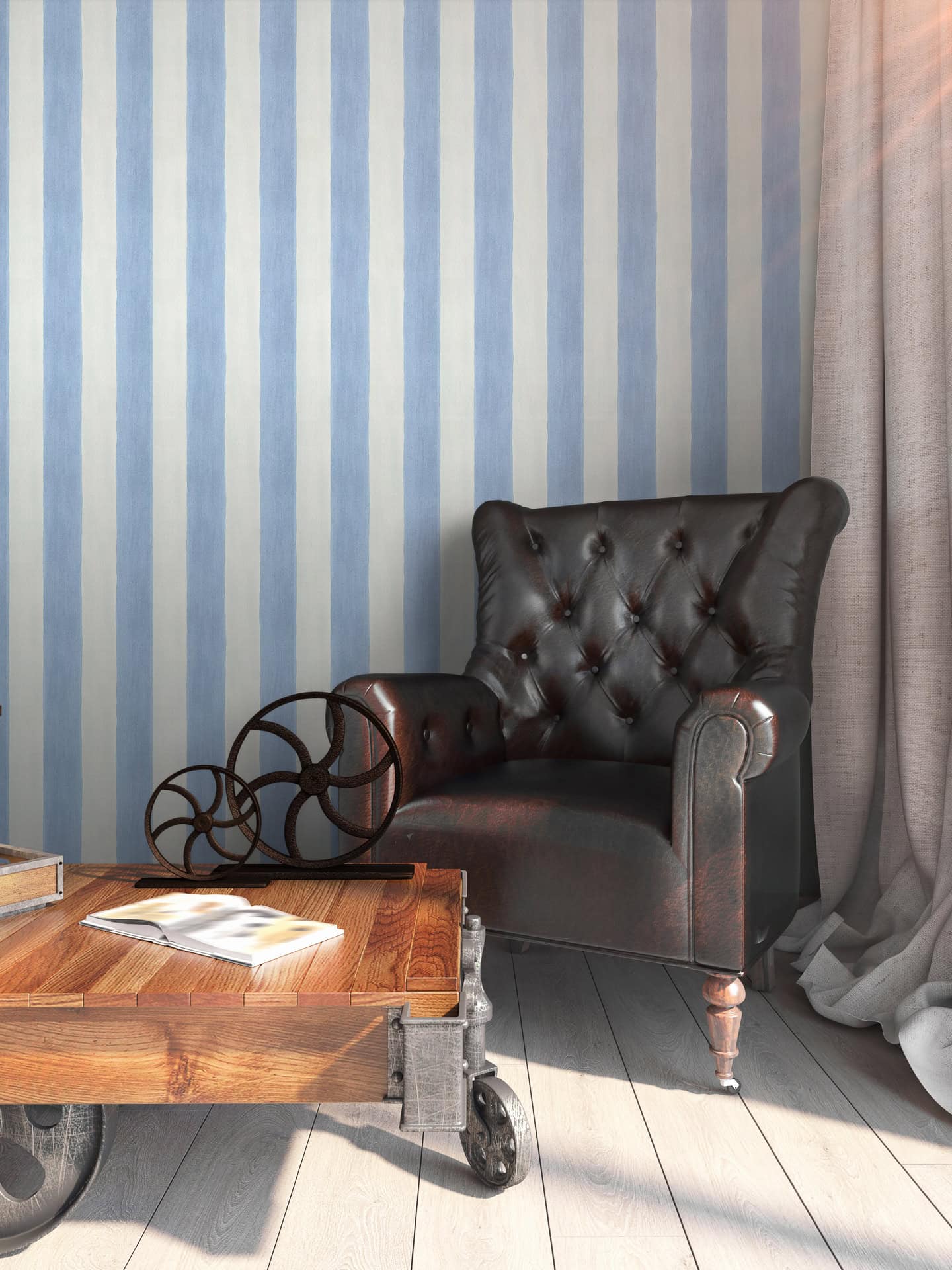
Or if you need your ceiling to look higher, try vertical stripes instead.
They lead your eye upwards, which tricks your brain into thinking the space is taller than it is.
The blue-and-white stripes in this room run uninterrupted from the floor to the ceiling, which exaggerates that vertical line even more.
Using just two soft colors keeps the pattern from overwhelming the room.
While the fairly wide stripes give the accent wall more presence than narrow pinstripes would.
Wider stripes are also a good choice for an accent wall because they create a bold pattern without making the wall look too busy.
7 | Put up a mural
A mural is a good way to turn one wall into the main feature of the room without having to add a lot of separate artwork or accessories.
The oversized floral design in this room covers almost the entire wall, so it has the impact of a huge piece of art.
I also like how the colors in the mural are repeated in the pink sofa and the smaller purple accents.
While the black rug, curtains and furniture keep all of those soft florals from feeling too sweet.
If you use a mural this bold, pulling a few of its colors into the rest of the room helps the wall feel connected to everything around it.
8 | Use large art to create a focal wall
You don’t necessarily have to change the wall itself to create an accent wall.
One oversized piece of art (or a large mirror) provides enough color, pattern and visual impact to turn an otherwise plain wall into a focal point.
The key is choosing artwork that is large enough for the wall.
A piece that is too small will look lost, especially on a tall or wide wall.
While something with enough scale visually fills the space without needing a lot of other artwork or accessories around it.
Here, the large blue-and-white painting sits directly above the fireplace and is almost the same width as the mantel opening, so it is big enough to hold its own on the tall wall.
The blue in the artwork is repeated by the sofa and rug, which helps connect the focal wall to the rest of the room.
The surrounding molding adds another layer of detail, but keeping it the same color as the wall lets the artwork remain the main focus.
If you don’t have a single large piece of art, you can create a collection and turn the entire wall into a feature.
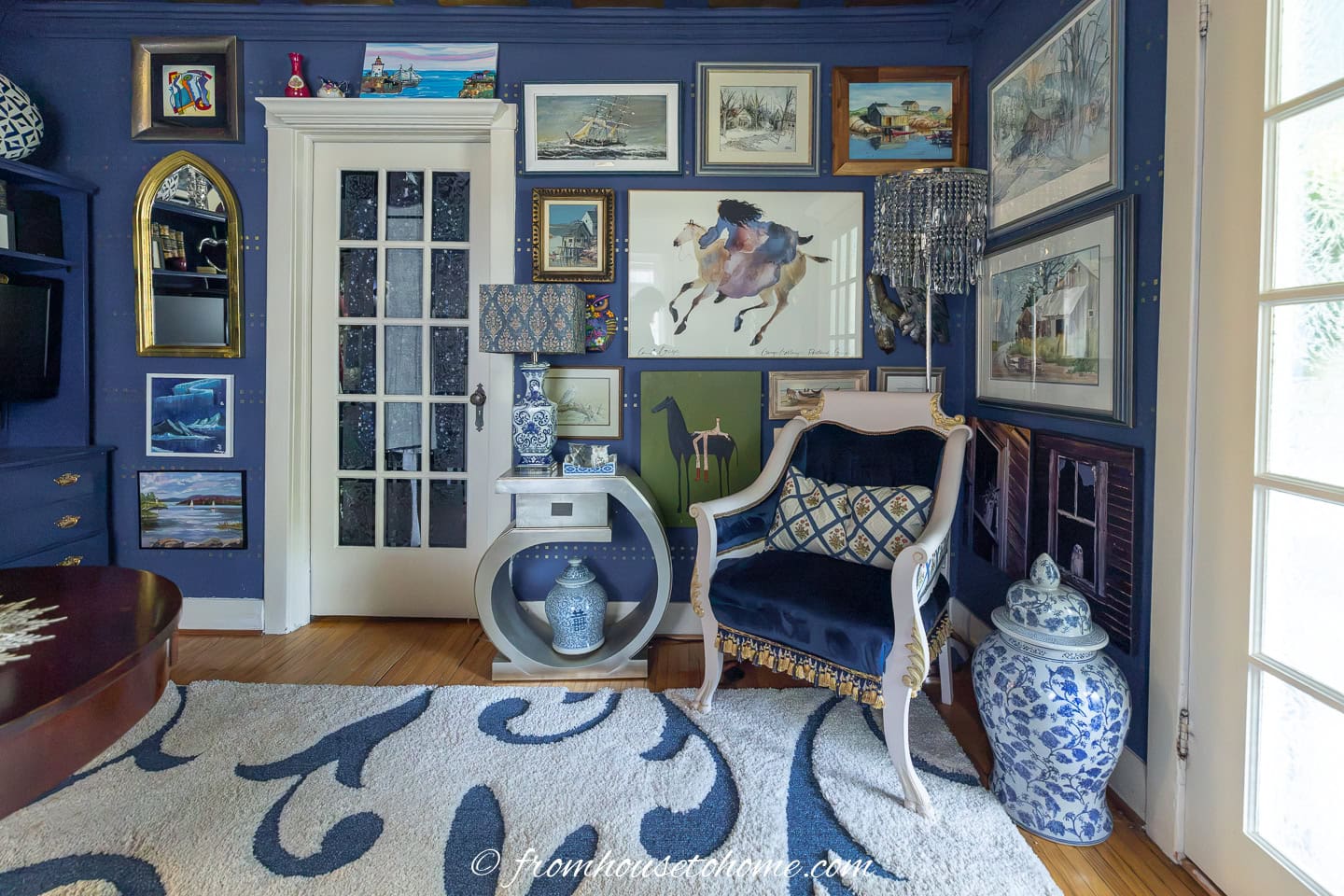
This gallery in my mother’s living room fills nearly every available section of the wall, including the narrow areas around the door and above the furniture.
The frames vary in size, shape and finish. But the mostly blue, green and neutral artwork ties them back to the dark blue wall and the rest of the room.
You do not need perfectly matching frames for a gallery this full.
Repeating colors and keeping the spacing fairly tight is enough to make the individual pieces read as one larger composition.
10 | Use mirrors to make a wall stand out
Similarly, a group of mirrors can make an accent wall feel substantial while also bouncing more light around the room.
This wall uses a collection of round and oval mirrors in different sizes, with mostly gold and dark frames.
The repeated circular shapes make the arrangement feel connected even though none of the mirrors match exactly.
And the mix of sunburst and simpler frames keeps it from looking too uniform.
Hanging the collection over the sofa gives it a clear boundary, so the grouping reads as one large focal point rather than a scattering of small accessories.
The mirrors are also hung on a dark blue accent wall, which provides a strong contrast with the reflective surfaces and gold frames.
That darker background makes the whole collection stand out much more than it would against a lighter wall.
11 | Turn a wall of built-ins into the feature

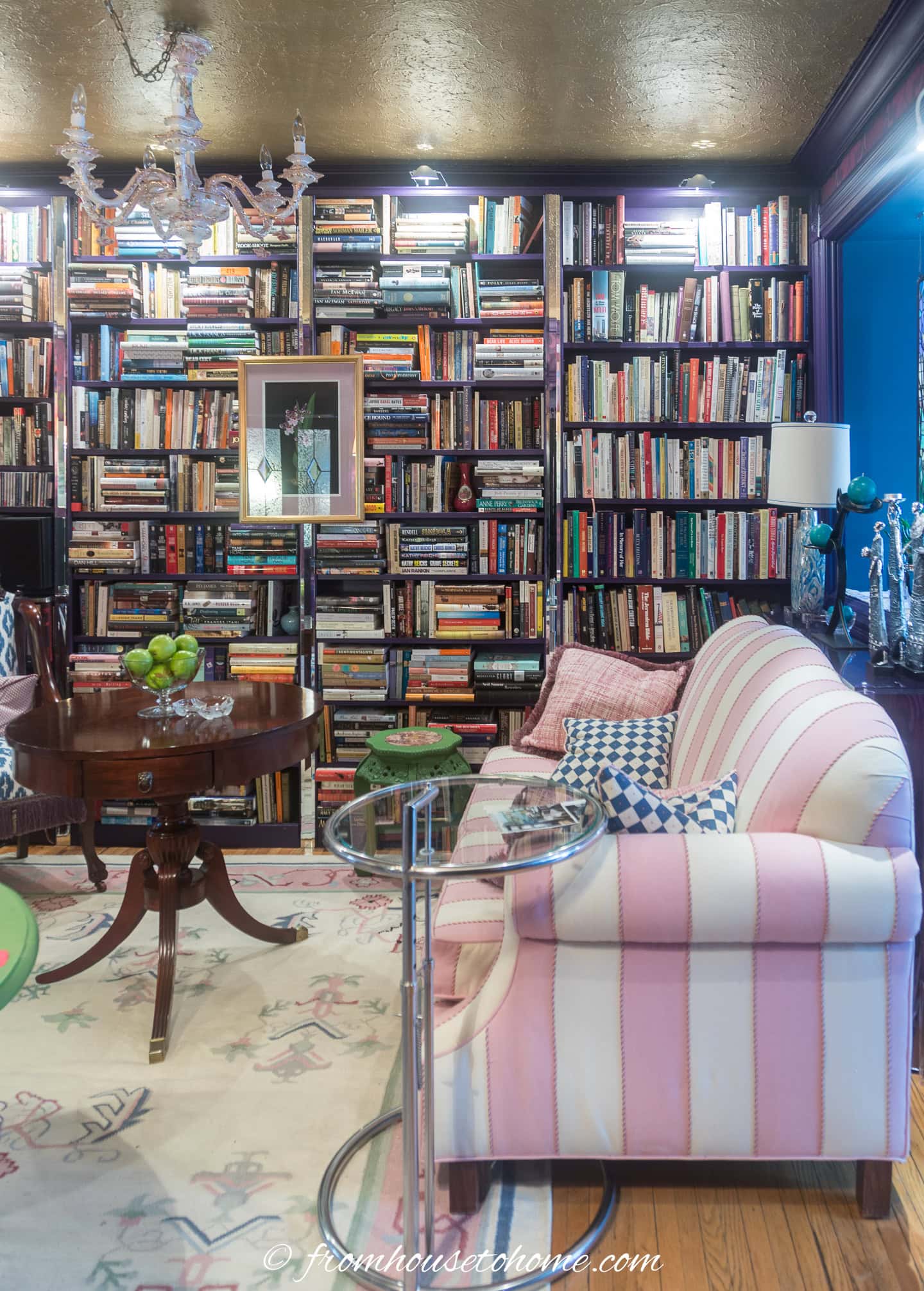
A wall of built-ins already has the scale to be an accent wall, so you do not need another wall treatment behind it.
These dark bookcases run nearly from floor to ceiling and are packed with colorful books, turning the whole wall into one large display.
Painting the shelves and surrounding trim the same deep color gives the collection a strong frame and keeps all of those individual book spines from looking disconnected.
This works particularly well when you have a collection you actually want to see rather than hiding everything behind cabinet doors.
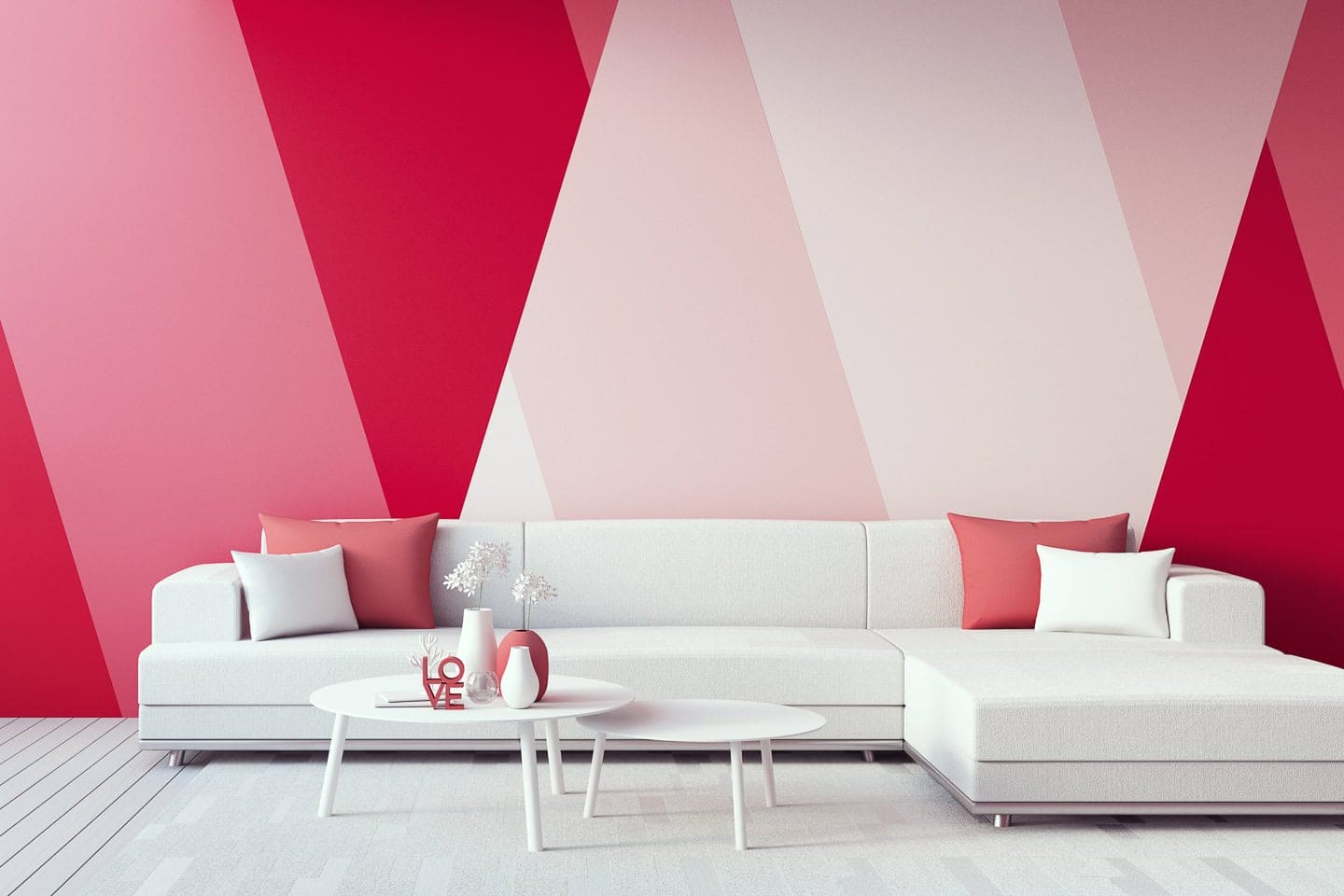
©tontectonix – stock.adobe.com Another option is to use shapes, lines or bands of color to create a more graphic design.
This is a great choice if you want your accent wall to have a contemporary look, since you can use simple shapes and clean lines to create something that feels almost like modern art.
In this room, the design uses a dramatic contrast between shades of pink and red, with the two colors dividing the wall into large graphic areas.
The strong color difference makes the pattern an important part of the room rather than simply a backdrop for the furniture and artwork.
You can create a similar look with painter’s tape to mark out blocks, bands or geometric shapes.
Contrasting colors will make the design stand out, while colors that are closer in value will give you a more subtle version of the same idea.
13 | Combine molding and wallpaper

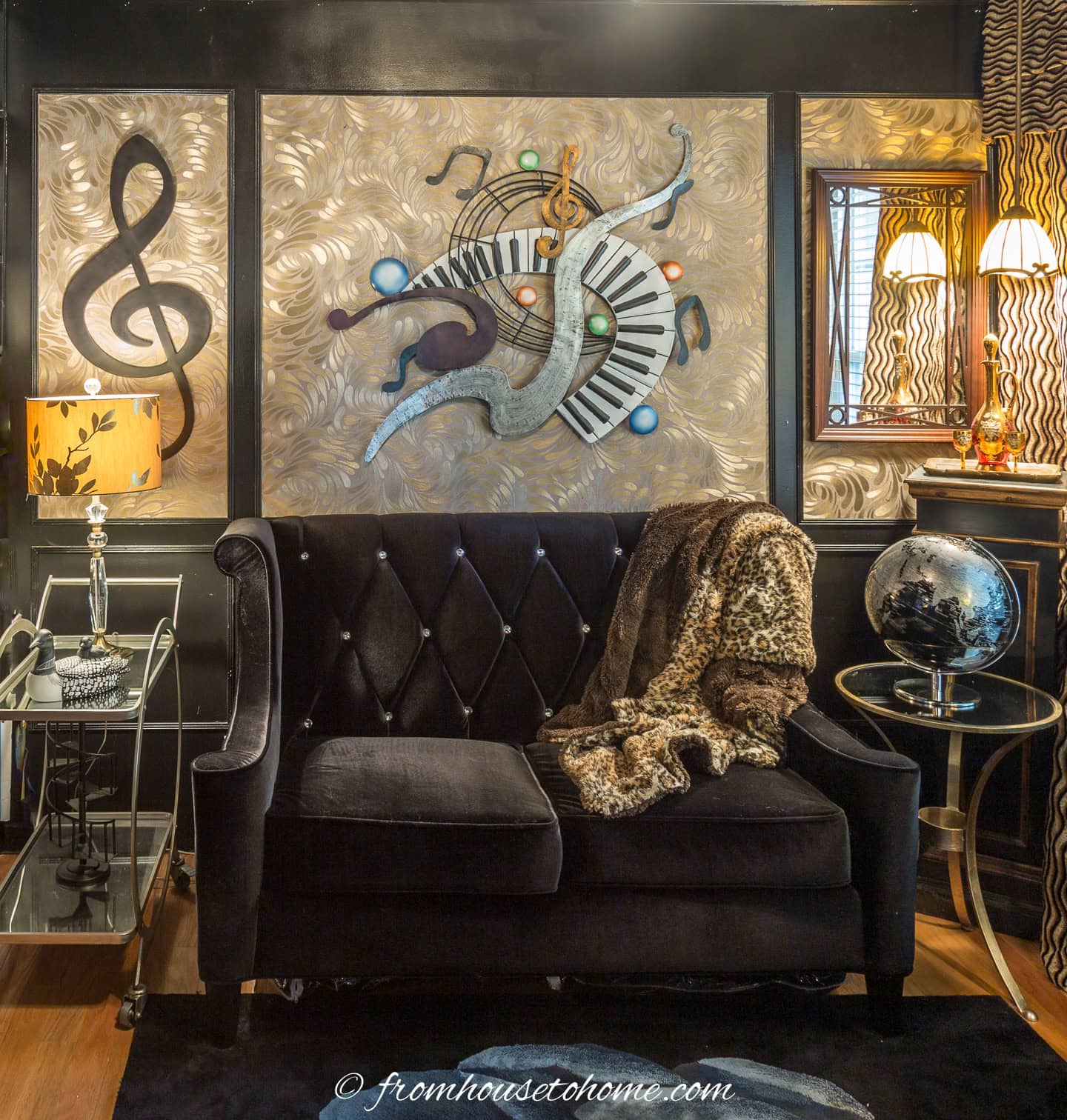
For an accent wall with even more detail, try combining wallpaper with molding.
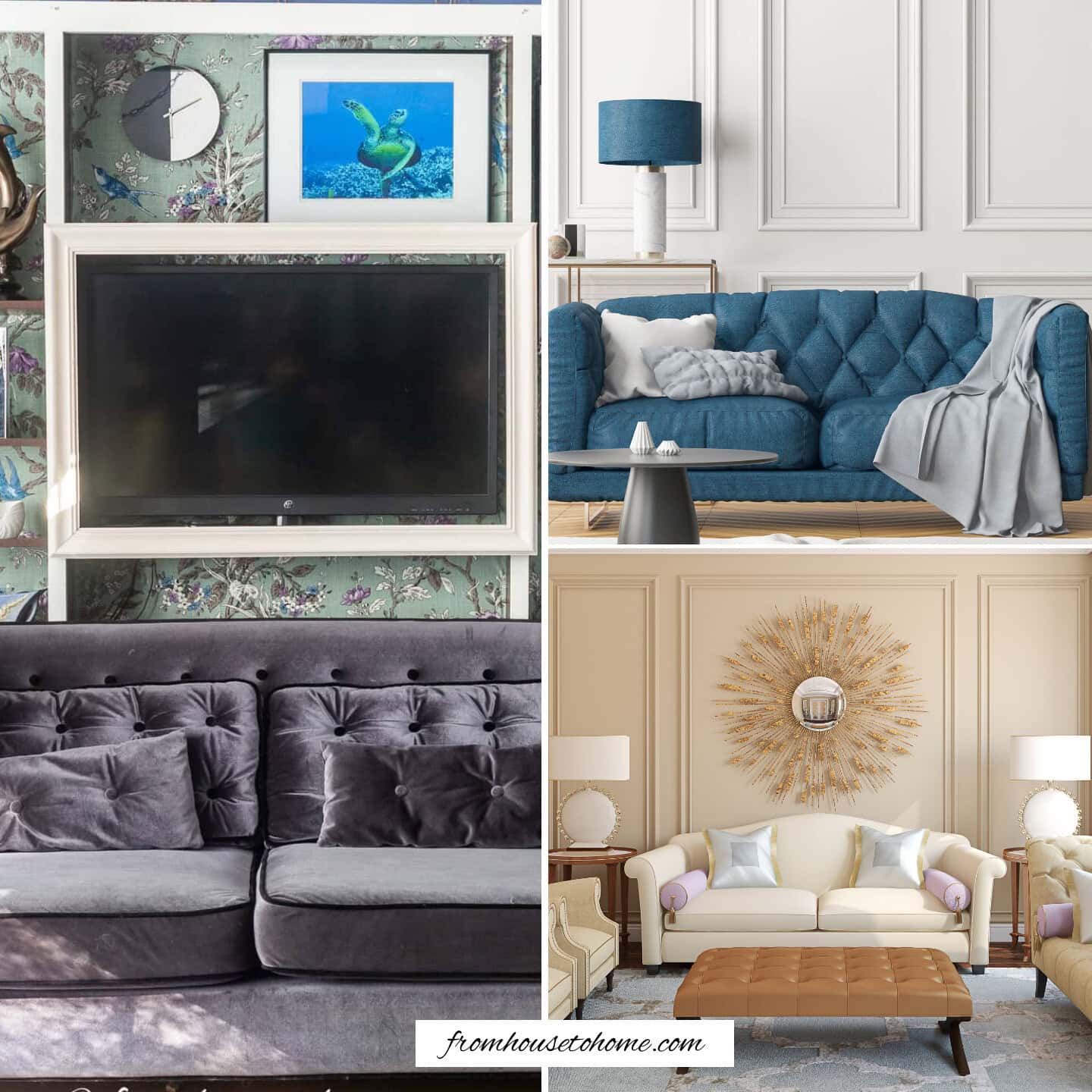
Rather than treating the wallpaper as one continuous pattern across the whole wall, the molding divides it into individual sections that look almost like large decorative panels.
This also gives you a lot of flexibility in how much pattern you use.
You can wallpaper inside every section for a dramatic look, alternate wallpaper with painted panels, or use it only in a few areas you want to emphasize.
The molding gives each section a defined edge, so even a fairly elaborate wallpaper feels structured.
In this room, metallic patterned wallpaper is inset inside black molding to create a series of oversized panels.
The dark trim frames the pattern and connects it to the black furniture, while the gold in the wallpaper picks up the metallic finishes throughout the room.
The combination makes the entire wall a feature, with the wallpaper providing the pattern and the molding adding depth and architectural detail.
14 | Make the fireplace stand out
If your fireplace is already the natural focal point of the living room, emphasizing that section of wall is usually more effective than choosing a completely separate accent wall.
In this room, the tall charcoal section surrounding the fireplace extends all the way to the vaulted ceiling, so your eye follows it upward and notices the height of the space.
The white mantel creates a crisp break against the dark paint, while the round mirror adds interest to the otherwise empty space above it.
Keeping the other walls a much lighter neutral makes the fireplace section stand out even more.
15 | Install wood on the walls
For an accent wall with more texture and warmth, cover it with wood.
Unlike paint or wallpaper, wood adds physical dimension to the wall, so the changing light and shadows become part of the design.
Here, narrow vertical wood slats cover the entire fireplace wall and continue all the way up to the high ceiling, creating a dramatic focal wall that immediately commands attention.
The closely spaced slats create a strong repeating texture without needing a complicated pattern.
And the natural wood warms up a room filled with white, gray and black.
Because the fireplace and television are built into the same treatment, the whole wall reads as one architectural feature rather than a collection of separate elements.
These wood slats actually come attached in panels, so you don’t have to install every narrow piece of wood individually. Which definitely makes this look much easier to achieve than it might seem.

Have comments or questions about our living room accent wall ideas? Tell us in the section below.